What should you look for before buying?
For a crêpe night, first decide whether you want to remove the bones during preparation, then choose the seasoning and the amount of fish you’ll need. These factors can go together: boneless sardines can also be preserved in oil.
| What to consider |
What to check |
Who this matters to |
| Texture and bones |
Look for the words “boneless” or “fillets”; don’t assume from the picture. |
I want to quickly spread the fish over the crêpes without removing the central bone when serving. Around 36% of consumers may put ease of preparation first. |
| Seasoning |
Read the ingredients list to distinguish between water, oil and marinade; drain the sardines if the filling might become too wet. |
I’m already adding a sauce or seasoned vegetables and prefer to decide on the final flavour myself. This level of control could be the priority for around 29% of consumers. |
| Quantity |
Compare the drained weight, if shown on the tin, with the number of crêpes you need to fill. |
I’m planning several fillings and don’t want to open more sardines than I need. For around 21% of consumers, choosing the right tin size could be the main concern. |
| Label |
Check the ingredients, fish allergen information and nutritional details for the variety you choose. |
I need to know exactly what’s in the product before serving the crêpes, particularly to check for the fish allergen. Reading the label could be the top priority for around 14% of consumers. |
Tinned sardines to consider on Joybuy
These tins work with crêpe fillings featuring olive oil or other seasonings. Some are sold as fillets. When choosing between recipes, consider the other ingredients you’re planning to use and check the drained weight to make sure it’s right for your portions.
 Image unavailable
Connétable Sardines in extra virgin olive oil, 140 g
Worth considering if olive oil is part of the flavour you want in your filling; this isn’t a recipe in brine.
For this product, the Joybuy listing gives a drained fish weight of 98 g. Use this figure to work out how much to divide between your crêpes.
View on Joybuy
 Image unavailable
EL TATO Sardine fillets in olive oil, 115/81 g
The fillets are a good choice if you plan to spread the sardines across several crêpes; olive oil is already part of the seasoning.
The title gives the weight as 115/81 g. Check the label to see what each figure refers to before working out your portions.
View on Joybuy
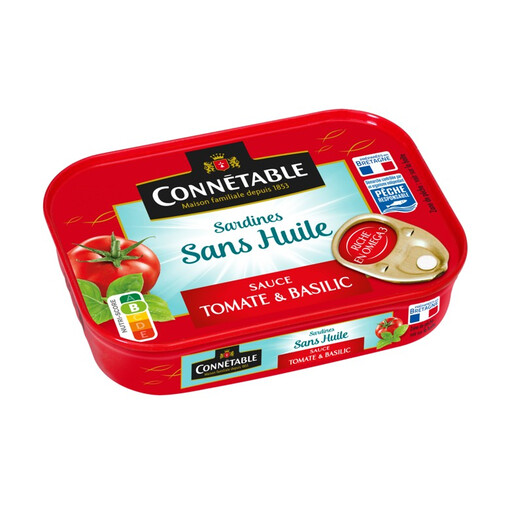 Image unavailable
CONNECTABLE Sardines with tomato and basil, 115 g
This recipe works well in a crêpe where you’re already looking for tomato sauce and herbs, rather than a base you can season freely.
The listed size is a 115 g tin. Check the drained weight on the label to estimate how much fish it contains.
View on Joybuy
 Image unavailable
Connétable Sardines in olive oil with Espelette pepper, 115 g
Choose this recipe only if Espelette pepper is the flavour you’re looking for in your crêpes.
The tin is listed as 115 g. Check the drained weight on the label before planning your portions.
View on Joybuy
 Image unavailable
Connétable Sardines in extra virgin olive oil, 135 g
This tin of sardines in olive oil could be a good option if you’re making several crêpes with the same seasoned filling.
The listed size is 135 g. If ease of serving or the quantity of fish matters most, check the label for information about bones and drained weight.
View on Joybuy
Frequently asked questions
Which tin should I choose to avoid removing bones during the evening?
Look for a product explicitly labelled “boneless” or “fillets”. Connétable says the central bone is removed from its boneless sardines in brine before they’re tinned; Auchan also offers boneless sardines in olive oil. Check the seasoning separately, as “boneless” doesn’t mean “in brine”.
Which weight should I use to plan the crêpe filling?
Use the drained net weight if it’s shown: it’s more useful than the weight including the covering liquid when estimating how much fish you have. The DGCCRF says this weight must be given for prepacked products presented in a covering liquid. For example, Carrefour lists a drained net weight of 95 g for its sardines in brine.
How should I store leftover sardines after opening?
Follow the instructions on the tin you’ve opened. For the sardines in brine and boneless sardines in olive oil featured here, Auchan recommends storing them between 0 and +4 °C after opening and eating them within 48 hours. Prepare the amount you need for serving, then follow the specific instructions for any leftovers.
What should I check if the date on a tin has passed?
First, check what kind of date is printed on the tin: a best-before date (DDM) is not the same as a use-by date (DLC). The French Ministry of the Economy explains that a DDM is indicative, while a DLC is a strict limit. Also check that the tin is intact and follow the manufacturer’s instructions; don’t assume that every date calls for the same decision.


