Anyone making homemade savoury biscuits
If you’re adding sardines to a savoury dough, a variety in spring water lets you choose the herbs and fat you add yourself. For a really smooth dough, check whether the sardines are boneless too.


To make savoury biscuits while keeping some tinned sardines for other recipes, choose a multipack that lets you control the seasoning. Opt for sardines in spring water, or in olive oil if that flavour suits your dough. Compare the number of tins, the usable quantity and whether the sardines are boneless. Save pre-seasoned varieties for recipes where you want their flavour to come through.
If you’re adding sardines to a savoury dough, a variety in spring water lets you choose the herbs and fat you add yourself. For a really smooth dough, check whether the sardines are boneless too.
Several small tins let you spread them across biscuits, toast and other savoury recipes. E.Leclerc, for example, lists a Pêche Océan multipack of 3 × 63 g in spring water. The weight of each tin matters just as much as the number of tins.
Compare the water or oil the sardines are packed in, the salt, any herbs and spices, and information about bones to find a tin that suits your recipe.
If you’re stocking up for several savoury recipes, start by choosing a product with ingredients that suit your cooking, then pick a tin size that matches the quantities you use.
| What to consider | What to check | Who is it for? |
|---|---|---|
| Versatility | Ingredient list and whether the sardines are in spring water or seasoned. | I want to season my biscuits myself and use the other tins in different savoury recipes; around 40% of consumers would put versatility first. |
| Multipack size | Number of tins, weight per tin and drained weight, if stated. | I’d rather choose how much to keep in stock, so I can cook several times without opening a large tin each time; around 30% of consumers would make pack size their priority. |
| Texture | Look for “skinless” and “boneless” on the label; don’t assume this just because the product says “fillets”. | A smooth dough matters more to me than buying a multipack, as I want to avoid having to remove bones; this would be the main concern for around 20% of consumers. |
| Flavour | Type of oil, salt and herbs or spices listed in the ingredients. | If I’m making biscuits with a particular flavour in mind, I choose a tin for its oil or seasoning; around 10% of consumers would prioritise this flavour profile. |
Lemon and basil, tomato or chilli give savoury dough a distinct flavour that might not suit your other recipes.
For more flexibility with seasoning, keep tins of sardines in spring water or plain oil in the cupboard, and save flavoured varieties for specific recipes.
A multipack of 3 × 63 g and one of 4 × 135 g don’t give you the same amount each time you open a tin. If you drain the sardines, the weight on the front of the tin doesn’t tell you how much you’ll actually add to the dough.
Work out how much you need for your recipes and check the drained weight on the packaging, if it’s listed.
Whole sardines may need extra preparation if you don’t want bones in your biscuits.
Look for an explicit “boneless” label if this is important to you, or plan to check and prepare the sardines before mixing them in.
Removing bones by hand adds to the preparation time.
The Ministry of Agriculture advises transferring leftover tinned food to a separate, sealed container and keeping it in the fridge.
Once you’ve taken out the amount you need for the dough, transfer the rest to a sealed container and follow the storage instructions for the tin you’ve bought.
Saupiquet’s range includes sardine fillets in spring water and oil, as well as several seasoned varieties.
Connétable offers a variety in extra virgin olive oil, with sardines, oil and salt listed as the ingredients.
E.Leclerc lists Pêche Océan sardines in spring water in a 3 × 63 g multipack, as well as other varieties in oil.
Auchan’s sardine range includes varieties in spring water and oil, as well as seasoned options.
Carrefour lists a Parmentier multipack of sardines in extra virgin olive oil, with 4 × 135 g tins.
These two tins of sardines in olive oil could work well in a savoury recipe. They’re sold individually, so if you’re looking to stock up on multipacks, check the pack size separately before you buy.
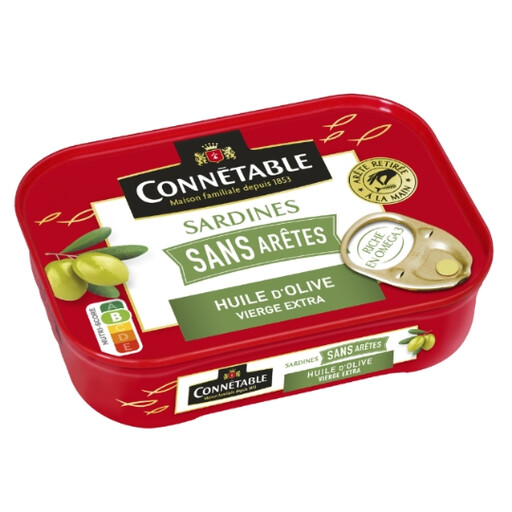 Image unavailable
Worth considering for savoury biscuits if your recipe calls for the flavour of olive oil. This is an individual tin; check the information about bones if you’re after a really smooth dough.
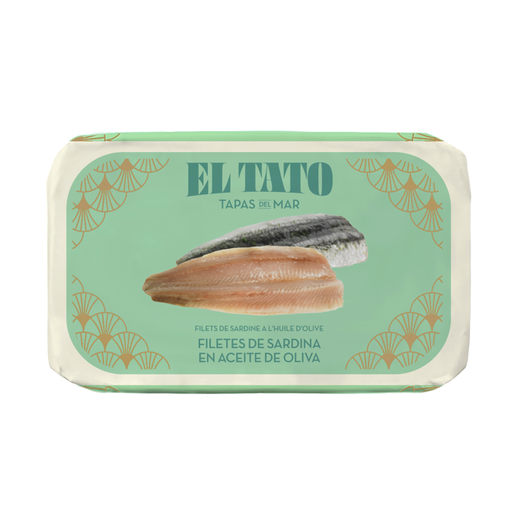 Image unavailable
Worth considering if you want to add sardine fillets to a savoury recipe. This is an individual tin; fillets aren’t necessarily boneless.
Yes, in savoury biscuits. A recipe from Cuisine Étudiant blends boneless sardines into the dough before baking. Adapt the preparation and cooking time to the recipe you’re following.
Drain them if you want to control how much liquid or oil goes into the dough. A Lidl Recettes recipe drains the sardines but saves the oil from the tin to use in the mixture.
Transfer the leftovers to a sealed container and keep them in the fridge, following the Ministry of Agriculture’s advice for leftover tinned food. Also follow the storage instructions and use-by time after opening shown on your product.