For a dinner you’re making just for yourself, a tin containing around 265 g drained weight is a good starting point if pulses make up a substantial part of the meal. A mini tin of 125 to 130 g is better for adding to a meal; a larger size means planning another meal and following the storage instructions once opened. Check the drained weight and the ingredients of the product you’re considering, especially if it’s a prepared recipe.
Who are these sizes suitable for?
Students keeping an eye on their spending
You want a tin you can use for dinner without buying more than you intend to eat. Products from Carrefour, E.Leclerc and ALDI include tins of around 250 to 265 g; check the drained weight to see how much you’ll actually get.
Students who want to get a meal ready quickly
You’d rather add ready-cooked pulses to a recipe than plan ahead to soak and cook dried pulses. Manger Bouger lists tinned and jarred pulses among the options for quick recipes.
Students who want to avoid leftovers
Choose the quantity based on how much of your meal the pulses will make up: a 125 to 130 g portion can round out a meal, while a tin containing 265 g drained weight gives you more. Carrefour and Auchan also stock multipacks of smaller tins that you can open one at a time.
What should you check before choosing?
For a dinner on your own, start with the meals you plan to make, then check the drained weight and the ingredients in the tin you’re considering.
| What to consider |
What to check |
Who it matters to |
| Keeping spending under control |
Decide whether you’ll use the contents for this dinner alone or for several meals you’ve already planned. |
When money’s tight, I want to use what I buy rather than add another tin to my shopping without a clear plan for it. Around 40% of consumers put managing their spending first. |
| Choosing the right quantity |
Compare the net drained weight; distinguish a 125 to 130 g mini tin from a tin containing 265 g drained weight or a larger size. |
If pulses are just one part of my meal, I’d rather open a small tin and not have anything left over. Getting the right quantity is a priority for around 30% of consumers. |
| Preparing food quickly and choosing a recipe |
Check the instructions, ingredients list and allergens shown on the specific tin. |
When I want to cook quickly, I look for a tin I can add straight to my meal, without finding out too late that the ingredients don’t suit me. Speed and ingredients come first for around 30% of consumers. |
Two mistakes to avoid
-
Opening a large tin for one dinner without planning what to do with the rest
A 530 g tin may leave you with some contents to store after your meal. Storage instructions vary by product, so you can’t assume them based on the type of pulse alone.
If you don’t have another use planned, look for a smaller size. Otherwise, plan your next meal and follow the tin’s instructions for storing it after opening.
-
Assuming a prepared recipe has the same ingredients as plain pulses
Seasonings can affect the ingredients list and the allergens you need to consider. For example, an Auchan tin of lentils cooked with goose fat lists milk as an ingredient.
Before choosing, check the ingredients list and allergen information for the exact product, rather than relying on the name of the pulse alone.
Brands and retailers to know
Carrefour / Carrefour Classic'
Carrefour stocks Carrefour Classic' lentils in a tin containing 265 g net drained weight, as well as multipacks of smaller tins.
- The 265 g drained size gives you a useful benchmark for putting together a meal for one.
- For a multipack, check the quantity in each tin instead of relying on the total weight alone.
E.Leclerc / Marque Repère / Notre Jardin / Eco+
E.Leclerc lists Notre Jardin lentils and Eco+ chickpeas in 265 g sizes.
- These products let you consider the type of pulse and the stated quantity separately.
- For Notre Jardin lentils, E.Leclerc recommends checking with your local store before looking for the product in person.
Auchan
Auchan stocks lentils in a 265 g tin, a pack of 3 × 130 g tins and a 530 g size, as well as plain and prepared recipes.
- The 130 g portions and larger tins suit different meal plans.
- Ingredients vary by recipe, so check the list on the tin you choose.
ALDI / All Seasons / Fleurs des Champs
The ALDI catalogue lists 265 g All Seasons chickpeas, 250 g Fleurs des Champs kidney beans and 530 g tins of prepared lentils.
- The 250 g and 265 g products give you two smaller sizes to consider for a meal on your own.
- The range may change over time, so check with your store for the product you’re looking for before making a trip.
A tin of kidney beans on Joybuy
These kidney beans can be used to put together a quick dinner for one. The net weight of 250 g is not the same as a drained weight of 250 g, so bear that in mind when comparing sizes.
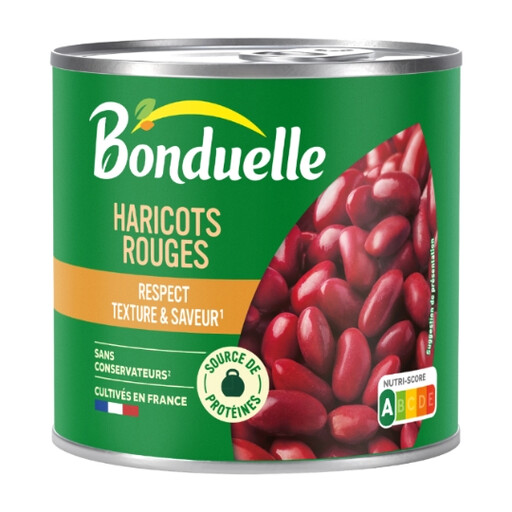 Image unavailable
Bonduelle steamed cooked kidney beans, 250 g
Worth considering if you want to add kidney beans quickly to a cold dish or a meal you’re reheating.
The tin states a net weight of 250 g. Check the drained weight if you want to compare the usable quantity with another tin.
Check the allergen information and storage instructions after opening on the tin’s label.
View on Joybuy
Frequently asked questions
What size tin should I choose for a meal on my own?
A tin containing around 265 g drained weight is a good starting point if pulses make up a substantial part of your meal. A 125 to 130 g portion is better for adding to a meal; if you choose a larger size, plan what you’ll do with the rest.
Do tinned pulses need to be cooked for a long time?
No. Tinned pulses are already cooked, so follow the instructions on the tin when adding them to a hot or cold dish. Manger Bouger lists tinned and jarred pulses among the options for preparing recipes quickly.
What should I do with the contents once the tin is open?
Follow the storage instructions for the product you’ve opened. As an example for this specific product, Auchan’s listing for D’Aucy prepared lentils in a 265 g tin says to transfer the contents to a suitable airtight container, refrigerate and eat within two days.
Is the name “kidney beans” enough to check for allergens?
No. Check the ingredients and allergen information on the specific tin. A prepared recipe may have different ingredients from plain tinned pulses, and the label will help you identify anything you need to look out for.


