For those who like to put their own meal together
If you’ve already planned to bring bread, salad or crudités, plain fillets let you choose how to season them. Oil-packed recipes can also work in a salad if you’d like to use the oil.


For a picnic, choose plain fillets if you want to make your own salad or sandwich; a ready-seasoned recipe is a good choice if you’d rather serve the tin with minimal preparation. Check the quantity, ingredients, allergens and date for the product you choose. Once opened, any leftovers can’t be stored in the same way as an unopened tin.
If you’ve already planned to bring bread, salad or crudités, plain fillets let you choose how to season them. Oil-packed recipes can also work in a salad if you’d like to use the oil.
A mustard, tomato, escabeche or white wine recipe means you don’t need to bring a separate sauce for sandwiches or a cold salad. Check the ingredients, especially if you’ll be sharing the meal.
Weight, fish content, salt, allergens and the date can help you choose between two tins intended for the same meal. For prepacked foods sold in France, the DGCCRF notes in particular that allergens must be highlighted on the label.
First decide whether you’ll bring your own seasoning or want the tin to be ready to serve. Then compare the labels of recipes that suit your choice.
| Criterion | What to check | Who is it for? |
|---|---|---|
| A cold meal you can put together | Choose a plain or oil-packed recipe to suit the sides you’re bringing; check the drained weight and the type of tin opening. | If I’ve already packed salad or bread, I prefer to choose the seasoning myself. Around 31 % of consumers would prioritise this flexibility. |
| A ready-to-serve recipe | Read the ingredients of a mustard, tomato, escabeche or white wine recipe, and check the allergens listed. | If I’m serving sandwiches without bringing a separate sauce, I look for something that’s already seasoned. This would be the main consideration for around 25 % of consumers. |
| Ingredients and allergens | Compare the ingredients, highlighted allergens and nutritional values, particularly salt, using the same basis as stated on the labels. | If several people are sharing the tin, I want to check what’s in it before adding it to the menu. Around 25 % of consumers would put this check first. |
| Size and leftovers | Compare the net weight and, where stated, the drained weight with the number of people you’re serving. | To avoid a tin that’s too small or leftovers that are difficult to keep chilled, I choose the quantity to suit the number of people. Around 19 % of consumers would put this criterion first. |
Fish is an allergen; a recipe may also contain mustard or, in some white wine preparations, sulphites.
Before sharing a meal, read the ingredients and check the allergens highlighted on the tin you plan to serve.
Storage instructions for an unopened tin don’t apply to leftovers. Guidance after opening varies by product.
Open the tin when you’re ready to serve. For any leftovers, follow the packaging instructions, transfer them to a suitable container and keep them chilled.
Information given for one recipe doesn’t necessarily apply to other products from the same brand.
If the species or fishing area matters to you, check the details on the specific tin before you buy.
The range includes plain fillets, fillets in extra virgin olive oil and seasoned recipes.
Saupiquet offers plain fillets as well as grilled fillets in extra virgin olive oil.
Carrefour’s range includes plain fillets and several seasoned recipes.
These E.Leclerc brands offer plain and seasoned mackerel recipes.
The range includes mackerel recipes with tomato, mustard, lemon and sauce.
These fillets in olive oil are a good option if you want to add a tin to a cold meal. If you’d rather add your own seasoning or prefer a recipe in sauce, compare the ingredients of these other preparations instead.
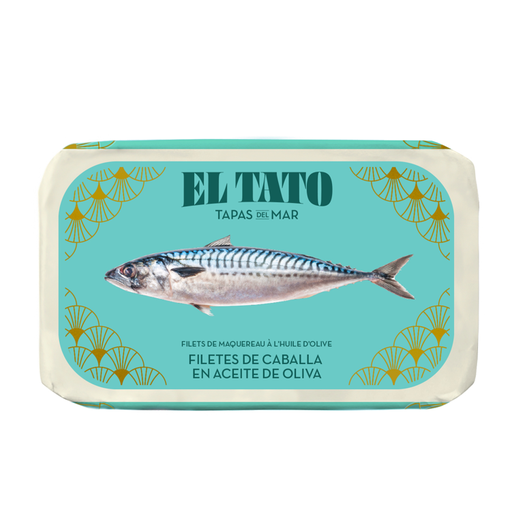 Image unavailable
For a cold meal with no cooking required, serve these fillets in olive oil with the sides of your choice.
Check the tin to see what the 115/80g figures refer to and how much fish they represent.
Before setting off, check the date and storage instructions. Once opened, keep the product chilled as directed on the packaging.
Yes, as long as the tin stays sealed until you’re ready to serve and you follow its date and storage instructions. Once opened, follow the product guidance for leftovers and make sure they stay chilled.
Plain fillets give you more freedom to add your own seasoning, while fillets in oil can be added to a salad. If you want to serve them without a separate sauce, look for recipes that are already seasoned, then check their ingredients.
Check for fish and any other allergens in the recipe, such as mustard in some sauces or sulphites in some white wine preparations. In France, the DGCCRF notes that allergens must be highlighted on the labels of prepacked foods.
No. When choosing between a plain, oil-packed or sauced recipe, also check the ingredients, allergens, quantity and nutritional values using the same basis, such as per 100 g where the labels allow.