For several desserts or a recipe
If you’re planning to serve several people or cook with the fruit, focus on the tin’s drained weight and how much you’ll use once it’s opened.


If you’re making several desserts or following a recipe, choose a pack with a drained weight that matches the amount of fruit you need. If you’re serving the fruit separately, individual pots or small tins mean you won’t have to open a large tin. Whether you’re choosing fruit in light syrup, juice or with no added sugar, check the product description, ingredients and ‘of which sugars’ line: they don’t all describe the same recipe.
If you’re planning to serve several people or cook with the fruit, focus on the tin’s drained weight and how much you’ll use once it’s opened.
If you want to tell the difference between fruit in syrup, fruit in juice and products labelled ‘no added sugar’, check the ingredients and nutritional information for the product you choose.
If you’d rather open one portion at a time, compare the weight of each pot or small tin and the number of units in the pack.
For fruit to keep in the cupboard, choose the recipe and quantity you want, then check whether you’ll be able to use the contents once opened.
| What to consider | What to check | Who is it for? |
|---|---|---|
| Recipe and sugars | Compare the product description, ingredients and ‘of which sugars’ figure per 100 g. | I want to know whether sugar has been added, without confusing that with the amount of sugars shown on the label. This would be the priority for around 40% of shoppers concerned. |
| Portions and leftovers | Check the number of containers and the amount in each one; plan how you’ll store any opened contents. | For an individual dessert, I’d rather open just one portion than have to deal with the leftovers from a large tin. Around 30% of shoppers would prioritise portion size. |
| Amount of fruit | Compare the drained weight, excluding syrup or juice, of the recipes that suit you. | If I’m making a dessert for several people, I want to know how much fruit I’ll be able to serve. This would be the top priority for around 30% of shoppers. |
Fruit and juice can contain naturally occurring sugars. For example, Auchan’s listing for St Mamet peach, pear and pineapple fruit cocktail with no added sugar gives 12 g of sugars per 100 g; this figure applies to that particular product.
Read the claim on the front of the pack alongside the ingredients list and the ‘of which sugars’ line in the nutritional information.
The total weight includes both the fruit and the liquid it’s packed in. So two tins with a similar total weight won’t necessarily contain the same amount of fruit to serve.
When preparing a recipe, compare the drained weight of products with ingredients that suit you.
A large tin is handy for a dessert to share, but you’ll need to store any leftovers properly and use them soon.
Choose a size to suit the dessert you have planned. If you’d rather open separate portions, consider individual pots or multipacks of small tins.
The DGCCRF says that dents, rust or a bulging tin may indicate that the product has deteriorated, even if the date seems fine.
Inspect the tin when you collect your order and before opening it. If you’re unsure whether it’s intact, don’t eat the contents.
Carrefour’s online grocery range includes large tins and some individual pots under this brand.
The ranges listed by Auchan include fruit in syrup, fruit cocktails and options with no added sugar.
This Marque Repère range listed by E.Leclerc includes fruit in light syrup in tins and individual pots.
E.Leclerc’s range includes ECO+ tins of fruit cocktail and fruit in light syrup.
This selection includes tinned fruit in syrup and a multipack of small containers. To choose the right option for you, distinguish the stated drained weight from the total weight, and check the recipe for each product.
 Image unavailable
For a dessert to share or a recipe that calls for pear halves.
The 455 g stated is the drained weight. Check the storage instructions on the product you receive before planning how to use any leftovers.
 Image unavailable
For a dessert or recipe that needs a smaller amount of peach halves.
The product title gives a drained weight of 230 g. Compare this with the amount you need for your recipe.
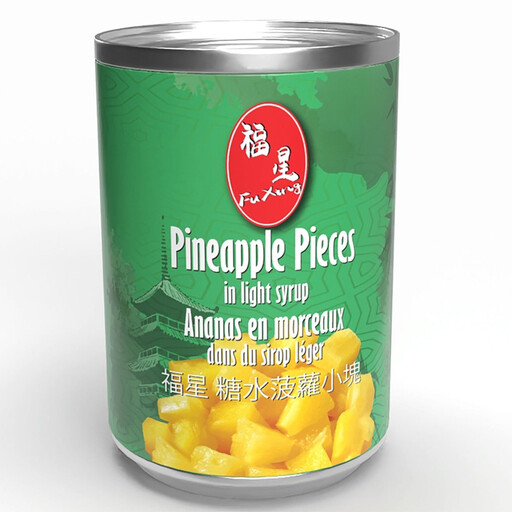 Image unavailable
For serving pineapple pieces or adding them to a dessert.
The title gives both the total weight of 565 g and the drained weight of 260 g. Use the latter to work out how much fruit you’ll get.
 Image unavailable
A different cupboard staple, with mango slices to add variety to your fruit selection.
The 425 g is the pack size given in the title. If the amount of fruit excluding syrup is important to you, check the drained weight on the label.
 Image unavailable
For opening small tins of fruit cocktail one at a time.
The multipack contains three 125 g tins. To compare the amount of fruit excluding syrup, check the drained weight on the packaging.
No: fruit and juice can contain naturally occurring sugars. Auchan’s listing for St Mamet peach, pear and pineapple fruit cocktail with no added sugar gives 12 g of sugars per 100 g. Check the nutritional information for the product you choose.
Check the drained weight if you want to know how much fruit you’ll get without the liquid it’s packed in. The total weight also includes the syrup or juice.
Going past the minimum durability date, or DDM, doesn’t by itself make a product unsafe to eat. However, Anses explains that its taste or nutritional quality may decline. Check the condition of the tin before opening it, too.
A bulging or dented tin, or one with signs of rust, should be treated with caution: according to the DGCCRF, these signs may indicate that the contents have deteriorated. If you’re unsure whether the tin is intact, don’t eat its contents.
Follow the storage instructions on the product and put any opened contents in the fridge. Manger Bouger recommends covering opened food and eating it promptly, so bear this in mind before choosing a large tin.