Student sharing a flat
If you make desserts or fruit salads together, a large tin could be a good choice, provided you have a plan for using the contents after opening.


For your first student cupboard, choose a large tin of fruit in syrup if you plan to share it or use it in several desserts soon after opening. If you live alone and want to avoid having an opened tin left over, opt for small tins or fruit pots. In either case, compare the drained weight, ingredients and storage instructions for each product.
If you make desserts or fruit salads together, a large tin could be a good choice, provided you have a plan for using the contents after opening.
Fruit pots and small tins let you open a smaller amount at a time when you’re only planning to make a single portion of dessert.
If the packing liquid or the sugars listed on the label matter to you, compare the ingredients and nutritional information for the products you’re considering.
First decide how much you’ll use after opening, then check the ingredients and whether you have room to store any leftovers.
| What to consider | What to check | Who it matters to |
|---|---|---|
| How much you’ll use | Tin size and net drained weight. | If I’m making several desserts, I want enough fruit without opening more tins than I need. Around 33% of consumers say the amount they can use is their top priority. |
| Avoiding leftovers | Size of each portion and number of containers in the pack. | If I live alone, I’d rather open a small amount than leave a large tin open. Avoiding leftovers is the top priority for around 27% of consumers. |
| Ingredients | Ingredients list and the ‘of which sugars’ figure per 100 g. | I want to tell products in syrup apart from those in juice by checking the label, rather than relying on the product name. Ingredients come first for around 20% of consumers. |
| Storage | Instructions for after opening and space available in the fridge. | If I have little fridge space, I need to be able to store anything I don’t use straight away safely. This is a top priority for around 20% of consumers. |
An 800 to 850 g tin can be used for several desserts, but once opened, it can’t be kept in the cupboard. Storage instructions vary by product.
Before buying, think about how you’ll use the contents and read the instructions on the tin. If in doubt, consider a smaller size.
Some of the fruit could go unused if the opened tin is left in the fridge for too long.
A claim on the front of the pack isn’t a substitute for nutritional information when comparing two products.
Check the ingredients and the ‘of which sugars’ figure per 100 g for the products you’re thinking of buying.
This range includes large tins of fruit in syrup, as well as smaller sizes and fruit pots.
E.Leclerc’s Marque Repère range includes fruit cocktails, peaches, pears and fruit pots.
This E.Leclerc range includes medium-sized tins of fruit in syrup.
The range featured includes large tins, medium-sized packs and fruit pots.
The products featured include large tins and multipacks of smaller portions of fruit in syrup.
These products offer several ways to stock your first student cupboard: a large tin, multipacks of small tins, a bulk pack and a single tin of pear halves. Choose according to how much you plan to open and use.
 Image unavailable
A large tin to consider if you’re planning several desserts or a meal to share.
After opening, the product information for this fruit cocktail says to keep it in the fridge for 3 to 4 days in a suitable container.
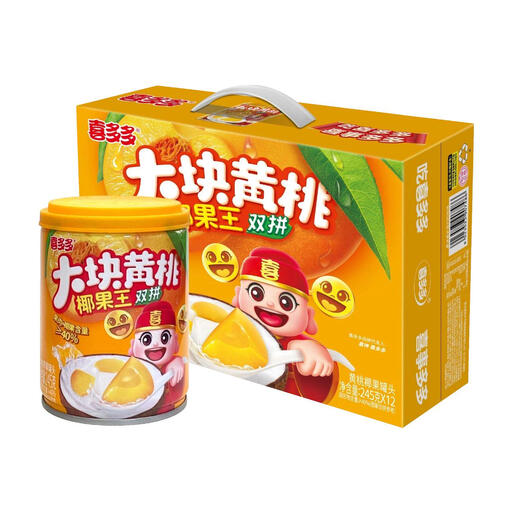 Image unavailable
Separate tins let you choose how many to open, as long as you have room to store the multipack.
The pack contains 12 tins of 245 g each.
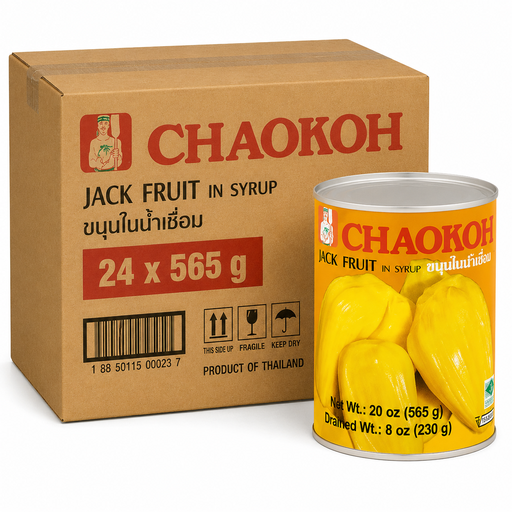 Image unavailable
This multipack is better suited to frequent or shared use than to the occasional dessert.
It contains 24 tins of 565 g each, so check you have enough room to store them.
 Image unavailable
Three small tins to consider if you’d rather open your fruit cocktail a little at a time.
The pack contains three 125 g tins. Follow the storage instructions for each tin after opening.
 Image unavailable
This single tin is a good choice if you’ve planned to use pear halves, perhaps in a dessert, rather than stock up on a multipack.
The 455 g is the drained weight, not the total weight of the tin.
Yes, if you plan to use the contents in line with the storage instructions after opening. Otherwise, small tins or fruit pots let you open a smaller amount at a time.
Follow the instructions for the product you’ve bought, and don’t leave an opened tin in the cupboard. Auchan’s product information for its 820 g Williams pears in light syrup says to keep them in the liquid in the fridge and eat them promptly. The information for St Mamet’s 850 g fruit cocktail says to keep it in the fridge for 3 to 4 days in a suitable container.
A tin doesn’t automatically become unsafe to eat after its best-before date. The DGCCRF states that the packaging must be intact and that the product may have lost some of its flavour or quality. Also check the instructions on the tin.
The drained weight helps you distinguish the amount of fruit from the total weight, which includes the packing liquid. The DGCCRF states that this weight must appear on the label of prepacked food presented in a packing liquid.