Hotels mindful of salt content
For comparing products by the ‘salt’ figure per 100 g, without assuming that a low figure means a reduced-salt claim can be made. The DGCCRF specifies that nutrition declarations are given per 100 g or 100 ml.


For a hotel breakfast buffet, first compare the salt content per 100 g for the exact product, then check the sugars, drained net weight and pack size. A low salt figure alone is not enough to justify the claim ‘reduced salt’: choose a large tin if your buffet can use it within the stated time after opening, or individual pots if portioned service is your priority.
For comparing products by the ‘salt’ figure per 100 g, without assuming that a low figure means a reduced-salt claim can be made. The DGCCRF specifies that nutrition declarations are given per 100 g or 100 ml.
For serving fruit from a large tin, provided you have a portioning plan and follow the product’s storage instructions after opening.
For offering individual pots and consistent portion sizes. However, ‘no added sugars’ does not replace checking the nutrition information.
Start by checking the salt content of the product you’re considering, then choose a pack size that works for your service and storage after opening. When comparing recipes, the DGCCRF reminds consumers that nutrition declarations are given per 100 g or 100 ml.
| Criterion | What to check | Who it matters to |
|---|---|---|
| Salt and claims | The ‘salt’ figure per 100 g and, if required, the exact reduced-salt claim on the product. | If my specification focuses on salt, I need to compare products without confusing the declared figure with a regulated claim. Around 50% of consumers would make this their priority. |
| Pack size and storage | The drained net weight and storage instructions after opening for each tin. | If the buffet needs to be easy to replenish, I choose a pack size the team can serve and use within the stated time. For nearly 30% of consumers, service logistics would take priority over other criteria. |
| Sugars and ingredients | The ingredients list and the ‘of which sugars’ figure per 100 g. | If I’m comparing different recipes for the buffet, I want to distinguish added sugar from naturally occurring sugars. Around 20% of consumers would prioritise the sugar content and the amount of fruit served. |
Auchan’s exotic fruit mix in light syrup lists sugar among its ingredients and contains 14 g of sugars per 100 g, according to its product information. The recipe name also tells you nothing about its salt content.
Check the ingredients and the ‘of which sugars’ and ‘salt’ figures per 100 g for the product you choose.
A declared salt content alone does not prove that a product contains less salt than a comparable one. Nutrition claims are subject to a regulatory framework published on EUR-Lex.
If your specification requires the claim ‘reduced salt’, check that the exact product carries the claim and meets the conditions for using it. Otherwise, state only the declared salt content.
Storage times vary: Auchan’s product information for the exotic fruit mix says to consume it within two days of opening, refrigerated in an airtight container, while Joybuy’s product information for the ST MAMET 850 g fruit cocktail gives three to four days in the fridge.
Choose a tin size that suits the buffet’s turnover and follow the instructions for the product you’re actually serving.
The range includes an 850 g tin of fruit cocktail and individual portions labelled no added sugars, according to product information from Joybuy and Carrefour.
Carrefour offers, among other products, a pack of four 70 g pots with no added sugars, designed for individual portions.
E.Leclerc offers fruit in light syrup in several pack sizes, including a 500 g cocktail and individual pots.
Auchan offers, among other products, a 340 g tin of exotic fruit mix in light syrup.
These tins give you the option of serving a fruit cocktail or a single fruit at your buffet. Compare the nutrition label and instructions for storage after opening before deciding how much to serve.
 Image unavailable
This large tin of fruit cocktail suits a buffet that can use it up after opening. Joybuy’s product information gives a salt content of less than 0.01 g per 100 g and says to refrigerate for three to four days after opening; check the drained net weight to plan your portions.
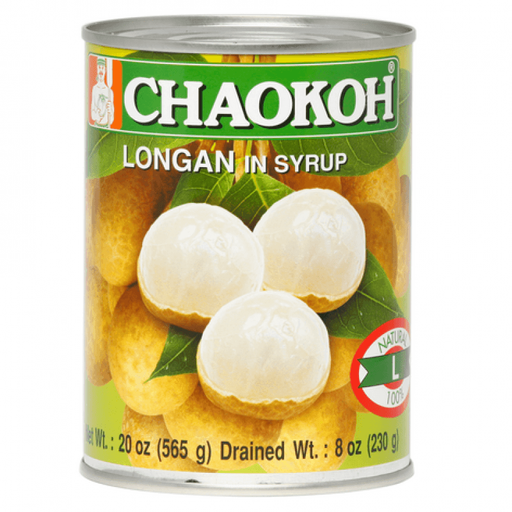 Image unavailable
If you’d like to serve longans instead of a fruit cocktail, this tin contains 565 g. Before planning how quickly to use it at the buffet, check the packaging for the salt content, drained net weight and storage instructions after opening.
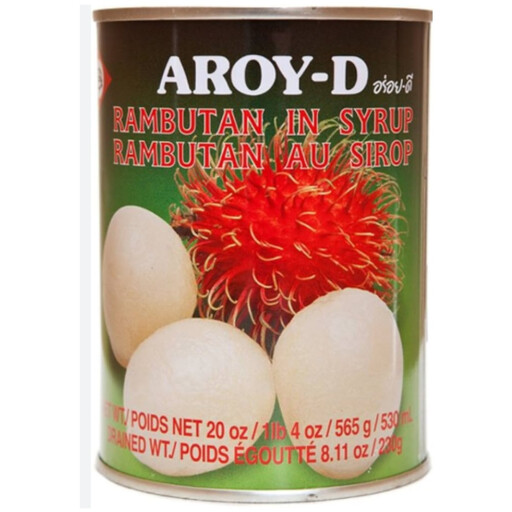 Image unavailable
This 565 g tin lets you offer rambutans in syrup rather than a fruit mix. To plan your service, check the salt content, drained net weight, allergen information and storage instructions after opening on the product you receive.
No. The salt figure alone does not prove a reduction compared with a comparable product. Nutrition claims are governed by legislation published on EUR-Lex; check the claim and the conditions for using it for the exact product before including it in a specification or communicating it to customers.
You need to check the declared figure for each product. The product information for Auchan’s 340 g exotic fruit mix and the ST MAMET 850 g cocktail both gives a salt content of less than 0.01 g per 100 g; these figures do not apply to other recipes or pack sizes.
Follow the instructions for the tin you’re using. Auchan’s product information for the exotic fruit mix says to consume it within two days, refrigerated in an airtight container; Joybuy’s product information for the ST MAMET 850 g cocktail gives three to four days in the fridge after opening.
Keep the allergen information for each product you serve and check it before service; don’t assume allergens are absent just from the appearance of the fruit. The French decree of 17 April 2015, published on Légifrance, covers consumer information about allergens in non-prepacked foods.
No. Carrefour’s product information for the ST MAMET cocktail with no added sugars states that it contains naturally occurring sugars. Check the ‘of which sugars’ figure per 100 g for the product you choose, as well as its ingredients list.