Households that cook with chickpeas often
If you regularly make soups, curries or stews in winter, several tins let you open just one portion for each meal. Check that the total quantity suits how often you cook.


When stocking up for several winter meals, choose a format based on how much you’ll use each time you open a tin. A multipack lets you spread your supplies across several tins, while small tins are better suited to modest portions. With a large tin, you’ll need to plan how to use the leftovers soon after opening. Compare the drained net weight, then check the ingredients, salt content, allergens and storage instructions for the specific product you choose.
If you regularly make soups, curries or stews in winter, several tins let you open just one portion for each meal. Check that the total quantity suits how often you cook.
If you usually need one or two portions at a time, a multipack of small tins can be easier to portion out than a large tin, which needs to be stored after opening.
If declared origin, ingredients, salt content or allergen information matter to you, compare the exact products: these details can vary between formats from the same brand.
When stocking up on chickpeas for winter, first work out how much you’ll use each time you open a tin. Then compare the quantities in multipacks and the information on each label.
| What matters | What to check | Who is it for? |
|---|---|---|
| Supplies for several meals | Compare the number of tins and the total drained net weight, where stated. | I want to open one tin for each winter meal without using up my whole supply at once; around 37% of consumers prioritise having this level of flexibility in their cupboard. |
| Quick preparation | Check that the chickpeas are already cooked and read the instructions for use. | When I decide on dinner at the last minute, I’d rather skip soaking and the long cooking time for dried chickpeas; speed is the top priority for around 27% of consumers. |
| Origin and ingredients | Read the declared origin and ingredients list for the exact format you’re buying. | I want to know where the chickpeas are said to come from and what’s in each tin before buying several; around 18% of consumers put this information first. |
| Salt, allergens and leftovers | Check the salt per 100 g, allergen information and storage instructions after opening. | If a large tin leaves me with leftovers, I need to be able to store them as directed on the label, while taking account of any dietary information that matters to me; this is the main priority for around 18% of consumers. |
Two multipacks of three tins don’t necessarily contain the same quantity. Auchan’s product listing for the Bonduelle 3 × 265 g multipack gives a total drained weight of 795 g, while the Notre Jardin product listed by E.Leclerc is labelled 3 × 130 g.
Compare quantities on a like-for-like basis, especially the drained net weight if it’s shown for both products, then choose the number of times you want to open a tin.
For its tin of chickpeas with a drained weight of 530 g, Auchan says to transfer the contents to a suitable airtight container after opening, refrigerate and use within two days.
If you use only a small amount of chickpeas per meal, choose smaller tins or plan to make recipes close together, following the instructions on the tin you buy.
Any leftovers not used within the stated time may go to waste.
Monoprix and Auchan’s product listings give salt levels and allergen cross-contamination warnings specific to their products. Auchan also notes that some information may vary depending on the online grocery service or purchase date.
Check the ingredients, nutritional information and allergen warnings on the packaging you receive, especially if any of the information is relevant to you.
In 2026, RappelConso published recalls for specific batches of chickpeas due to sealing or sterilisation defects, advising consumers not to eat the affected products.
If a tin in your cupboard is subject to a notice, compare its product reference, batch number and best-before date with the details published by RappelConso. A recall does not automatically apply to all tins of chickpeas.
These products offer a useful comparison of formats and labels; the details for one tin don’t necessarily apply to other products from the same brand.
A three-tin multipack for spreading meals across several openings.
A multipack of small tins to consider for modest portions.
A large tin with a drained weight of 530 g for a meal that needs more chickpeas.
An individual tin and a three-tin multipack make it easy to compare different pack sizes.
A small individual tin to compare with multipacks, depending on how much you need per meal.
If your meal calls for a large tin of chickpeas, you can compare this 820 gr format with the multipacks mentioned above. Check the drained weight and number of tins before choosing it to stock up.
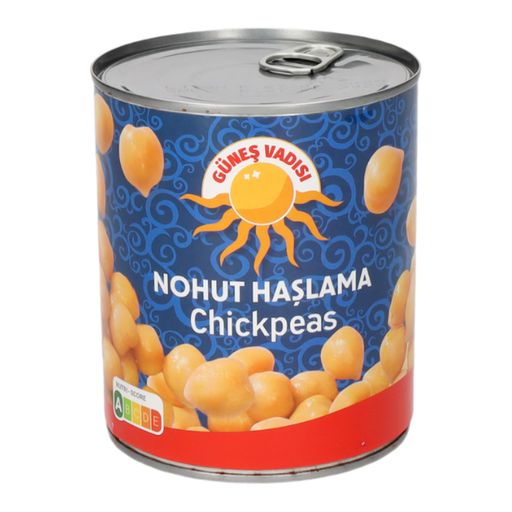 Image unavailable
For a large winter dish, compare this 820 gr format with the amount you expect to use when you open it. If you’re looking for several tins, check the pack size. Also check the drained weight, allergen information, including lupin, and storage instructions after opening.
Yes, provided they’re already cooked and ready to use. The Bonduelle multipack listed by Auchan says to drain the chickpeas and serve them; you can then add them to a soup, curry or stew, depending on the recipe.
Follow the instructions on the tin you buy. For its product with a drained weight of 530 g, Auchan says to transfer the contents to a suitable airtight container, refrigerate and use within two days. The French government advises following the manufacturer’s temperature and storage-time instructions after opening.
No, check the origin for the exact product. At E.Leclerc, the Notre Jardin 3 × 130 g multipack states that the chickpeas are of French origin, while the listing for the 530 g Notre Jardin tin gives several possible origins, including France, the United States and Mexico.
Compare the brand, product reference, batch number and best-before date on your tin with the notice published by RappelConso, then follow the instructions for the affected batch. French recalls of chickpeas published in 2026 due to sealing or sterilisation defects advised consumers not to eat the products identified.