
Livraison le jour même ou le lendemain

Qualité garantie

Débloquez vos offres de bienvenue: Livraison GRATUITE | Jusqu'à -80 % | 30 jours d'essai gratuits à JoyPlus
Téléchargez l'application
For a sim racing enthusiast, immersion is everything. From the base's force feedback to the feel of the wheel in your hands, every detail matters. Choosing a new wheel, like a Thrustmaster GT add-on wheel, is therefore a crucial step in taking realism to the next level. But be warned: the market is flooded with marketing promises that too often lead to disappointment.
Our mission? To help you see clearly. We've broken down the most common pitfalls to guide you toward an informed choice, far from the marketing hype.
The Compatibility Mirage: You've fallen for a wheel with a stunning design, but once unboxed, you can't attach it to your base. Worse, it's not even recognized. The culprit is often an outdated attachment system, incompatible with modern Direct Drive bases. A next-generation quick release isn't a luxury; it's a necessity to ensure a flawless connection and perfect data transmission.
Material Disappointment: In photos, the wheel looks sturdy. In use, it's a different story: the plastic creaks, and the paddle shifters feel painfully unresponsive. A good wheel must be built with rigid materials that don't flex under the pressure of force feedback. Magnetic paddles made of metal, for example, offer a crisp click and rock-solid durability, a far cry from low-end spring-based mechanisms.
To turn your simulator into a true racing machine, certain technical points are non-negotiable. Here's what to scrutinize.
The quick release system is the critical link between your wheel and its base. Modern, powerful bases, like those in the T818 ecosystem, demand a system capable of handling extreme stress without any play.
You must opt for a next-generation quick release. This standard ensures native compatibility with new Thrustmaster bases and guarantees perfect force feedback transmission. An old system or a simple adapter could introduce slight play, instantly degrading your driving feel and the precision of your racing lines.
A Thrustmaster wheel accessory built for GT racing must be designed for endurance. The rigidity of its structure is paramount. A faceplate made of metal or high-density composite is an excellent indicator. It prevents any flex and ensures the motor's energy is delivered directly to your hands without loss.
The grips must offer a flawless hold, even during long sessions. Prioritize wear-resistant materials. Finally, take a look at the controls: well-positioned buttons, rotary knobs, and a D-pad are essential for making mid-race adjustments without ever taking your eyes off the track.
Be aware that the compatibility of an add-on wheel with your console or PC depends not on the wheel itself, but on the base it's mounted to. For example, to use a PS5-compatible wheel, your Thrustmaster base (T818, T-GT, etc.) must also be compatible with the PlayStation 5. The wheel only transmits commands; it's the base that communicates with the gaming platform. Therefore, always remember to check the compatibility of your entire ecosystem.
Rather than an endless list, we've selected THE model that checks all the boxes for demanding drivers already equipped with a recent Thrustmaster ecosystem.
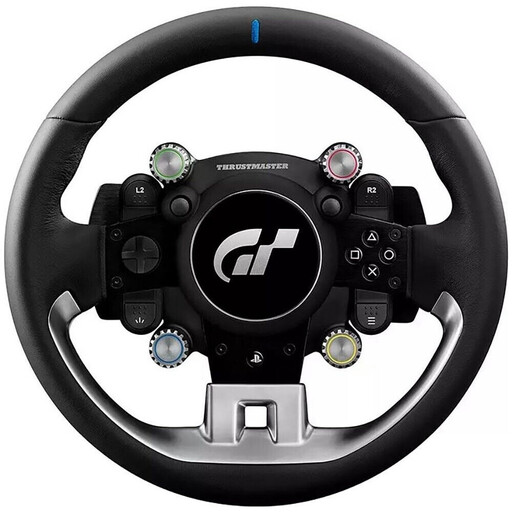
Why it's the right choice: This wheel is built for drivers who clock long hours in GT and endurance simulations. Its standard diameter, versatile shape, and comprehensive controls make it the perfect ally for owners of a Thrustmaster Direct Drive base seeking maximum immersion, without compromise.
It incorporates the next-generation Quick Release system, eliminating any risk of incompatibility with recent bases. Its rigid construction and metal magnetic paddles eliminate the flimsy feel typical of entry-level products.
Optimized force feedback transmission thanks to its lightweight yet rigid design. Ultra-comprehensive controls (buttons, rotary encoders, D-pad) for on-the-fly adjustments.
We have curated a complete selection of products that meet our demanding selection criteria.
This wheel is designed specifically for the ecosystem using the next-generation quick release (T818 bases, etc.). While third-party adapters may exist to mount it on older bases, this solution is strongly discouraged. The adapter is likely to compromise the rigidity of the setup and the fidelity of the force feedback, negating many of the wheel's advantages.
Absolutely. Magnetic paddles provide a much crisper, more precise, and more satisfying shifting sensation than classic spring-based systems. The distinct, firm "click" confirms every gear change, improving consistency and confidence on the track. Their far more durable design makes them an excellent long-term investment for dedicated drivers.
No, the Quick Release system is specifically designed for fast, tool-free wheel changes. Simply follow the manual's procedure to attach or detach the wheel from the base in seconds. Just make sure the mechanism is fully locked before powering on the base—it's a matter of safety and performance.