Don’t choose a thick waffle for an older person’s afternoon tea based on its thickness alone. Start by considering the texture they can chew and swallow, then look at the portion size and ingredients. A waffle described as soft may be suitable if it is well tolerated, but that description alone cannot tell you whether it is appropriate for someone who has difficulty chewing or swallowing.
Who are these options for?
Someone who has no difficulty chewing
If they want a ready-to-eat snack, they can compare waffles described as soft and choose a portion to suit their appetite. The word ‘soft’ describes the product, but doesn’t guarantee that its texture will suit everyone.
Someone preparing an afternoon snack for a loved one
Difficulty chewing or swallowing, or a reduced food intake, changes what matters most: the waffle’s format is no longer enough to guide your choice. The French National Authority for Health identifies chewing and swallowing difficulties as risk factors for older people.
Someone looking to serve practical portions
For a snack to take out or prepare easily, the number of waffles and their packaging matter. Auchan’s listing for Lotus waffles filled with brown sugar syrup specifies packs of two; the amount served should still be adjusted to the person’s appetite.
What should you look for in store?
When choosing a waffle for an older person’s afternoon snack, first check which textures they can tolerate, then compare the label and serving format. ‘Thick’, ‘thin’ and ‘soft’ don’t answer the same question on their own.
| What matters |
What to check |
Who is it for? |
| Texture |
Check whether the waffle is described as soft, thin, filled or suitable for toasting, then consider the person’s ability to chew and swallow. |
If certain foods are becoming difficult to chew, thickness alone doesn’t tell me which texture they can tolerate. Around 40% of consumers say texture is their top priority. |
| Ingredients |
Compare the nutritional information per 100 g and per portion, as well as the ingredients list and allergens for the product you choose. |
To plan the afternoon snack as part of the day’s diet, I want to know what’s in the food I’m serving. This is the priority for around 40% of consumers. |
| Portion and serving |
Check the number of waffles, their weight and the packaging, particularly if they are divided into individual packets. |
When someone’s appetite varies or the snack needs to be taken out, I prefer to be able to choose how much to serve easily. Around 20% of consumers prioritise this practical aspect. |
Mistakes to avoid
-
Assuming ‘thick’ means ‘easy to eat’
Thickness tells you nothing about how firm a waffle will be after cooking, or how a filling might affect chewing. The French National Authority for Health identifies chewing and swallowing difficulties as risk factors for older people.
If the person struggles to chew or swallow, or is at risk of choking, don’t choose a waffle based on its format alone: ask a healthcare professional for advice.
-
Relying on waffles to make up for eating less at mealtimes
A sweet pastry on its own cannot make up for a reduced food intake. France’s national health insurance service notes that an insufficient intake of energy, protein and nutrients can lead to weight loss.
Serve a portion that suits the person’s appetite. If they are eating less or losing weight, speak to a doctor rather than simply giving them more waffles.
-
Assuming a brand guarantees allergen information
Ingredients vary from one waffle recipe to another. In France, the Directorate-General for Competition Policy, Consumer Affairs and Fraud Control says that allergenic ingredients must be highlighted on the labels of prepacked foods.
Check the ingredients list on the packet you buy, even if you already know the brand.
Brands to consider
These examples show how recipes, described textures and packaging can vary; no brand can guarantee that a waffle will suit every older person.
AUCHAN TERROIR
Auchan describes its traditional all-butter waffles as round and soft. They come in a 320 g pack.
- Auchan’s listing gives 32 g of sugars and 25 g of fat per 100 g, figures to compare with the portion served.
- The description ‘soft’ doesn’t tell you whether the texture will suit someone who has difficulty chewing or swallowing.
La Dunkerquoise
Auchan describes its waffles filled with brown sugar syrup as soft.
- The listing helps you identify a filled waffle for someone who is looking for this type and has no difficulty chewing.
- Auchan lists 39.9 g of sugars per 100 g for this product; check the ingredients on the packet before serving it too.
Lotus
Auchan describes these thin Northern French waffles as filled with brown sugar syrup and packed in pairs.
- Packs of two can make the snack easier to prepare or take out.
- Auchan lists 36 g of sugars per 100 g. A thin waffle isn’t necessarily suitable for someone with chewing or swallowing difficulties.
A toaster waffle on Joybuy
This plain toaster waffle is an option when you want to choose the amount to serve one waffle at a time. If the person prefers a soft texture, check the result after heating before serving.
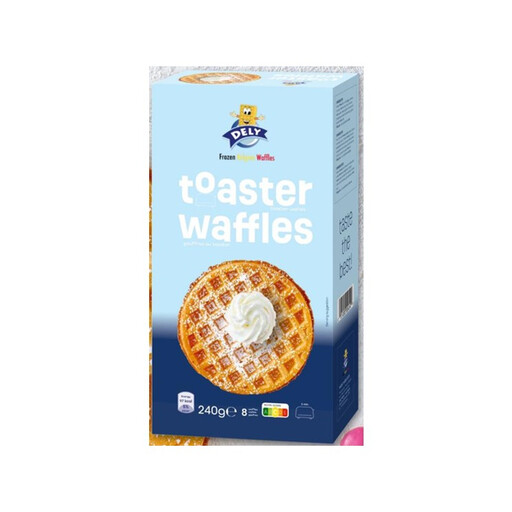 Image unavailable
DELY Toaster Waffles Plain, 8 waffles, 240 g
Worth considering if you want to choose how many waffles to serve as an afternoon snack: the pack contains 8 waffles weighing 240 g in total. They may become slightly crisp after heating, so check that the texture suits the person and read the allergen information on the packaging. The format alone doesn’t tell you whether these are thick waffles.
View on Joybuy
Frequently asked questions
Are thick waffles easier for older people to eat?
No. Thickness doesn’t tell you how easy a waffle will be to chew or swallow. If the person has dental, chewing or swallowing difficulties, consider which textures they can tolerate and ask a healthcare professional for advice.
What should I do if the person is eating less and losing weight?
Don’t rely on waffles alone to address the issue. France’s national health insurance service recommends speaking to a doctor if someone loses 2 kg in one month or 4 kg over the past six months.
Where can I check the allergens in a packaged waffle?
Check the ingredients list on the packet for the product you’ve bought. In France, the Directorate-General for Competition Policy, Consumer Affairs and Fraud Control says that allergenic ingredients must be highlighted on the labels of prepacked foods.


