Anyone preparing lunch in advance
You’re looking for a pack that’s easy to store before setting off. Whether unopened cream can be kept out of the fridge depends on the product, and once it’s open, you’ll need to follow its storage instructions.


For lunch on deck, choose semi-thick UHT cream if you need to store unopened cartons without refrigeration and the label says this is suitable. If a thick texture is your priority, thick fresh cream is a good choice, provided you keep it chilled during transport. In either case, check the instructions for after opening: the words ‘filtered milk’ alone don’t tell you how the product should be stored.
You’re looking for a pack that’s easy to store before setting off. Whether unopened cream can be kept out of the fridge depends on the product, and once it’s open, you’ll need to follow its storage instructions.
You want to add the cream straight to a dish or achieve a texture that coats the back of a spoon. Check the product description: ‘semi-thick UHT’ and ‘thick fresh’ refer to different products.
You’re looking at the fat percentage without losing sight of texture and how you plan to use the cream. Compare the product description and ingredients for each option too.
For lunch away from home, first decide how you’ll store the cream before and during your meal. Then choose the texture you want and, if it matters to you, the fat content.
| What to consider | What to check | Who is this for? |
|---|---|---|
| Storage and transport | Read the instructions for before and after opening. Use an insulated bag for chilled cream or cream that’s already open; Anses recommends keeping the time spent transporting chilled products to a minimum. | I’m preparing the meal in advance and want to know where to keep the unopened cream, then how to take it with me without breaking the cold chain. Around 46% of consumers would make this their priority. |
| Texture in your dish | Compare the descriptions ‘thick’ and ‘semi-thick’, then check the ingredients if your recipe calls for a particular texture. | I want a genuinely thick cream to coat my dish, rather than a semi-thick texture. Texture would be the priority for around 36% of consumers. |
| Fat content | Compare the percentage shown on each product, as well as its description and texture. ‘Light’ doesn’t tell you on its own whether it’s fresh or UHT cream. | I want to choose a lower fat content while keeping a texture that works for my recipe. This would come first for around 18% of consumers. |
These terms don’t all describe the same thing: the cream’s texture and how it has been treated are two separate considerations. In France, the decree on milk creams reserves the description ‘fresh cream’, in particular, for cream that has undergone no heat treatment for sanitation other than pasteurisation.
Check the product description and treatment on the packaging, then compare the texture and ingredients to suit your recipe.
The room-temperature storage guidance for Auchan semi-thick UHT cream applies to unopened cartons. Its product information says to store it between 0 °C and +6 °C once opened.
Open the carton when you’re ready to use it, or keep any opened portion chilled while you transport it, following the instructions for the product you’ve bought.
This wording alone doesn’t tell you how the cream has been treated or how you can store it for lunch.
Look for ‘UHT’ or ‘sterilised’ where it applies to the product, then read the storage instructions for before and after opening.
Light thick fresh cream and light semi-thick UHT cream may have different fat contents, as well as different textures and storage requirements.
Compare the fat content, product description, ingredients and stated texture before choosing the cream that suits your dish and how you’ll transport it.
Depending on the product, the brand offers single, semi-thick and thick creams, both fresh and long-life.
The retailer’s range includes separate categories for thick and pourable creams.
The range includes thick fresh cream with 30% fat and light semi-thick UHT cream with 18% fat in 3 × 20 cl packs.
One product in the range is full-fat semi-thick UHT cream, sold in 3 × 20 cl packs with 30% fat.
MILSANI offers, among other products, full-fat thick fresh cream with 30% fat and a light version with 15% fat.
This option is suited to anyone looking for thick cream to serve with a meal. If you plan to store it before setting off, check the treatment information and storage instructions on the packaging: its presentation doesn’t mean it can be treated as semi-thick UHT cream.
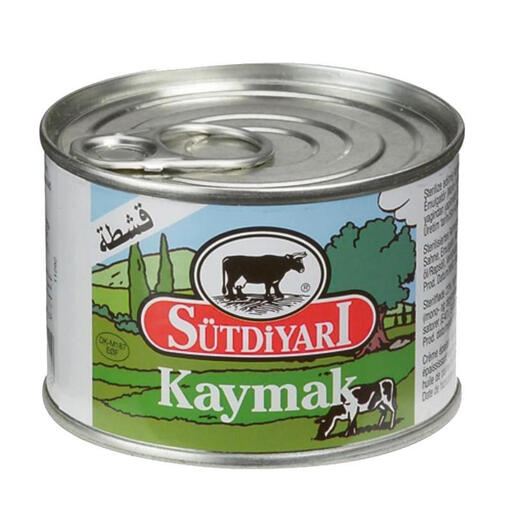 Image unavailable
Worth considering if you’re looking for a thick cream to serve with a meal, rather than a cream that’s simply semi-thick. The product comes in a 170 g pack and contains 23% fat.
The product description says to store it at room temperature before opening, but this alone doesn’t establish that it is UHT or long-life. Check the packaging for these details. Once opened, the description says to store it between 2 °C and 5 °C for no more than three days, so plan to keep it chilled if you’re taking it with you after opening.
Yes, before opening, if the instructions for that product say it can be stored at room temperature. The product information for Auchan semi-thick UHT cream says this is fine for unopened cartons, but that it should be stored between 0 °C and +6 °C once opened. Always read the instructions for the product you’ve bought.
Yes, provided you keep it chilled and follow the instructions on its packaging. For transporting chilled products, Anses recommends using an insulated bag and keeping transport time to a minimum.
No. In France, the decree on milk creams specifies, among other things, that ‘fresh cream’ must not have undergone any heat treatment for sanitation other than pasteurisation. If you specifically want a product described as ‘fresh cream’, don’t replace it with sterilised UHT cream just because the texture is similar.
Check the product description, ingredients, fat content and storage instructions for before and after opening. Also check the relevant date on the product. The DGCCRF reminds consumers that allergenic ingredients must be highlighted in the ingredients list.