What should you compare?
Start with the product description and nutritional information, comparing values given in the same units. Then consider its texture and storage instructions in light of your recipe and where you plan to keep it. The words ‘filtered milk’ alone don’t tell you whether a product is the right thick cream for you.
| What to compare |
What to check |
Who is it for? |
| Carbohydrates and sugars |
Compare ‘carbohydrates’ and ‘of which sugars’ per 100 g or per 100 ml, using the same units, then take into account how much you’ll use. |
If I add cream to a dish whose ingredients I control, I want to know the carbohydrate and sugar content of the product I choose; around 42% of consumers would put this first. |
| Fat |
Compare fat and saturated fat on the same basis, and check the carbohydrates separately. |
If I want to reduce the fat content of a dish, I don’t want to assume its carbohydrate content will fall too; around 33% of consumers would prioritise this. |
| Use and storage |
Check whether it’s described as ‘thick’ or ‘semi-thick’, the storage instructions before and after opening and, if needed, whether it’s labelled lactose-free. |
If I’m planning a specific recipe, need to store the product outside the fridge before opening or want a lactose-free option, I need a product that suits that purpose; around 25% of consumers would make this their priority. |
Thick cream on Joybuy
This thick cream could be worth considering for a recipe that calls for this texture. Compare the nutritional information and storage instructions on the specific product with what you’re looking for when shopping.
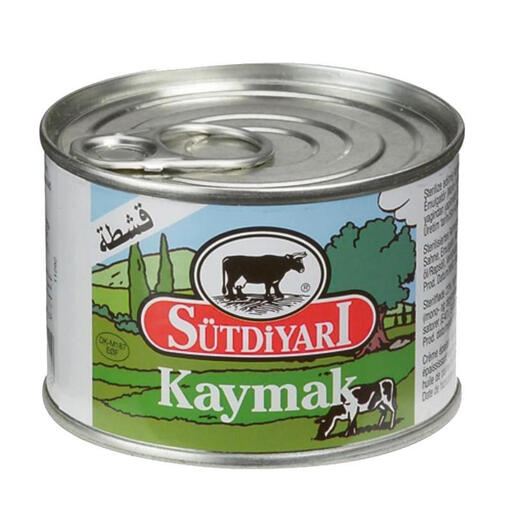 Image unavailable
Sutdiyari Turkish thick cream, 23%, 170 g
Worth considering for a recipe that calls for thick cream. The listed pack size is 170 g and the product name states 23%. Check the packaging to see what this percentage refers to, along with the nutritional information and storage instructions.
View on Joybuy
Frequently asked questions
Which values should I compare on the label of thick cream?
Compare carbohydrates, including sugars, and fat, including saturated fat, per 100 g or per 100 ml, using the same units. When shopping with diabetes, Assurance Maladie recommends reading food labels and adapting your diet to your needs. Remember to take into account how much cream you plan to use too.
Does a 4% dairy speciality always contain fewer carbohydrates than 18% cream?
No. Products listed by E.Leclerc and Auchan show why you need to check both values separately. Per 100 ml, E.Leclerc’s 4% Delisse dairy speciality contains 7.8 g of carbohydrates, compared with 6.2 g in Auchan’s 18% UHT light cream.
Can you keep UHT cream in a cupboard?
Yes, if the product instructions allow it before opening. This is the case for the 18% UHT semi-thick light cream described by Auchan. Once opened, this product must be kept between 0 °C and +6 °C and used within five days. Check the instructions for the cream you buy.
Is a lactose-free version enough when choosing cream while shopping with diabetes?
No. ‘Lactose-free’ addresses a separate need. Elle & Vire describes its 4% lactose-free thick dairy speciality as suitable for people with lactose intolerance. Compare the carbohydrates and sugars separately, and consider how much you plan to use.


