Parents starting out with baby-led weaning
Before choosing a cream, you’ll want to make sure the meal suits the textures your child is discovering. Manger Bouger explains how this exploration fits into the progression of weaning.


For baby-led weaning, use cream as an ingredient in a meal with a texture suited to your child; it should not replace breast milk or infant formula. Then compare the product name, ingredients, fat content and the milk allergen information. A 2 L tub is suitable for family use only if you cook often enough to use it and can follow the storage instructions.
Before choosing a cream, you’ll want to make sure the meal suits the textures your child is discovering. Manger Bouger explains how this exploration fits into the progression of weaning.
You use cream in family meals and need to choose a pack size that suits how often you cook, the space in your fridge and the storage instructions.
You need to be able to identify milk in the ingredients and pass on clear information when your child eats away from home. The DGCCRF reminds consumers that allergens must be highlighted in the ingredients list of pre-packed foods.
When choosing cream to use in a baby-led weaning meal, start with the dish and its texture. Then check the label and choose a pack size your household can use in line with the storage instructions.
| Criteria | What to check | Consumers concerned |
|---|---|---|
| Meal texture | Check that the dish you’re serving has a texture your child is discovering and can manage. | If my child is just starting to explore different textures, I want to choose a suitable dish first, rather than focus on the size of the cream pack. Around 36% of consumers put adapting the meal first. |
| Milk and ingredients | Read the ingredients list and look for milk, which is listed as an allergen. | When someone else is also preparing the meal, I want to be able to give them clear information about the product’s ingredients. Around 29% of consumers prioritise checking the ingredients. |
| Pack size and storage | Compare the pack size with how often you cook, then check the date and storage instructions, particularly after opening. | If I cook for the family often, I look for a pack we can finish within the stated storage conditions. Around 21% of consumers prioritise pack size. |
| Type of cream | Compare the exact product description, fat content and recommended culinary use. | For a specific recipe, I want to know whether the cream will give me the texture I’m looking for, rather than assume semi-thick cream can replace thick cream. Around 14% of consumers prioritise this culinary consideration. |
Choosing an ingredient alone won’t determine whether a meal is suitable for your child. Cream is not a substitute for breast milk or infant formula.
First choose a dish with textures your child is discovering, then decide whether cream works as an ingredient.
These product descriptions refer to different types of cream. For example, Carrefour lists a thick crème fraîche with 32% fat and a light semi-thick cream with 18% fat.
Before choosing the cream for your recipe, read the full product description and the nutritional information per 100 g or 100 ml.
The 2 L tub listed by Lactalis Foodservice is a Président Professionnel product that should be stored between +4 °C and +6 °C. With a pack this size, consider the meals you have planned and the instructions on the product.
Check the date, the instructions for use after opening and the space available in your fridge. If you only use cream occasionally, compare it with a smaller pack.
An opened pack that you can’t finish within the stated storage conditions may lead to waste.
Dairy cream contains milk. The DGCCRF states that allergens must be highlighted in the ingredients list of pre-packed foods.
Check the label whenever you switch products. If your child has a known allergy or you have any concerns, ask a health professional for advice.
The range includes different types of cream and pack sizes. Carrefour lists, for example, full-fat UHT semi-thick cream in two 25 cl bottles and light thick crème fraîche in a 33 cl pouch.
Lactalis Foodservice lists a 2 L tub of light thick crème fraîche for sauces and cooking.
The retailer lists both thick and semi-thick cream, under its own brand and other brands. These include a 50 cl pack of Carrefour Classic’ light semi-thick cream.
This small pack of thick cream could be used as an ingredient in a dish with a texture suited to your child. It won’t meet your needs if you’re looking for a pack close to 2 L.
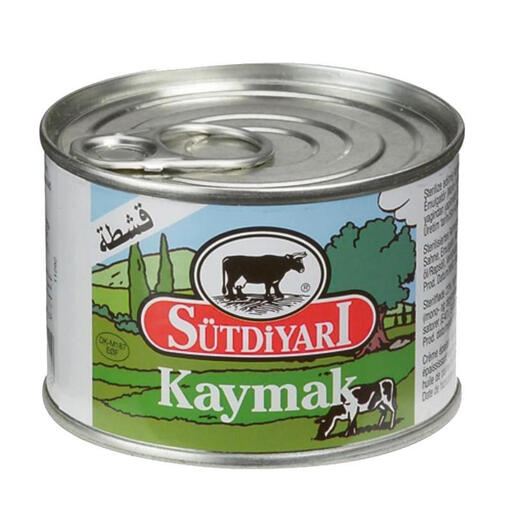 Image unavailable
Consider using it as an ingredient in a dish with a texture suited to your child. The 170 g pack is better suited to occasional use than to anyone looking for a large quantity. Check the pack for the ingredients, milk allergen information, date and storage instructions after opening.
No. Cream can be used as an ingredient in a suitable meal during weaning, but it should not replace breast milk or infant formula. You should also consider the textures your child is discovering when choosing what to prepare.
It depends on your child and the textures they can already manage. Manger Bouger places the exploration of new textures at around 6 to 8 months. Adapt each dish to your child’s abilities rather than relying on age alone.
Read the ingredients list. The DGCCRF states that any allergens in pre-packed food must be highlighted there. Check the label on the product you buy, especially if someone else will also be preparing the meal away from home.
Compare the nutritional information on the same basis, per 100 g or per 100 ml, as shown on the labels. The DGCCRF says this format makes it easier to compare products. Also check whether they have the same product description, such as “thick” or “semi-thick”.
It may be suitable if the quantity matches the meals you plan to make and you can follow the storage instructions. Lactalis Foodservice states that its 2 L Président Professionnel product should be stored between +4 °C and +6 °C. Also check the date and the instructions for use after opening on the product you choose.