What to check
When shopping with food allergies in mind, start by confirming the person’s exact dietary requirement and checking the product label. Then compare the ingredients and pack size for cooking, without letting a recipe preference take precedence over the need to avoid milk.
| Criterion |
What to check |
Who this matters to |
| Milk allergy |
Check the ingredients of the specific variant you’re buying and look for allergens highlighted on the prepacked product label. |
If I’m shopping for someone who needs to avoid milk proteins, the presence of cream or milk is the first thing that determines whether I can put a product in the basket. Around 45% of the consumers concerned would make avoiding these ingredients their top priority. |
| Lactose |
Confirm that lactose is the issue, then look for the words ‘lactose-free’ on the exact product; this does not mean ‘milk-free’. |
If I want to keep cooking with thick cream despite lactose intolerance, I look for a variant explicitly labelled for this dietary requirement. This would be the priority for around 27% of the consumers concerned. |
| Recipe and ingredients |
Compare the fat percentage and ingredients list, including any thickeners. |
Once I’ve confirmed that a product is suitable for my dietary requirements, I want to choose ingredients and a texture that work for my recipe. Around 18% of the consumers concerned would prioritise this cooking-related choice. |
| Pack size and storage |
Check the volume, date and storage instructions, particularly after opening. |
If I’m only making one recipe, a large container might be left open and unused; for several dishes, pack size matters more. Around 10% of the consumers concerned would make this their main consideration. |
Coconut creams on Joybuy
These three coconut creams are options to consider for certain dishes where you’re thinking of replacing dairy cream. They aren’t dairy-based thick creams, and you shouldn’t assume they’ll give the same results in cooking. If you’re shopping for someone with an allergy, check the ingredients, allergen information and any warnings about traces on the packaging intended for that person.
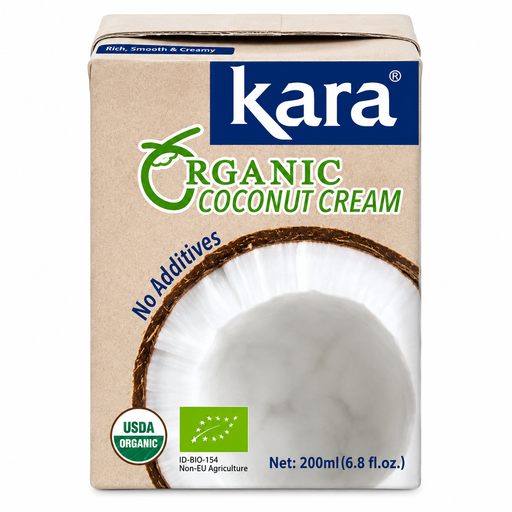 Image unavailable
Kara Organic Coconut Cream UHT, 24 %, 200 ml
The 200 ml pack could be a good choice if you only need a small amount of coconut cream for cooking. It won’t necessarily give the same results as dairy-based thick cream or be suitable for a specific allergy, so check the label on the product you receive.
View on Joybuy
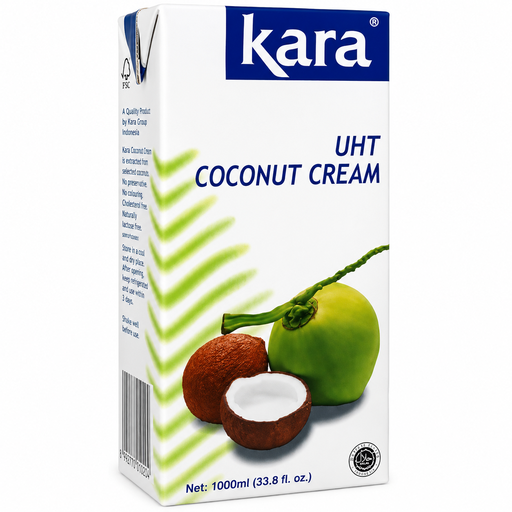 Image unavailable
Kara Coconut Cream UHT, 24 %, 1 L
The 1 L pack is worth considering if you have several dishes to prepare. Before choosing this larger size, check the storage instructions after opening and the label for information relevant to the allergy concerned.
View on Joybuy
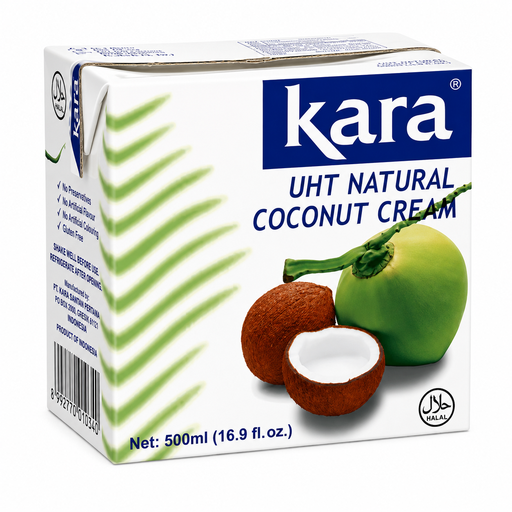 Image unavailable
KARA Coconut Cream UHT, 24 %, 500 ml
The 500 ml pack is worth considering if your recipes call for more than a small container but you don’t need 1 L. If you’re avoiding a particular ingredient, read the label on the product you receive and check the storage instructions after opening.
View on Joybuy
Frequently asked questions
Is regular thick cream suitable for someone with a milk allergy?
The dairy-based thick creams whose ingredients are listed by Auchan and E.Leclerc contain cream or milk, so they aren’t suitable if these ingredients need to be avoided. For prepacked products you buy in France, check the ingredients list and any allergens highlighted on the label, as advised by the DGCCRF, and follow the person’s dietary guidance.
Is ‘lactose-free’ cream also milk-free?
No, this label doesn’t mean ‘milk-free’. The Assurance Maladie distinguishes lactose intolerance, which affects the digestion of a sugar found in milk, from food allergy. Check which dietary requirement applies and read the ingredients of the product you choose.
What should I look for on the label before choosing thick cream?
If you’re shopping for someone with an allergy, start with the ingredients and any highlighted allergens; the DGCCRF reminds shoppers that this labelling is required for prepacked foods. Then compare the fat content, quantity and storage instructions for the specific product you’re buying.
How do I choose between a small pack and a 50 cl tub?
Choose a size that suits the recipes you’re planning and the product’s storage instructions. For its 50 cl full-fat thick cream, Auchan advises storing it between +2 °C and +6 °C and using it soon after opening.


