
Livraison le jour même ou le lendemain

Qualité garantie

Débloquez vos offres de bienvenue: Livraison GRATUITE | Jusqu'à -80 % | 30 jours d'essai gratuits à JoyPlus
Téléchargez l'application
Your iPhone screen can get scratched in your pocket, covered in fingerprints during a game, or take a knock on the Tube. For anyone using an iPhone 16, iPhone 17 or iPhone 18, choosing a tempered glass iPhone screen protector isn’t simply about spotting “9H” on the packaging.
Some details have a direct impact on everyday comfort: a cut that’s too close to the edges, a fiddly installation process, disappointing clarity, or a privacy filter that darkens the display significantly. Here are the criteria to check before you buy, along with a selection suited to different needs.
The tempered glass 9H label refers to surface scratch resistance, as claimed by the manufacturer under certain test conditions. It doesn’t mean the screen becomes immune to impacts, drops, or pressure on the corners.
A quality glass protector also needs a precise cut, properly finished edges, and even adhesion. A poorly fitted protector can crack around the perimeter, even if its 9H hardness is advertised.
An iPhone screen protector that covers the edges completely can come into contact with a rigid case. Over time, this pressure can lift the glass or create a line of dust around the screen.
Before ordering, check the exact model — iPhone 16, iPhone 16 Pro Max, iPhone 17 Pro or iPhone 18 Pro Max, for example — and look for the case-friendly label. A slight margin around the screen is usually better than an overly ambitious cover.
A high-transparency screen protector should preserve readability, colours, and touch responsiveness. However, privacy protectors use a structure that narrows the viewing angle and can reduce perceived brightness. This trade-off is handy on public transport or in the office, but it’s less suitable for people who edit photos or game often in a dimly lit room.
9H hardness is a common benchmark for an anti-scratch screen protector for daily use. It should come with a sufficiently smooth surface and rounded edges, often described as 2.5D. These finishes prevent your finger from catching and make the glass more comfortable to use with a case.
Take impact resistance claims with a pinch of salt: a protector’s main job is to preserve the screen surface from scratches, scuffs and minor knocks. It doesn’t replace a reinforced case.
An anti-fingerprint screen protector usually benefits from a hydrophobic and oleophobic treatment. This makes it easier to wipe away fingerprints, sebum and sweat. For gamers and people who type a lot on their phone, it also helps maintain a smooth glide.
This coating wears down over time. Avoid abrasive products and harsh cleaners to keep the surface in good condition for as long as possible.
A bubble-free installation depends as much on preparation as on the glass itself. Kits that include an alignment frame, wipes and a dust-removal sticker reduce the risk of poor centring. Install the protector in a low-dust room, after switching off your iPhone and cleaning its screen thoroughly.
An isolated bubble can sometimes be pushed towards an edge with a soft cloth. However, if dust gets trapped under the glass, you’ll often need to start the whole process again.
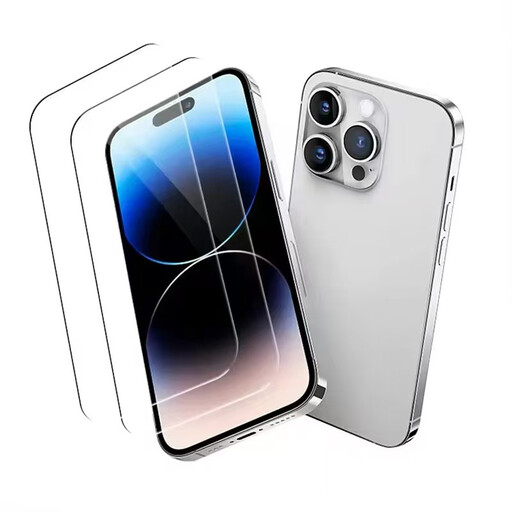
Why this choice suits this profile: This protector is ideal for users looking for a straightforward solution for the iPhone 16, with guided installation and an easy-to-understand spec sheet.
The listing mentions 9H hardness, an anti-fingerprint surface and an applicator to minimise centring and dust issues.
9H glass, claimed high transparency, hydrophobic and oleophobic treatment, applicator included.
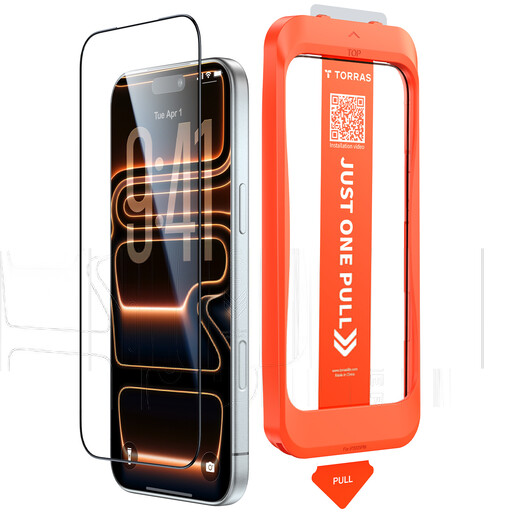
Why this choice suits this profile: It’s aimed at people who value a crisp image, a smooth feel, and discreet integration with their case.
The cut is claimed to be compatible with most cases, reducing the risk of lifting at the edges. The static adsorption installation also aims to minimise bubbles.
Claimed transparency over 92%, 9H hardness, oleophobic treatment and peripheral reinforcement claimed at over 250 N.
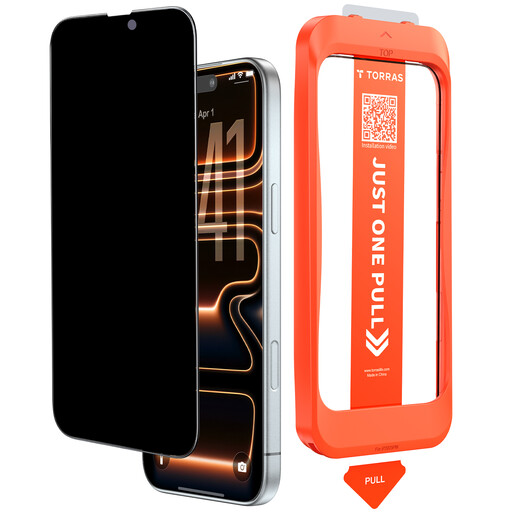
Why this choice suits this profile: This anti-spy screen protector is ideal for commuters, mobile professionals, and anyone who checks sensitive information in public places.
The claimed 25° privacy angle reduces side visibility. However, you should expect lower perceived brightness depending on the angle and environment.
Privacy filter, 9H hardness, anti-fingerprint coating, claimed case-friendly design.
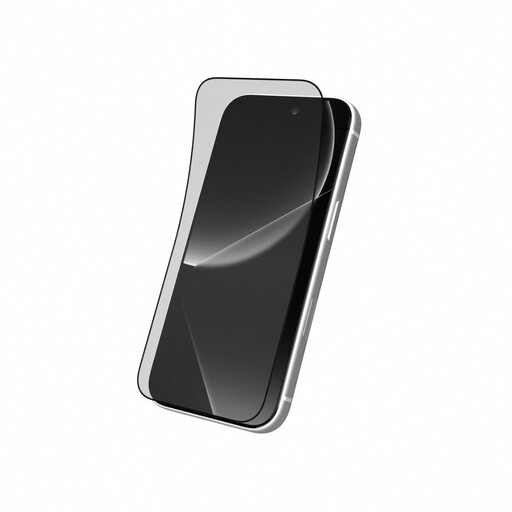
Why this choice suits this profile: Its flexible material can suit users who carry their phone around a lot or want a compromise between flexibility and scratch resistance.
The flexible design reduces the risk of breakage associated with very rigid glass. An installation tool is provided to help with alignment.
Flexible structure, hardened layers against scratches, claimed high transparency and installation tool included.
We’ve put together a comprehensive, real-time updated selection of products that meet these demanding criteria as well as European safety standards.
Clean the screen with the provided wipe, remove any remaining dust using the sticker supplied for that purpose, then use the alignment frame if the kit includes one. Place the glass without touching its adhesive side and press gently in the centre. Small air bubbles can usually be pushed towards the edges with a microfibre cloth.
Its lifespan depends on friction, impacts and how you care for it. Replace the protector if a crack appears, if an edge starts to lift, or if the surface becomes heavily scratched. The anti-fingerprint treatment can also gradually lose its effectiveness, even when the glass itself remains intact.
Yes. A privacy filter can darken the display when you look at the screen from an angle or in a low-light environment. It’s particularly useful on public transport and in shared spaces, but a clear model will suit users who prioritise image quality and brightness.