
Livraison le jour même ou le lendemain

Qualité garantie

Débloquez vos offres de bienvenue: Livraison GRATUITE | Jusqu'à -80 % | 30 jours d'essai gratuits à JoyPlus
Téléchargez l'application
Baby's teething is a natural, but often painful, milestone for both the infant and their parents. Swollen gums, irritability, crying... these are all-too-familiar signs for new parents. A well-chosen teething ring can provide real relief. With the multitude of models available, it can sometimes be hard to know where to start. This guide is here to provide some clarity, reviewing the essential criteria and presenting the products that caught our eye.
Before you decide on a model, there are several points to check to ensure both your baby's comfort and safety.
The golden rule?: ensure the product complies with current European standards. Opt for materials guaranteed to be BPA-free (Bisphenol A), phthalate-free, and free of other potentially harmful substances. Food-grade silicone is a classic choice, praised for its flexibility and durability. Also, make sure the ring is molded as one piece or that its different parts are perfectly assembled to eliminate any risk of ingestion.
A good teething toy should be easy for a baby's little hands to grasp and hold. Therefore, prioritise ergonomic shapes. Varied textures (nubs, ridges, bumps) play a crucial role?: they massage sore gums and contribute to the child's sensory development. Some models are developmental, with different textures and shapes designed to soothe incisors, and later, molars.
To effectively soothe baby's gums, cold is a great ally. A cooling teether contains sterilised water or a non-toxic gel that, once placed in the refrigerator (never the freezer, as it would become too hard and risk injury), provides a soothing cool sensation. Check that the model is leak-proof and designed for this purpose.
Here are a few models that caught our attention, each meeting specific needs and all designed for your child's well-being.
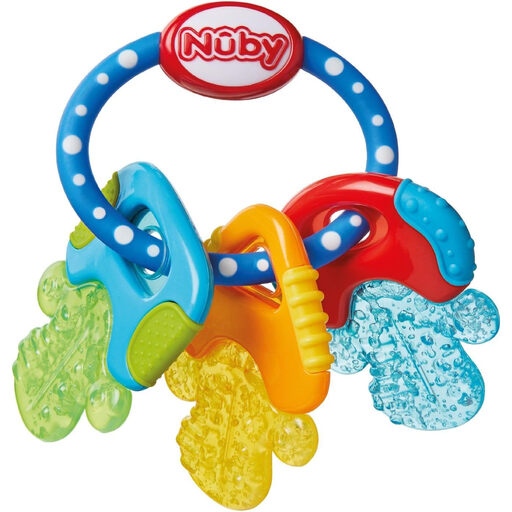
Why this model stands out
This set of keys combines soothing cold action with developmental stimulation. It features Nuby's P?RICE technology, a gel that, according to the brand, allows the ring to stay cold longer than a classic water-filled model. Its multiple textured surfaces are designed to massage gums at different stages of teething.
Highlights
Who is it for? Parents looking for a 2-in-1 solution?: an effective cooling teether and a developmental toy that supports their child's motor skills.
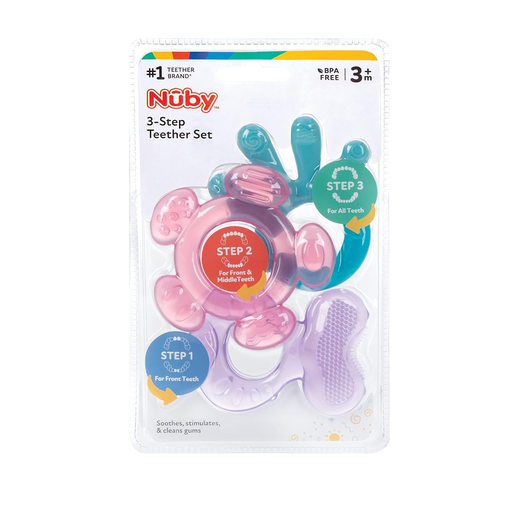
Why this model stands out
This product's strength?: its developmental design. It is made to accompany your baby through the three main stages of teething?: first the incisors, then the middle teeth, and finally the molars. Each part of the ring offers a texture and firmness adapted to the specific area.
Highlights
Who is it for? Parents looking for a versatile baby teether that can adapt to their child's changing needs over the months.
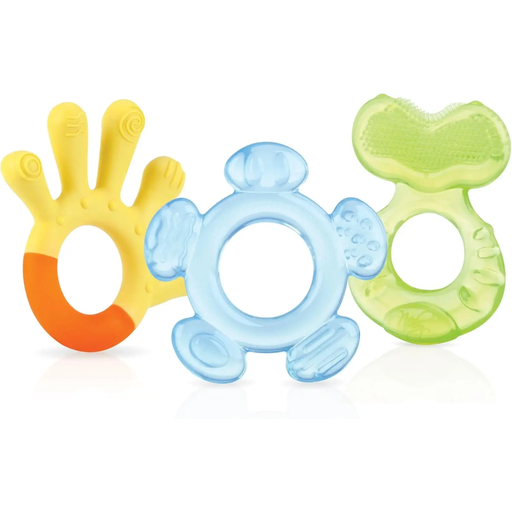
Why this model stands out
This isn't just one ring, but a set of three distinct teething toys, each targeting a specific stage. The first, shaped like a fish, is soft and textured for the first incisors. The subsequent ones offer different shapes and resistances to reach the middle and back teeth.
Highlights
Who is it for? Parents who prefer having a specific tool for each need and want to offer their baby a varied range of solutions for relief.
Our selection is just a starting point. Every baby is unique, and their preferences may vary. To explore a wider range of solutions dedicated to your child's development and comfort, feel free to browse our complete collection.
Discover our complete collection of Baby & Toddler Activity Toys to find the product that will best suit your family.
There is no strict age. Use generally coincides with the first signs of teething, which most often occur between 3 and 6 months. Pay attention to the signs?: if they start chewing on their fists, drooling more than usual, or seem uncomfortable around the gums, it's the right time to offer them a teething ring.
Hygiene is paramount. Most silicone rings can be simply washed with warm, soapy water. Rinse them thoroughly and let them air-dry. Always refer to the manufacturer's instructions. Some models are dishwasher-safe (top rack) or compatible with certain sterilisers. Before each use, inspect the ring for any cracks or signs of wear.
Absolutely not, and this is a crucial safety point. It is strongly advised not to place a teething ring in the freezer, unless explicitly authorised by the manufacturer (which is rare). A frozen product becomes extremely hard and rigid?: it could injure a baby's delicate gums or even break. Always use the refrigerator to achieve a soothing and safe cooling effect.