
Livraison le jour même ou le lendemain

Qualité garantie

Débloquez vos offres de bienvenue: Livraison GRATUITE | Jusqu'à -80 % | 30 jours d'essai gratuits à JoyPlus
Téléchargez l'application
As a product expert at Joybuy, my daily job is to break down dozens of adhesive solutions. My goal? To help you see clearly, beyond the marketing jargon, so that every project—professional or personal—finds its perfect tool. A successful project often comes down to the details, and the choice of a technical adhesive tape is a critical one. The wrong tape can not only ruin the final result but also cost you hours of cleanup and unexpected repair fees.
Before we get to the solutions, let's break down the most common pitfalls that turn a simple purchase into a real headache:
To buy smart, you need to understand what makes a tape perform. Let's focus on the technical characteristics that really matter.
The tape's material (the backing) and the type of glue (the adhesive) are inseparable.
The context of use is paramount. Always check the technical data sheet for the following information:
Some tapes include features that are a game-changer on a job site. A pre-taped masking film with an integrated masking tape allows for much faster application. Even better, an electrostatically treated film will cling to the surface on its own, ensuring perfect protection. For safety, the high visibility of a hazard warning tape is, of course, its entire purpose.
Instead of an endless list, here are concrete solutions that meet specific needs and avoid the pitfalls we've just discussed.
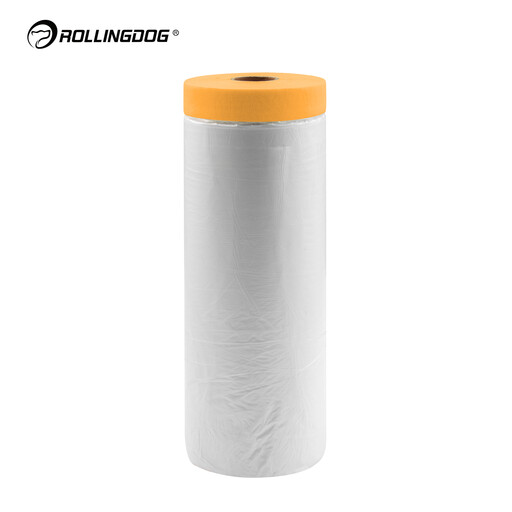
Why we chose it: Ideal for professionals and savvy DIYers who want to protect large surfaces (walls, floors, furniture) in record time, while achieving impeccable paint lines.
Its washi paper tape ensures clean removal for up to 30 days, even after UV exposure. Say goodbye to the risk of sticky residue and paint bleed—the nightmare of cheap, "all-purpose" tapes.
The electrostatically treated film clings to surfaces on its own, providing perfect coverage and a spectacular time-saver during prep work.
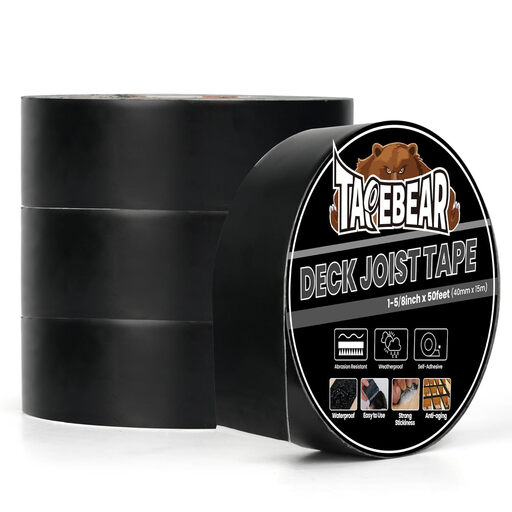
Why we chose it: This tape is the best life insurance for wooden deck structures. Applied to the top of joists and beams, it creates a 100% waterproof barrier that blocks water infiltration, which prevents rot and significantly extends the life of the installation.
Where a standard PVC tape would eventually crack from weathering, its butyl backing guarantees unfailing waterproofing and adhesion, even in extreme temperatures (-29°C to 110°C).
It's a very cost-effective preventative solution to protect the investment of a wooden deck against its number one enemy: moisture.
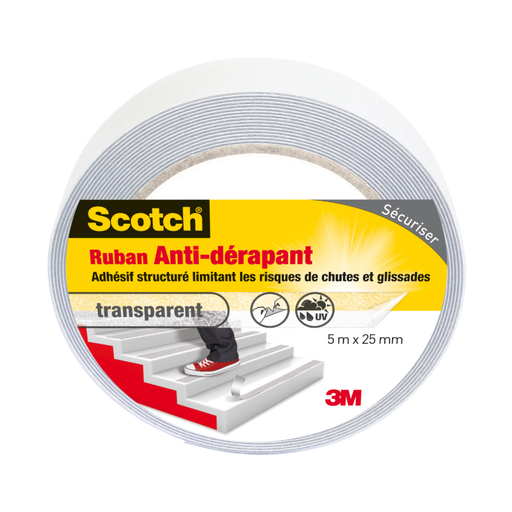
Why we chose it: This anti-slip tape offers a discreet safety solution for high-risk areas like stairs, ladders, or shower areas. Its transparency preserves the look of the surface (wood, tile, etc.) while ensuring a secure grip underfoot.
It is specially formulated to resist wear and water, ensuring long-lasting effectiveness where a standard adhesive would peel off at the first downpour.
Its textured surface offers excellent grip that reduces the risk of falls, while its transparency makes it virtually invisible on most surfaces.
Explore our full selection of products that meet our most demanding criteria for performance and durability.
The secret is to respect the "clean removal time" indicated by the manufacturer (e.g., 7 or 14 days). Opt for washi paper-based tapes with a quality acrylic adhesive, which are known for flawless removal. Always apply the tape to a clean, dry, and dust-free surface.
PVC tape is perfect for electrical insulation and basic protection against abrasion and moisture. It's flexible and easy to apply. Butyl tape, on the other hand, is a much more robust and permanent waterproofing solution. Its thick, malleable adhesive fuses with the substrate to create a 100% waterproof and airtight barrier. It's the ideal solution for deck joists, roof repairs, or anti-corrosion protection for buried pipes.
Absolutely. Most quality anti-slip tapes are designed for both indoor and outdoor use. Their adhesive and textured surface are water-resistant. For a perfect bond, the trick is to apply it to a pristine surface (clean and dry), at a temperature above 10°C, pressing it down firmly to remove any air bubbles.