
Livraison le jour même ou le lendemain

Qualité garantie

Débloquez vos offres de bienvenue: Livraison GRATUITE | Jusqu'à -80 % | 30 jours d'essai gratuits à JoyPlus
Téléchargez l'application
Choosing a teapot seems simple… until a filter that is too narrow, an unsuitable capacity or time-consuming cleaning spoils the experience. Glass teapots, ceramic models, electric appliances and variable-temperature kettles each have their own features, and you will notice the difference in everyday use.
Before placing your order, three common mistakes are worth avoiding:
For one person, a teapot with a capacity of 0.5 to 0.6 litres is generally enough for one or two servings. A 0.9 to 1.0-litre model is better suited to a couple or a small gathering. For a family, a large-capacity teapot of 1.3 to 1.5 litres offers considerably greater convenience.
Much larger capacities, such as the 1.5-litre IAGREAA electric pot, are designed for a different type of use: preparing several cups, herbal teas or hot drinks to be kept warm. However, they take up more space on your worktop.
A borosilicate glass teapot lets you watch the colour of the infusion and see the leaves unfurl. However, this material is susceptible to knocks and significant changes in temperature. Avoid pouring boiling water into a cold container, and check regularly that no cracks or chips have appeared.
An stainless steel teapot, or a 304 stainless steel kettle, stands up well to everyday use. However, it does not let you see the colour of the tea. A ceramic teapot, particularly one made from glazed stoneware, adds a warmer touch and is ideal for serving at the table. Check the manufacturer’s instructions before putting it in the dishwasher, oven or microwave.
For electric appliances, check for an automatic shut-off, boil-dry protection and a stable base. Also make sure that the stated voltage is compatible with the French electrical supply.
Green teas, white teas and some delicate infusions require cooler water than black tea. A variable-temperature kettle therefore offers greater precision than an appliance that always heats the water to boiling point.
A gooseneck kettle, such as the TIMEMORE model, is particularly useful for filter coffee and controlled, gradual pouring. For loose-leaf tea, choose a removable filter that is sufficiently wide. A plunger system, meanwhile, allows you to stop the brewing process without having to remove the leaves immediately.
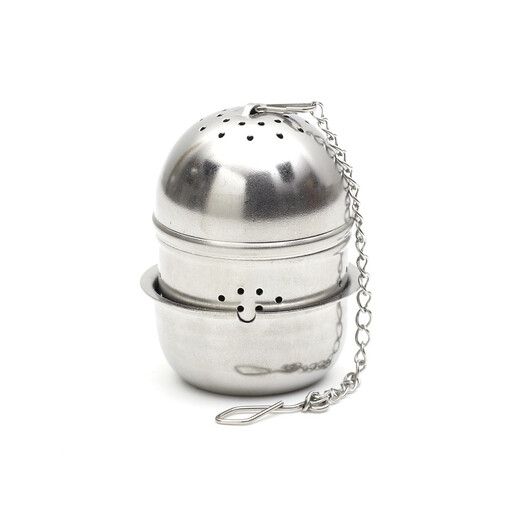
Why this choice suits this profile: This infuser is an easy way to get started with a simple cup or a teapot you already own, without immediately investing in an electric appliance. It is suitable for both loose-leaf tea and hot or cold infusions.
Its standard 6 × 4.5 cm size fits many cups and teapots. The stand catches drips once brewing is complete.
Stainless steel, stand included and dishwasher-safe according to the product listing.
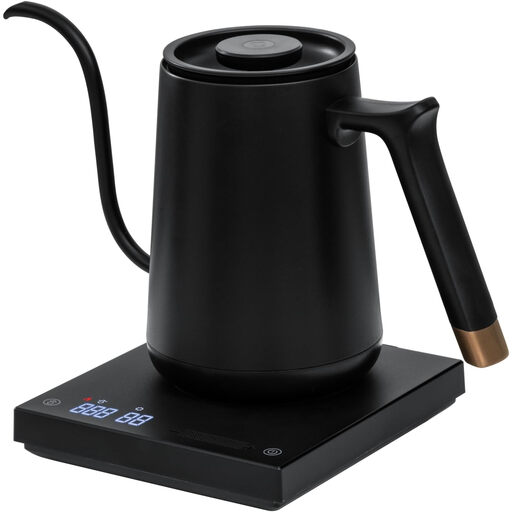
Why this choice suits this profile: Its gooseneck spout is ideal for people who also prepare filter coffee and want precise control over the water flow. Its 600 ml capacity is suitable for individual use or two small cups.
The temperature can be set from 40 to 100 °C in 1 °C increments. You will not have to rely on simply heating the water to boiling point.
304 stainless steel, temperature holding, automatic shut-off and boil-dry protection.
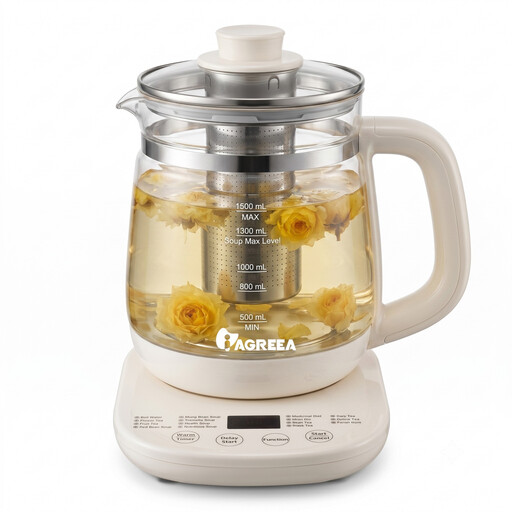
Why this choice suits this profile: This electric teapot is aimed at households that regularly prepare tea, herbal infusions or other hot drinks and want a family-sized capacity.
The borosilicate glass body, wide opening and removable infuser make it easier to monitor the brewing process and clean the appliance. The stated capacity is 1.5 litres.
14 preset programmes, six keep-warm settings between 40 and 90 °C, a keep-warm function and a stated power output of 800 W.
A teapot that is easy to clean is much more enjoyable to use over the months. After each infusion, empty the leaves and rinse the filter to reduce residue. Limescale can be removed regularly with a suitable product, following the manufacturer’s instructions.
With a glass teapot, avoid sudden changes in temperature, abrasive sponges and knocks against the sink. For an electric appliance, never immerse the base, cord or plug in water. Always place the teapot on a stable, dry and heat-resistant surface, away from children.
Running costs depend mainly on how often the appliance is heated, the volume of water and its power rating. Heating only the amount you need helps to reduce electricity consumption. Conversely, keeping the water warm for a long time may use more energy than heating it for a single occasion.
We have selected a complete, real-time updated range of products that meet these demanding criteria while complying with European safety regulations.
For two to four people, a capacity of between 1 and 1.5 litres is generally suitable. Remember to distinguish between the usable volume and the maximum level indicated on the container.
It depends on the power rating, the amount of water heated and how long it is kept warm. A variable-temperature kettle prevents the water from being heated more than necessary, while keeping it warm for an extended period increases electricity consumption.
Its service life varies according to the material, frequency of use and quality of care. A cracked glass teapot should be replaced without delay. For electric models, regular descaling and observing the minimum fill level help to preserve the appliance, but it is not possible to guarantee a precise service life.