
Livraison le jour même ou le lendemain

Qualité garantie

Débloquez vos offres de bienvenue: Livraison GRATUITE | Jusqu'à -80 % | 30 jours d'essai gratuits à JoyPlus
Téléchargez l'application
A tea pot is not something you should choose on looks alone. Electric tea pots, tea kettles, glass models and tea presses each meet different needs in terms of temperature, capacity, cleaning and safety. A poorly matched model can produce overly bitter tea, become a chore to descale or prove too small to serve the whole family.
A 1-litre tea pot may not be enough to fill four large mugs. Manufacturers often estimate a cup at 20 or 25 cl, whereas household habits vary considerably. To avoid disappointment, check the usable capacity, markings and the size of your cups.
Allow around 50 to 60 cl for one or two people. For family use or serving several guests, a 1.3 to 1.5-litre model will generally be more convenient.
A programmable tea pot with a keep-warm function or delayed start can be useful, but these options often mean a bulkier appliance that requires more maintenance. If your routine is simply to make tea in the morning, a tea pot with an infuser, paired with a variable-temperature kettle, may be more than sufficient.
On the other hand, a multifunction electric tea pot is ideal for anyone who enjoys a variety of infusions, hot drinks or even certain culinary preparations. Take the time to check the available programmes: the term ‘multifunction’ does not always tell you what the appliance can actually do.
In France, the domestic power supply is generally 230 V. An appliance designed for 110 V, such as the BUYDEEM K314 model featured in this selection, must not be plugged directly into a French socket without checking its compatibility and arranging the necessary equipment. Always check the voltage, power rating, presence of an automatic shut-off function and the contact details of the responsible person established in the European Union.
With glass or ceramic models, also beware of sudden changes in temperature. A cold tea pot should not be exposed abruptly to boiling water unless the instructions specifically allow it.
Remember to measure the space available on your worktop, too. An electric tea pot or tea kettle should be positioned far enough away from walls and furniture to allow steam to escape safely.
A glass tea pot, often made from borosilicate glass, lets you watch the colour of the infusion and see the leaves unfurl. However, it is more vulnerable to knocks and sudden temperature changes. It is an especially appealing choice for flowering teas, colourful infusions and anyone who enjoys watching their drink being prepared.
A ceramic tea pot or stoneware model adds a warmer touch to the table. Check whether it is suitable for the dishwasher, oven or microwave, as these features are not always included. Glazed ceramic with a smooth surface is generally easier to rinse clean.
A stainless-steel tea pot can easily handle everyday use. However, it does not allow you to see the colour of the infusion and retains more heat. For an electric kettle, choose a food-safe stainless-steel interior. The electrical base must never be immersed in water.
A sufficiently large tea infuser gives the leaves the room they need to unfurl and release their aromas. Fine mesh helps prevent residue in your cup, provided the filter can be removed and rinsed easily. With a tea press, simply lower the filter to stop the infusion and control the tea’s strength more effectively.
For green teas, white teas and certain delicate infusions, a variable-temperature kettle provides welcome precision. It avoids bringing the water to boiling point every time, which can affect the flavours. A range of 40 to 100 °C with several intermediate settings lets you tailor the preparation to your preferences.
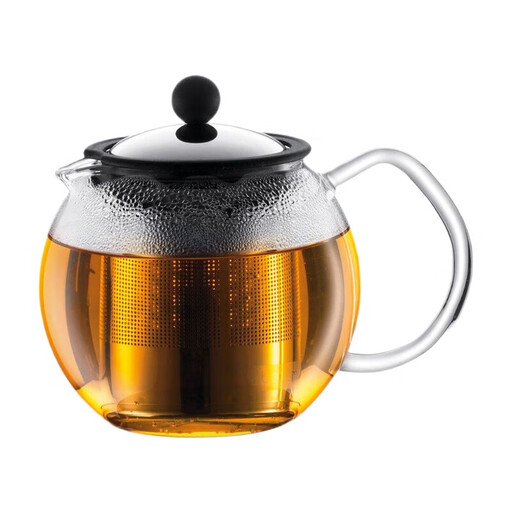
Why it suits this profile : Its compact size is ideal for one person or a small serving, with no programming or complicated set-up.
The stainless-steel filter and plunger let you control steeping time without the need for multiple accessories.
0.5 L capacity, borosilicate glass, stainless-steel filter and a size suited to both loose-leaf and bagged tea.
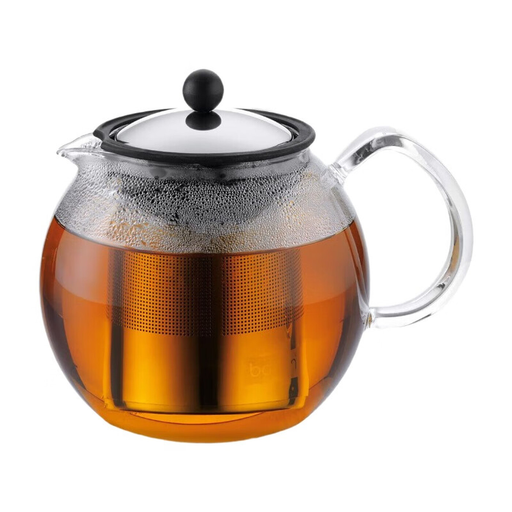
Why it suits this profile : This model combines generous capacity, a plunger system and a transparent design that is perfect for serving tea in style.
The integrated filter means you do not have to handle a hot basket after every infusion, simplifying the serving process.
1.5 L capacity, stainless-steel filter edged with silicone and components stated to be dishwasher-safe.
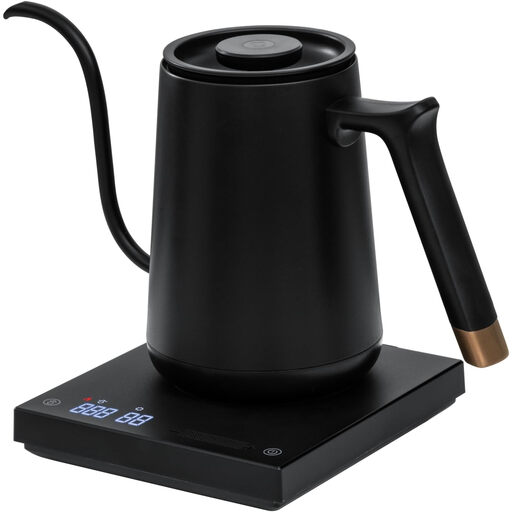
Why it suits this profile : Its gooseneck spout lets you pour water gradually for filter coffee and infusions that require precise flow control.
The 40 to 100 °C setting, adjustable in 1 °C increments, means you do not have to rely on simple boiling, whatever drink you are preparing.
600 ml capacity, real-time temperature display, degree-by-degree adjustment and keep-warm function.
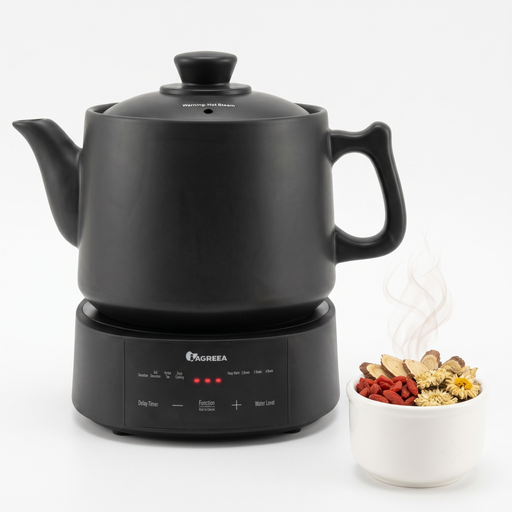
Why it suits this profile : Its large pot and programmes are designed for families who regularly prepare large quantities of infusions or hot drinks.
The removable pot separates the ceramic section from the electrical base. This makes cleaning easier and keeps the electrical components away from water.
4.5 L capacity, 600 W power, four preset modes, timer of up to 24 hours and automatic keep-warm function.
We have brought together a complete, real-time updated selection of products that meet these demanding criteria and European safety requirements.
Water at 70 or 80 °C is often suitable for green teas and certain delicate infusions. Black tea is generally prepared with hotter water. However, recommendations depend on the type of leaves and the manufacturer’s instructions. A variable-temperature kettle makes these adjustments easier, although it cannot guarantee the result in the cup on its own.
Descale the heating element or pot regularly using a compatible product, taking into account the hardness of the water in your area and the manufacturer’s instructions. Never immerse the electrical base in water. Empty any leftovers after each use and dry the removable parts thoroughly before storing them.
For glass or ceramic models, avoid thermal shock and abrasive sponges, which can scratch or weaken the surface.
It depends on its power rating, heating time and use of the keep-warm function. A 2,200 W appliance heats up quickly, but draws more power from the mains for just a few minutes. By contrast, leaving the keep-warm function on for a long time can significantly increase total consumption.
To keep consumption down, only heat the amount of water you need and switch off the keep-warm function as soon as you no longer need it.