
Livraison le jour même ou le lendemain

Qualité garantie

Débloquez vos offres de bienvenue: Livraison GRATUITE | Jusqu'à -80 % | 30 jours d'essai gratuits à JoyPlus
Téléchargez l'application
Buying a new large-screen TV is a significant investment. It's easy to get lost in a sea of opaque marketing jargon and endless spec sheets. Between promises of "enhanced" refresh rates and "dynamic" contrast ratios, the technical reality is often less impressive. This guide is here to help you separate fact from fiction and focus on the features that truly matter for a world-class audiovisual experience.
Before you take the plunge, here are the most common pitfalls to avoid:
To make the right choice, focus on these key points that define the performance of a modern TV, like a 75-inch TCL Smart TV.
This is the heart of the matter. While OLED remains the benchmark for its perfect blacks, QD-Mini LED technology is emerging as a formidable, high-performance alternative. It combines two major strengths:
In real-world terms, a 190 cm (75-inch) QD-Mini LED TV delivers high peak brightness, perfect for bright living rooms and HDR content, while maintaining an excellent contrast level.
For console (PS5, Xbox Series X) or PC gamers, two features are non-negotiable:
A great TV is more than just a beautiful picture. The overall user experience also depends on a responsive operating system and high-quality sound.
Here are a few options that meet these criteria, tailored for different user profiles.
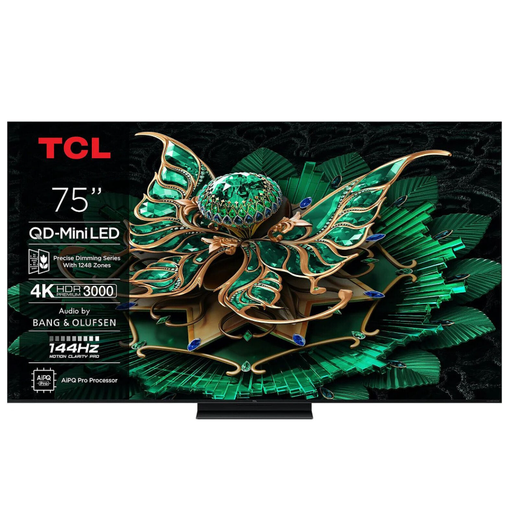
Why it stands out: Ideal for those seeking absolute, uncompromising performance. The combination of QD-Mini LED technology, a 144Hz panel, HDMI 2.1, and a Bang & Olufsen sound system makes it the perfect all-rounder for high-end cinema and gaming.
It features a true native 144Hz panel (not just software interpolation), and its QD-Mini LED technology ensures authentic, high contrast, far beyond empty marketing promises.
Its integrated Bang & Olufsen 6.2.2 sound system delivers immersive Dolby Atmos out of the box, saving most users the expense of a soundbar.
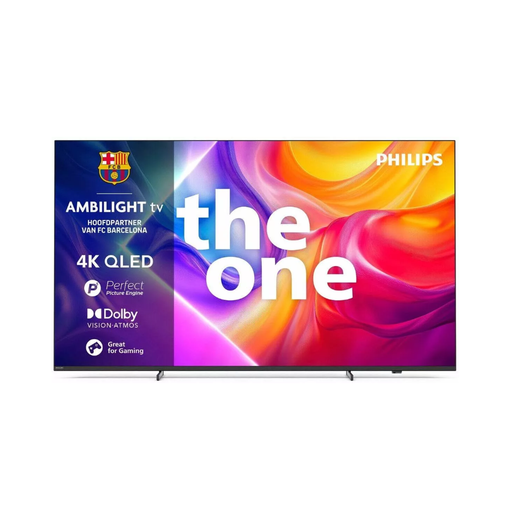
Why it stands out: For those who prioritise atmosphere and visual immersion. The Ambilight technology projects the screen's colours onto the wall, virtually expanding the scene and reducing eye strain.
It also features a native 144Hz panel and HDMI 2.1 ports, making it just as capable for gaming as other premium models, without falling for the fake refresh rate trap.
The 3-sided Ambilight is its exclusive signature feature. It creates a visual experience that other brands don't offer, dramatically enhancing immersion in movies and games.
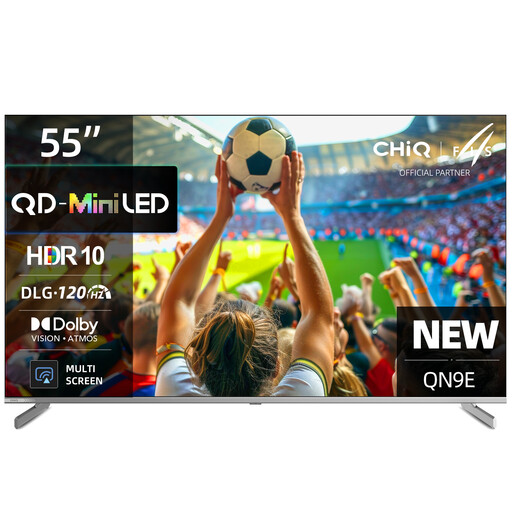
Why it stands out: For those with a smaller space or who want to experience Mini LED technology without the premium price of larger screens. It offers a high-quality picture in a versatile 55-inch format.
It relies on a responsive Google TV interface, thus avoiding the trap of slow, outdated operating systems, and uses true Mini LED technology for first-class contrast.
It makes the combination of Mini LED and QLED technologies, often reserved for much more expensive models, accessible in a very popular 55-inch size.
To perfect a home cinema setup, ambient lighting is the icing on the cake. While some TVs like Philips models have built-in Ambilight, a more universal and popular solution is to use light strips. An LED Strip with remote control is easy to install behind the TV or media console to create a customisable halo of light. The effect is stunning: it reduces eye strain by softening the contrast with the wall, while also enhancing immersion.
We have curated a complete selection of products that meet our demanding selection criteria and relevant safety standards.
1. Is the 144Hz refresh rate on the TCL 75Q7C really useful outside of gaming?
While its main benefit is for PC and compatible console gaming, a high refresh rate also improves the fluidity of sports broadcasts and action movies. Furthermore, navigating the interface, such as scrolling through Google TV, becomes noticeably smoother and more responsive.
2. Do I need a soundbar with the TCL 75Q7C's Bang & Olufsen audio system?
The TCL 75Q7C features a 6.2.2 channel Bang & Olufsen system designed for immersive Dolby Atmos sound. For most people, this setup is a significant quality leap over standard TV speakers and will eliminate the need to invest in a soundbar, especially in a medium-sized room. However, discerning audiophiles may still opt for a dedicated external setup.
3. What is QD-Mini LED technology, and how is it different from QLED or OLED?
QD-Mini LED technology is a hybrid approach. Like QLED, it uses a layer of quantum dots for richer, more vibrant colours. Its secret lies in its backlight, which is composed of thousands of "Mini LEDs" grouped into hundreds of control zones. The advantage? Much finer control over the light, resulting in deeper blacks and higher contrast than a standard QLED, closely matching the performance of OLED without the risk of screen burn-in.