Households whose freezer is overflowing
You want extra capacity without necessarily replacing your fridge freezer. The capacity you need, ease of access and available space will guide your choice.


Choose a tall freezer if you want to separate and find food easily in a vertical format; opt for a chest freezer for very large food stocks if you have enough suitable floor space. A large fridge freezer is most suitable when you also need more refrigerated storage and want to replace a single appliance. Que Choisir reminds shoppers to compare the footprint, permitted ambient temperature and stated storage time of the model.
You want extra capacity without necessarily replacing your fridge freezer. The capacity you need, ease of access and available space will guide your choice.
For storing prepared meals, bulk purchases or bulky food, a chest freezer prioritises capacity, while a tall freezer makes organisation and frequent access easier.
In a garage, cellar or cold utility room, check the minimum permitted ambient temperature for the exact model rather than relying on the appliance format alone.
Choose this if: you open the freezer frequently and want to separate food into drawers or compartments.
Bear in mind: tall freezers generally offer less capacity than the largest chest freezers; Que Choisir puts their capacity typically at around 200 L, rising to 400 L for the largest models.
Choose this if: you build up large food stocks or store bulky packaging in a pantry, cellar or suitable garage.
Bear in mind: reaching items at the bottom involves more handling, and a chest freezer takes up more floor space.
Choose this if: your household needs more refrigerated and frozen storage and wants to replace a single appliance in the kitchen.
Check: look at the capacity of the freezer compartment alone, not the appliance’s total capacity.
| Priority | What to check | Your needs |
|---|---|---|
| Capacity and space | Compare usable litres with your usual food stocks. Measure the width, depth, height, delivery access points and the opening space needed for the door or lid. | I want to increase my food storage without unnecessarily taking over the kitchen, utility room or pantry. |
| Access to food | Examine the drawers, flaps and compartments in a tall freezer. In a chest freezer, check the baskets and plan how to organise items by category or date. | I need to find food quickly without moving an entire stack every time I open the freezer. |
| Installation room | Compare the climate class and stated temperature range with the actual temperatures in the room, both in winter and during hot weather. | My appliance may be installed in a garage, cellar or outbuilding; compatibility must be confirmed for the model selected. |
| Power cuts and maintenance | Compare storage time in hours, annual energy consumption in kWh and the energy label between appliances with similar capacities. Also check the No Frost technology if it is important to you. | I want to protect my food stocks during a power cut and reduce the need for defrosting. ADEME states that the energy label ranges from A to G. |
A chest freezer can provide plenty of capacity, but its width, depth and lid opening may limit how practical it is if the space or delivery route is too narrow.
Measure the available space, doors and corridors, then simulate opening the door or lid. Compare the internal layout too, not just the litre capacity.
Compatibility depends on the ambient temperature range of the specific model. Installing it outside this range may compromise its intended operation.
Record the room’s minimum and maximum temperatures throughout the year, then check the climate class, instructions and stated operating temperature for the model you have chosen.
On models that include it, No Frost can help reduce frost, but it does not replace suitable organisation or checking how long food remains frozen during a power cut.
Assess the drawers or baskets, defrosting requirements and stated storage time separately. In a chest freezer, labels or a contents list make it easier to keep track of your food stocks.
Cooling appliances contain fluids and components that require specialist collection and treatment.
In France, ADEME recommends arranging collection by the retailer or delivery driver when replacing the appliance, or taking it to the dedicated area for electrical and electronic equipment at a recycling centre.
The French range includes tall and chest freezers, making it possible to compare vertical storage and large-capacity freezing within the same brand.
Beko is worth considering for a vertical drawer freezer, particularly if you plan to install it in an unheated room.
Liebherr’s official range covers freestanding freezers from under 80 L to over 300 L, with storage options for different capacities.
Joybuy options for increasing your food storage, including tall freezers, chest freezers and a fridge freezer to consider if you also need more refrigerated capacity.
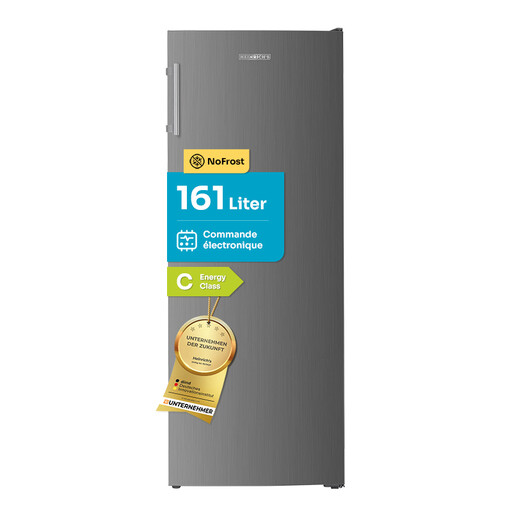 Image unavailable
A vertical option for separating your food stocks and accessing them frequently.
Stated features include 161 L, three drawers, two shelves, LED display, reversible door and alarm function. Check storage time during a power cut, dimensions and ambient temperature range before installation.
 Image unavailable
A compact extra freezer when your existing freezer is only slightly short of space.
60 L, reversible door, adjustable temperature and stated dimensions of 44.5 × 47.5 × 84.5 cm. Its capacity is less suitable for large food stocks; check the exact internal layout and installation conditions.
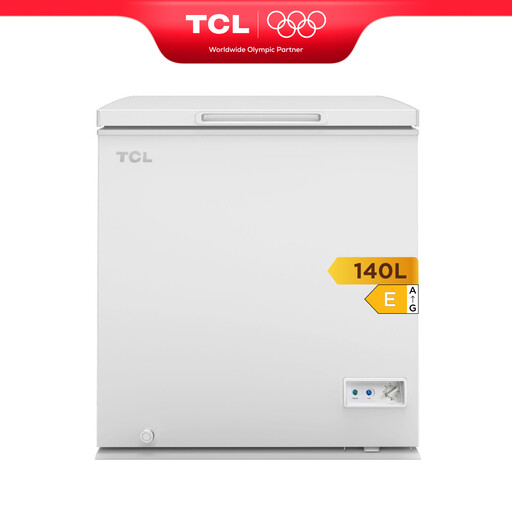 Image unavailable
An intermediate-capacity option for households that prefer a chest freezer without moving up to a very large appliance.
140 L, basket, castors, lid that stays open and stated dimensions of 637 × 556 × 846 mm. One basket is listed, so plan an organisation system that makes it easier to reach items at the bottom.
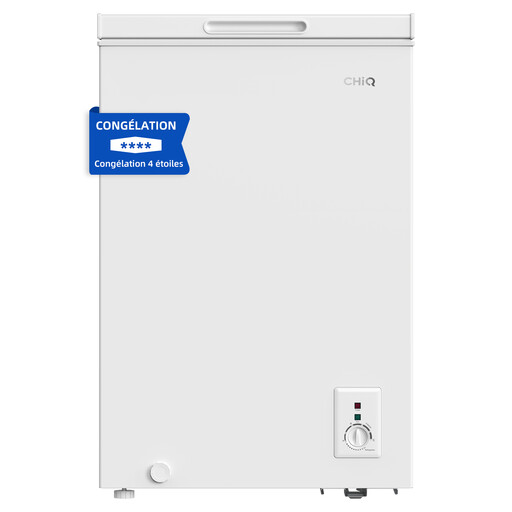 Image unavailable
A small chest freezer for adding extra freezing capacity where space is limited.
99 L, removable wire basket, adjustable thermostat, castors and stated dimensions of 54.5 × 47.6 × 83.5 cm. Check the type of opening, storage time and climate range before buying.
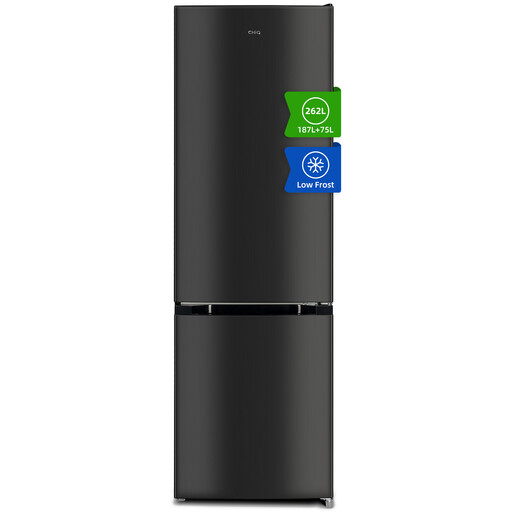 Image unavailable
An alternative if you need to replace both your refrigerated and frozen storage.
187 L fridge, 75 L freezer, three drawers, stated storage time of 10 hours and dimensions of 1760 × 540 × 550 mm. The stated range of 16 to 38 °C is not suitable for a cold garage.
Yes, but only if you have dedicated floor space available. Que Choisir states that chest freezers are typically 110 to 140 cm wide and around 70 cm deep; also measure the space needed to open the lid and reach the bottom.
Do not determine this from the format alone. Check the permitted ambient temperature in the product details and instructions for the exact model: Haier, Beko and Liebherr state temperatures as low as -15 °C for certain specific models, but this feature does not apply to their entire ranges.
According to Que Choisir, it is the length of time food remains frozen during a breakdown or power cut. Look for this information in the technical specifications or instructions for the model before making your choice.
Compare the energy label and annual energy consumption between models with similar capacities. To reduce defrosting, check whether the exact model has No Frost technology or a frost-reduction system; features vary between manufacturers.
ADEME recommends handing it to the retailer or delivery driver when replacing the appliance, or taking it to the dedicated area for electrical and electronic equipment at a recycling centre. Cooling appliances must be sent through a specialist treatment scheme.