
Livraison le jour même ou le lendemain

Qualité garantie

Débloquez vos offres de bienvenue: Livraison GRATUITE | Jusqu'à -80 % | 30 jours d'essai gratuits à JoyPlus
Téléchargez l'application
Choosing tableware plates is about more than simply picking a colour or pattern. Between claims of durability, impractical sizes and materials that are incompatible with certain appliances, an appealing purchase can quickly become a nuisance. Families, students, keen cooks and outdoor dining enthusiasts will not all have the same expectations.
Before comparing different plate sets, it is therefore worth focusing on three essential criteria: the material, the size and the conditions of use. Here are the key points to check to avoid unpleasant surprises and choose tableware that is genuinely suited to your everyday life.
A lightweight plate is convenient to carry, but not all plastics are equal. Polypropylene, for example, is often used for unbreakable plates designed for picnics, camping or children. However, it is still essential to check whether it is suitable for the dishwasher, oven and microwave.
The term ‘durable’ does not guarantee that a plate can withstand direct heat or repeated impacts. The manufacturer’s technical information should always take precedence over marketing claims.
Dinner plates are suitable for main courses, but a model that is not deep enough can quickly make serving dishes with sauce difficult. Deep plates are better suited to soups, pasta, cereal and generous portions. To create a versatile table setting, a set containing several sizes will often be more practical than a pack of identical plates.
Remember to measure the space available in your cupboards and dishwasher, too. A plate measuring 25 to 28 cm in diameter may be pleasant to use, but could be too wide for certain appliances or storage racks.
A plate may be dishwasher-safe without being suitable for use in the microwave. Some disposable plates marketed as eco-friendly are designed for single use only: they should not be reused, heated in the oven or placed in the dishwasher. A stainless steel plate, meanwhile, may be suitable for oven use or cooking according to its technical specifications, but must never be used in a microwave.
Before placing your order, clearly check for the following information: dishwasher, microwave, oven, freezer, food contact and single use.
For everyday meals, a diameter of around 20 to 26 cm covers most uses. Larger models are useful for plating, composed salads and generous main courses. A deep plate or one with a clearly defined rim helps prevent spills when serving dishes with sauce.
For a set intended for four people, examine the box contents carefully. Some packs contain dinner plates only, while others combine serving plates, salad plates and bowls.
Stackable models are particularly practical in a small kitchen, studio flat or motorhome. To protect their finish, use a soft sponge and avoid abrasive products whenever recommended in the technical specifications. Also check the total weight of the set: heavy tableware can be very stable, but less comfortable to handle and store.
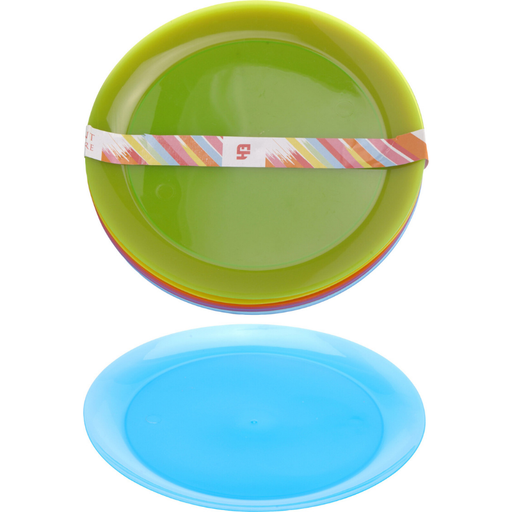
Why this choice suits this profile : This set of six polypropylene plates is ideal for a first tableware set, students or relaxed meals at home or in the garden.
The product details describe a lightweight, stackable, scratch-resistant and unbreakable model, without stating that it is microwave-safe.
Six pieces, dishwasher-safe, stackable for storage and suitable for indoor and outdoor use.
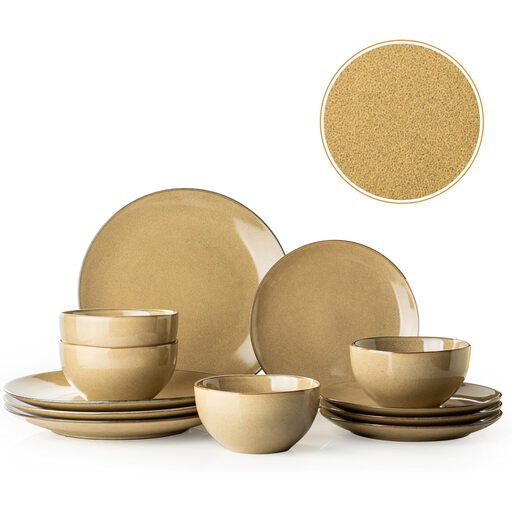
Why this choice suits this profile : This tableware set for four people combines dinner plates, salad plates and bowls in one ceramic collection.
The detailed contents remove any ambiguity about the different shapes : four plates of each type are included.
Ceramic stated to be free from lead and cadmium, and suitable for the dishwasher and microwave.
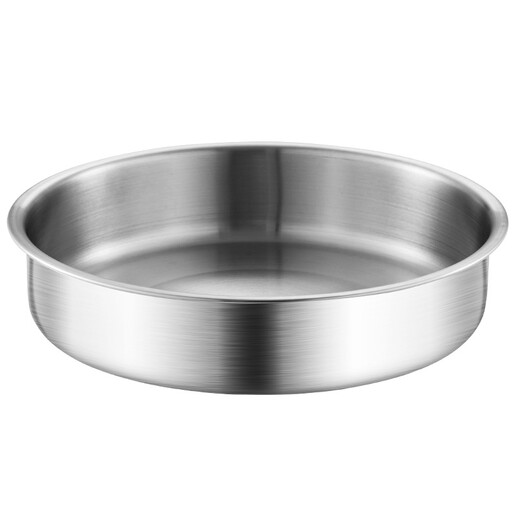
Why this choice suits this profile : This stainless steel plate is aimed at hard-working kitchens, convenient meals and users looking for a material described as unbreakable.
The product details explain the heating precautions, including the use of low to medium heat and the prohibition against heating the plate while empty.
304 stainless steel, good resistance to corrosion, easy to clean and stated to be compatible with the oven, steam oven and induction hob.
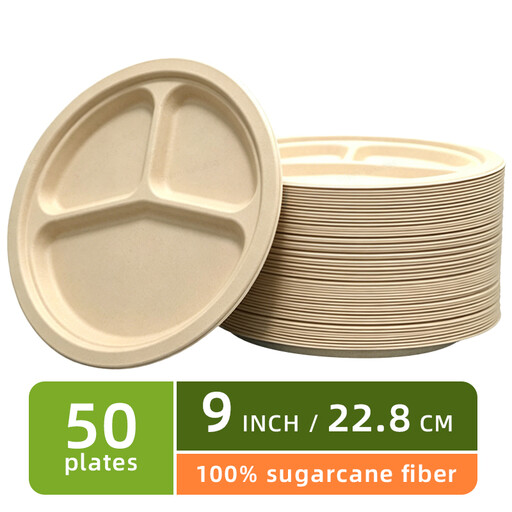
Why this choice suits this profile : The 50-piece pack is suitable for birthdays, buffets, community meals and occasional catering events.
The size and number of pieces are stated clearly, making it easy to estimate the quantities required for an event.
Sugarcane bagasse plates with compartments, described as compostable and resistant to food and greasy liquids.
We have put together a complete, real-time-updated list of products that meet these demanding selection criteria and European safety regulations.
Dinner plates are mainly used to serve main courses, starters and desserts. Deep plates are better suited to soups, pasta, cereal and dishes with sauce. For versatile tableware, a set combining both sizes will generally be the most practical option.
For four people, a set of four to six plates may be enough for everyday use. If you run the dishwasher less frequently, regularly host guests or want to keep serving tableware separate from the dishes used every day, a larger set will save you from constantly having to wash plates.
Not necessarily. A plastic plate may be highly resistant to impacts while still being unsuitable for the microwave. Always check the product details and the symbols on the underside of the plate. For reheating a meal, ceramic or porcelain may be suitable if explicitly described as microwave-safe, provided you avoid sudden changes in temperature.