
Livraison le jour même ou le lendemain

Qualité garantie

Débloquez vos offres de bienvenue: Livraison GRATUITE | Jusqu'à -80 % | 30 jours d'essai gratuits à JoyPlus
Téléchargez l'application
Buying table tennis equipment sounds simple… until you start comparing the bats, balls and kits available. With claims such as “professional”, low-cost multipacks and accessories for children, it is not always easy to know which features really matter.
Three mistakes are particularly common:
Whether you want to play with the family, train regularly or equip a club, a few checks are all it takes to avoid unpleasant surprises.
A table tennis bat for beginners should above all be easy to control. A wooden construction combined with an elastic rubber covering generally provides a versatile feel. However, the product details are still essential for confirming the exact composition.
For learning or family use, look for:
A bat described as “fast” is not necessarily the best choice for a child or someone who is new to table tennis. At first, stability and ease of control are often more important than seeking speed.
ABS V40+ balls use the modern ABS plastic format. Models with “one star” or “no star” are generally intended for training, while ITTF 3-star balls are more suitable for competition when the relevant certification is clearly stated in the product details.
Before ordering, check:
For a school, club or basket training, a pack of training balls is often more practical than a box of six. Conversely, a player who wants a feel closer to that of a match may prefer a product that mentions ITTF or WTT certification. This information should be checked in the detailed product description: it is not simply a marketing claim.
A table tennis ball collector quickly becomes useful when sessions involve a large number of balls. A telescopic handle means you do not have to keep bending down, while a large mesh bag reduces interruptions between exercises.
At home, also remember to check:
A children’s table tennis kit is not intended to replace competition equipment. It is primarily a fun, progressive piece of equipment, with a level of difficulty suited to the child’s age and playing environment.
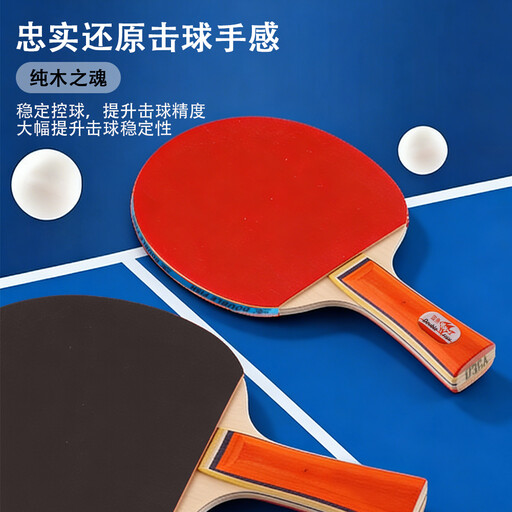
Why this suits this profile : this set of two bats and three balls is ideal for first games at home, occasional sessions and introducing two players to the sport.
the product details specify the use of wood, elastic rubber and edge protection, rather than relying solely on the bat’s appearance.
The product details list two bats, three balls, a long handle and a reinforced edge.
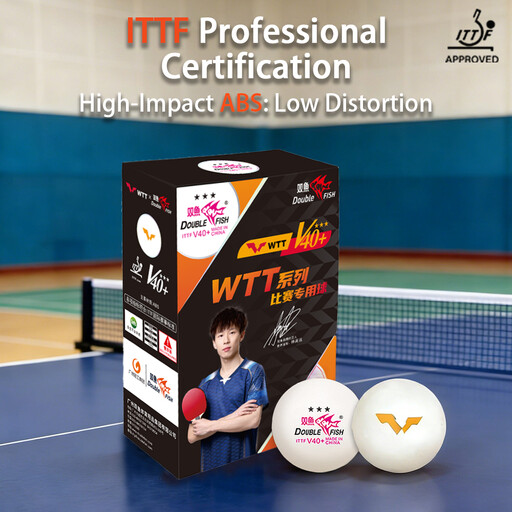
Why this suits this profile : this box is aimed at players who value the V40+ format, the stated consistency and the certifications mentioned by the manufacturer.
the product presentation clearly states that there are six balls, so you will not mistake a small box for a training pack.
The product details specify high-strength ABS, a seamed design and ITTF and WTT certifications.
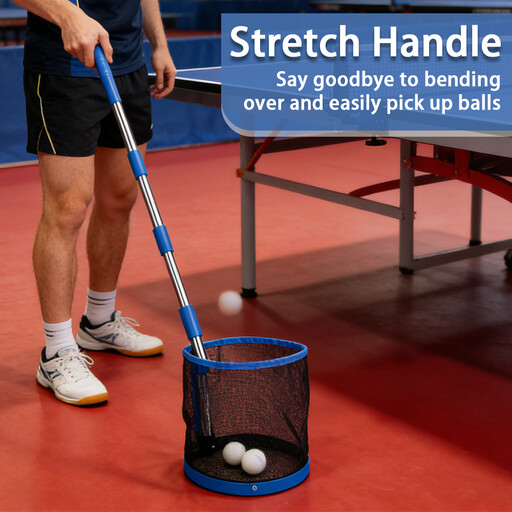
Why this suits this profile : it is designed for clubs, coaches and players who use a large number of balls during repetitive drills.
its ball-collecting function is clearly defined and includes a telescopic handle, rather than offering an impractical multi-purpose accessory.
A stainless-steel telescopic handle and mesh bag designed to hold more than one hundred balls are specified.
We have put together a comprehensive, regularly updated selection of products that meet these criteria and European safety requirements.
For a few games at the weekend, a beginner’s table tennis set with two bats and a few balls is generally enough. For family use, the Marvel children’s table tennis kit includes two bats, a folding net, five balls and a stand with a flexible rod. It is recommended for ages 3 and over, with assembly by an adult and supervision during use.
For a club or school, it is better to choose a pack of 100 balls, such as the Double Fish B40+ or V40+ models without a star rating. This format is more suitable for basket training and repeated sessions than a box of six balls.
Store balls and bats in a dry place, away from heat, direct sunlight and sharp objects. Clean the surfaces with a soft, dry cloth. These precautions help limit premature wear, but cannot guarantee a specific lifespan: this depends on the intensity of impacts, storage conditions and frequency of use.
For family games, three to six balls may be enough. During training, lost balls and repetitive drills make a pack of 100 more practical, particularly in a club or school.
No. They can be useful for getting familiar with the format of a competition ball, but training balls sold in multipacks are often better suited to first sessions and drills requiring several balls.
Wipe the covering regularly with a soft, dry cloth. Avoid prolonged exposure to moisture, high temperatures and significant impacts, and do not store the bat near sharp objects. For children, also keep the bat out of reach when it is not being used.