
Livraison le jour même ou le lendemain

Qualité garantie

Débloquez vos offres de bienvenue: Livraison GRATUITE | Jusqu'à -80 % | 30 jours d'essai gratuits à JoyPlus
Téléchargez l'application
Table linens aren't just a piece of fabric to protect your furniture. They are the centrepiece of your table decor, capable of transforming a simple meal into a shared moment, and a special occasion into an unforgettable memory. But the purchase can quickly turn into a disappointment. A tablecloth that shrinks after the first wash, a stain-resistant treatment that fails, or a material that fades after just a few weeks… these pitfalls are unfortunately common.
As a product expert at Joybuy, my mission is to guide you through this jungle of options to help you make the right choice. Let's break down the traps to avoid and the essential criteria for finding the table linens that will truly fit your style and daily life.
Before we talk about products, let's review the most common disappointments so you don't fall into the same traps.
To avoid these unpleasant surprises, focus on a few technical points that make all the difference.
The choice of material is crucial. It dictates the style, but also the ease of care and the lifespan of your table linens.
A tablecloth that is too short or too long can ruin the entire effect. The golden rule for an elegant drape? Allow for a 20 to 30 cm drop on each side of the table. For example, for a 90x180 cm table, a 140x230 cm rectangular tablecloth will provide a perfect look.
For a more casual style, or to show off a beautiful tabletop, a modern table runner or placemats are great alternatives. A round placemat, for example, can break up the lines of a square table for a welcome touch of originality.
The number one rule: always read the label. Quality table linens should withstand frequent washing without losing their shape or fading. For tablecloths with a stain-resistant treatment, a low-temperature wash is often recommended to preserve its effectiveness. As for natural fibres like cotton, opt for air-drying to limit the risk of shrinkage.
To move from theory to practice, here are a few products that meet different needs and lifestyles.

Why it's a great choice: Perfect for everyday meals, this set of PVC placemats protects the table from stains, liquids, and heat. Their smooth surface cleans up in a flash, a real daily bonus.
This product is transparent about its strength: its PVC material. It guarantees true waterproofness and easy cleaning, unlike "stain-resistant" treatments that eventually wear off.
Heat and moisture resistance: protects the table from hot dishes and condensation from glasses. A quick wipe with a damp cloth and it's clean.
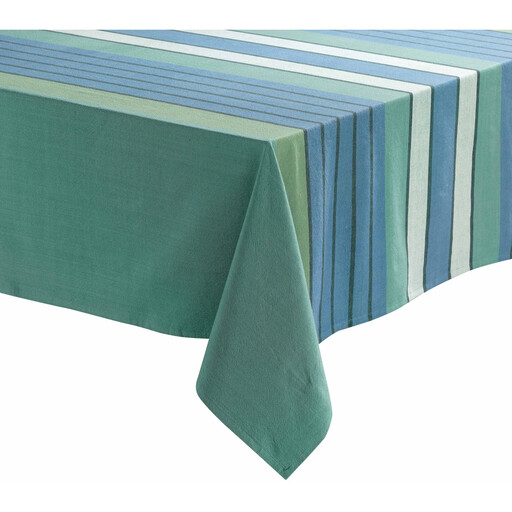
Why it's a great choice: This tablecloth perfectly combines style and commitment. Made from recycled cotton, it offers the soft feel of a natural fibre with a sustainable approach. Its peacock blue colour and subtle stripes add a touch of timeless elegance.
By relying on a quality material (recycled cotton) and a careful weave, this tablecloth avoids the trap of textiles that lose their shape or fade. It's a sustainable investment, for the planet and your wallet.
Eco-friendly material: made from recycled cotton. Easy care: it's machine washable for hassle-free use.
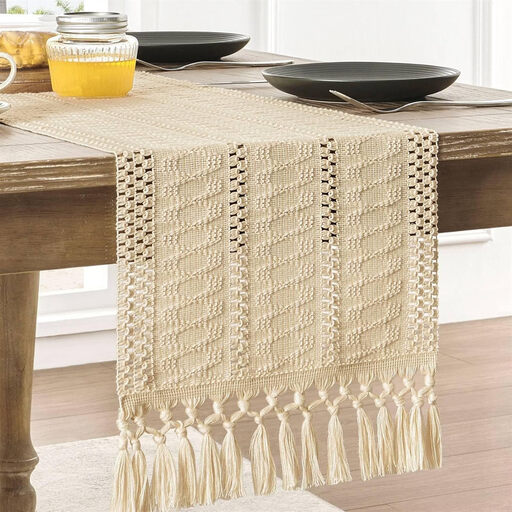
Why it's a great choice: This complete set (1 table runner and 4 placemats) is the turnkey solution for harmonious and warm table decor. The macrame style adds a boho-chic touch, perfect for dinners with friends or festive meals.
This product focuses on aesthetics above all. It doesn't promise absolute protection, but an atmosphere. It dresses the table while allowing the tabletop to show through, combining the best of both worlds.
Coordinated set: a complete and stylish look, effortlessly. Boho-chic style: the macrame weave is a sure bet, both trendy and timeless.
Discover our full selection of products that meet our quality criteria and current regulations.
For a classic drape, measure the length and width of your table, then add between 40 and 60 cm to each dimension. This will give you a nice 20 to 30 cm drop on each side. For a more casual style, a 15 cm drop is more than enough.
As a natural fibre, cotton can indeed shrink. To limit the damage, wash your tablecloth at a low temperature (30°C maximum), avoid the tumble dryer which tightens the fibres, and iron it while it is still slightly damp.
It all depends on the occasion and the desired effect.