
Livraison le jour même ou le lendemain

Qualité garantie

Débloquez vos offres de bienvenue: Livraison GRATUITE | Jusqu'à -80 % | 30 jours d'essai gratuits à JoyPlus
Téléchargez l'application
A beautifully laid table is about more than just plates and crockery. Table linen protects the tabletop, brings structure to your décor and makes everyday meals and special occasions more enjoyable. However, some purchases can quickly disappoint: the wrong dimensions, time-consuming care or a material that is less practical than advertised.
Here are the key criteria to consider before choosing a tablecloth, placemats, table napkins or a table runner.
A water-repellent finish slows the absorption of liquids, but it does not necessarily turn the fabric into a completely waterproof surface. A recycled cotton tablecloth can therefore feel pleasant and be machine washable, while still requiring prompt action if something is spilt.
For meals with children, drinks and nibbles or tables set up outdoors, a coated tablecloth or waterproof table linen can be much easier to manage day to day. However, always check the care instructions and the exact nature of the coating.
A tablecloth that is too short looks inelegant and offers poor protection for the table edges. If it is too long, it may get in the way of guests or catch on their knees. Measure the length and width of the tabletop, then add the desired drop on each side.
For a round table, measure the diameter. For a rectangular table, note the length and width separately, taking any extension leaves into account. A round tablecloth measuring 140 cm is suitable for some smaller tables, while a 170 × 300 cm rectangular model is designed for larger gatherings.
A delicate material, a very pale colour or a weave that requires frequent ironing can quickly become impractical for everyday use. Before ordering, consider whether the linen will be used every day, reserved for meals with friends or put outside.
A machine-washable or sponge-clean option can make care much easier. In all cases, follow the instructions provided on the product page.
Cotton offers a soft feel and a traditional look. Recycled cotton will appeal to anyone who wants to incorporate reclaimed fibres into their décor. Some models combine recycled cotton and polyester to improve the fabric’s shape retention and make it easier to care for.
Coated vinyl, used for coated tablecloths, can generally be wiped clean with a damp sponge. It is well suited to meals where splashes are common, but its feel and drape do not look the same as those of a woven textile.
Before buying, check the following points:
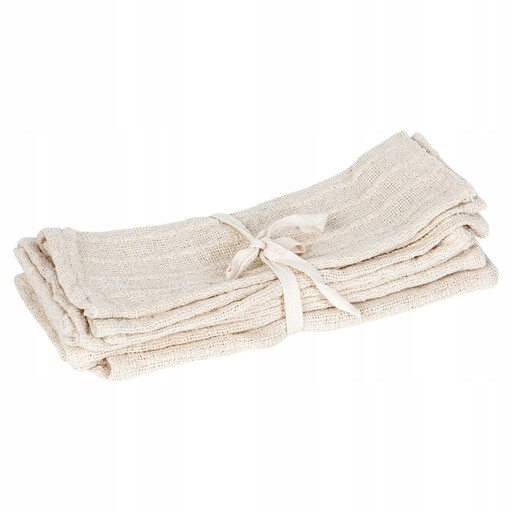
Why this choice suits this profile : This set lets you create a coordinated table without immediately replacing your tablecloth. It is equally suitable for everyday meals and kitchen tables.
The dimensions of each placemat are clearly stated, and the cotton can be washed at up to 30 °C, helping to prevent unpleasant surprises when it comes to care.
Set of 4, 100 % cotton, 45 × 30 cm format and machine washable at 30 °C.
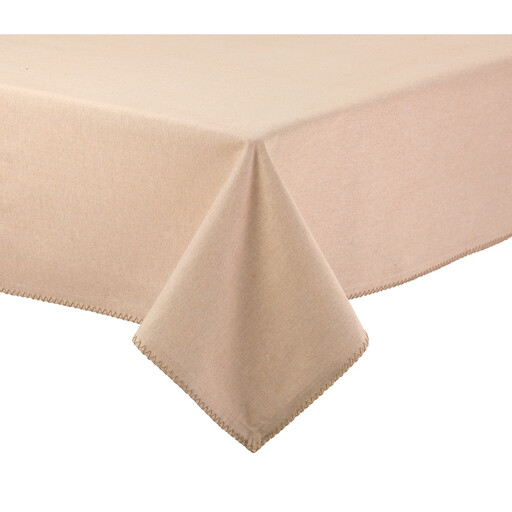
Why this choice suits this profile : Its generous size and natural shade suit family meals as well as formal dining tables, creating a particularly refined textile presentation.
The product details specify the composition, size, Oeko-Tex certification and stain-resistant treatment, rather than relying solely on aesthetic appeal.
80 % recycled cotton, 20 % polyester, “horse stitch” edging and machine washable.
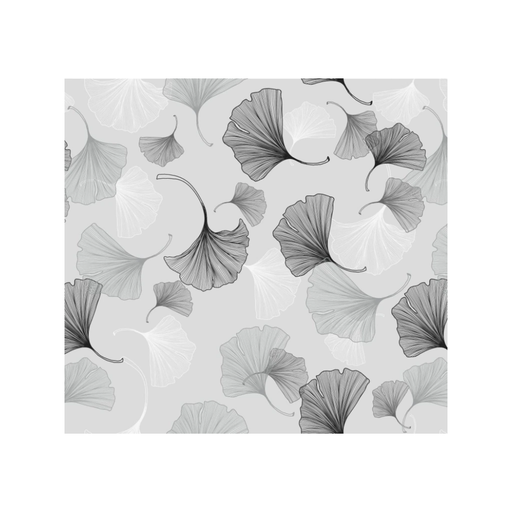
Why this choice suits this profile : This oilcloth is ideal for frequent meals, families and anyone who wants to wipe away small splashes quickly.
The vinyl coating and damp-sponge cleaning meet the need for speed, without promising the same uses as a machine-washable textile.
140 cm width, grey, black and silver ginkgo pattern, supple material and the option to cut the oilcloth to your desired length.
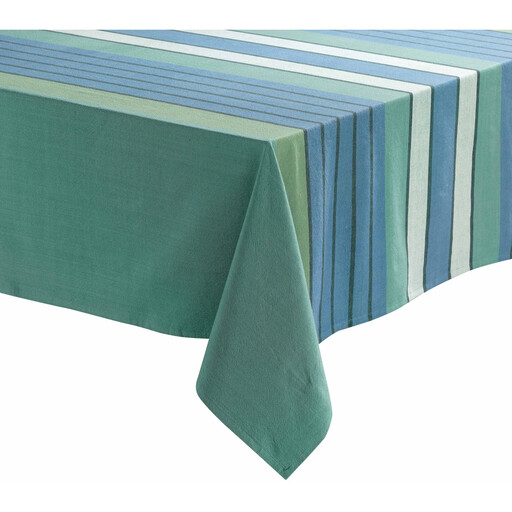
Why this choice suits this profile : Its square format works equally well on a square or round table, while its subtle stripes complement natural or more colourful décor.
The recycled cotton composition and machine-washing instructions are clearly stated, making it easier to compare materials on a practical basis.
170 × 170 cm, recycled cotton, delicate stripes, peacock colourway and machine-washable care.
We have put together a complete, real-time updated list of products that meet these demanding selection criteria and European safety regulations.
For a balanced table setting, stick to two or three visually distinct elements. A patterned tablecloth can be paired with plain table napkins. Conversely, a neutral tablecloth leaves more room for a colourful table runner or textured placemats.
Placemats effectively protect the area used by each place setting and make it easy to change the overall look. Outdoors, tablecloth clips can stop the tablecloth from slipping or lifting in the slightest gust of wind. Choose them according to the thickness of the tabletop and fabric.
Also make sure the dimensions work together: a table runner that is too narrow may look lost on a large table, while placemats that are too wide will reduce the space available for cutlery.
Start by measuring the diameter of the tabletop, then add twice the desired drop. A round tablecloth creates an even drape, but a square tablecloth can also work if you prefer a more relaxed look. The Yuna 170 × 170 cm model is suitable for both square and round tables.
If something is spilt, act quickly with a damp sponge and a mild product that is compatible with the coating. Avoid abrasive sponges, solvents and high temperatures unless they are permitted in the care instructions. A coated tablecloth should not be ironed directly on its coated surface.
Its lifespan depends on how often it is washed, the temperature used, the drying method and its exposure to stains or friction. To make it last longer, follow the manufacturer’s recommendations, wash similar colours together and alternate between several tablecloths or placemats. For everyday use, a material suited to your habits will often prove more practical than a model chosen solely for its appearance.