
Livraison le jour même ou le lendemain

Qualité garantie

Débloquez vos offres de bienvenue: Livraison GRATUITE | Jusqu'à -80 % | 30 jours d'essai gratuits à JoyPlus
Téléchargez l'application
Upgrading your car's lighting to LED—a simple formality? In theory, yes. In practice, the operation often turns into a headache: an error light illuminates on the dashboard, and frustration sets in. That's because choosing a T10 W5W Canbus LED bulb is about more than just finding the right socket. Too many drivers are still being misled by marketing promises that don't hold up.
The number one pitfall? Incompatibility with the on-board diagnostic (OBD) system. Because an LED bulb consumes very little power, the on-board computer thinks a bulb has burned out and triggers an alert. Another common disappointment: "ultra-powerful" bulbs that, without an effective cooling system, overheat, lose intensity, and give up the ghost in just a few months. This guide is here to help you sidestep these traps and choose a model that truly fits your vehicle and your expectations.
To make the right choice, you need to understand a few technical points. These are the true guarantors of quality and compatibility, far more so than advertising slogans.
The keyword is Canbus. This term, also known as error-free, is absolutely fundamental. It refers to a circuit integrated into the bulb that simulates an electrical consumption similar to that of a traditional halogen bulb.
These different references all refer to the same type of bulb socket, a very common standard in the automotive world. The versatility of the W5W LED bulb makes it the true Swiss Army knife of car lighting.
In any case, one step is essential before buying: consult your vehicle's manual to be certain that the T10/W5W format corresponds to the intended location.
The performance of a 12V car LED isn't just about lumens. The quality of the light and its longevity are just as important.
To help you see more clearly, we have identified options that meet distinct user profiles, based on compatibility and performance criteria.
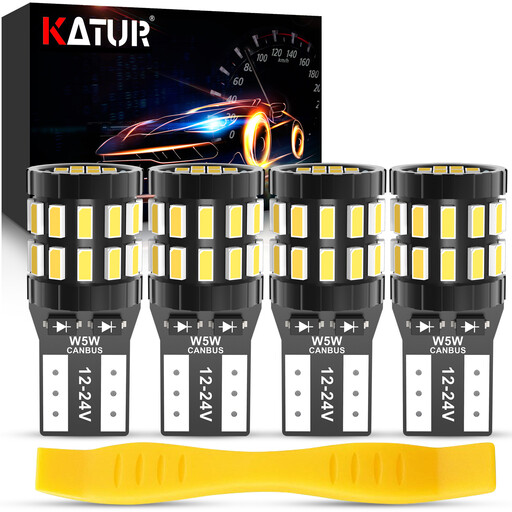
Why we chose it: Perfect for those who want an immediate result without the hassle. This model replaces halogen parking or license plate lights with a crisp, white light for a modernized look in minutes.
Its Canbus system is designed for broad compatibility, which neutralizes the OBD alert on most cars. The 6063 aluminum body ensures proper heat dissipation, eliminating the risk of overheating and guaranteeing better longevity.
Its versatility (parking lights, license plate, interior) and its xenon white 6000K color, which gives an immediate boost to the vehicle's look.
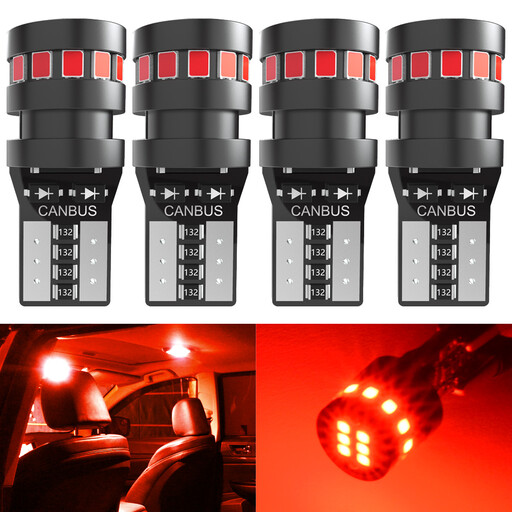
Why we chose it: For drivers who appreciate fine details and want a unique interior ambiance. Ideal for footwell, door, or glove box lighting.
This model combines a bold color with Canbus technology. No more choosing between low-quality colored bulbs that systematically trigger an error light.
A deep red color for a custom interior atmosphere, with the peace of mind of a guaranteed error-free, "plug and play" installation.
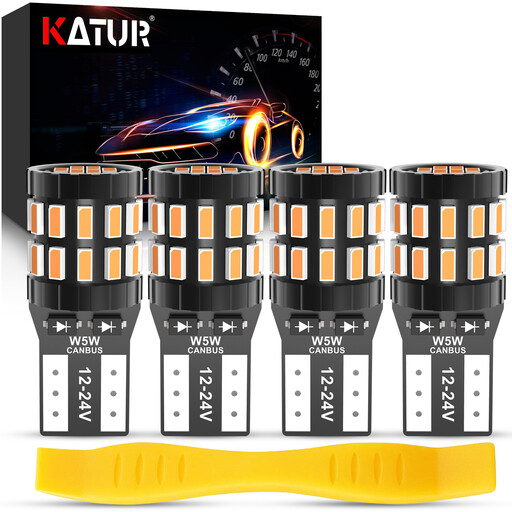
Why we chose it: Specially designed for signalling, particularly side marker turn signals, where an amber/yellow color is a legal requirement and a safety feature.
It provides the regulation amber color while integrating a Canbus system that prevents OBD errors and the infamous rapid blinking ("hyperflash") typical of unsuitable LEDs.
It combines the regulation color with brightness and responsiveness far superior to that of a classic halogen bulb.
Explore our full selection of products that meet our quality criteria and current standards.
In theory, yes, but some vehicles remain finicky. The diagnostic systems of German brands (Audi, BMW, Mercedes) or recent Stellantis group models are particularly sensitive. In rare cases, even an "error-free" bulb may not be enough. The best advice: check reviews from other owners of the same car model as yours.
It's no contest: a quality LED can last for over 50,000 hours, compared to just 1,000 to 2,000 hours for a halogen. Be aware, this exceptional longevity is directly dependent on the quality of the cooling. A low-end LED that overheats will never live up to this promise.
Absolutely not. Installation is child's play and requires no tools. It's "plug and play": you remove the old bulb and clip in the new one. If it doesn't light up, don't panic! Simply remove it, turn it 180 degrees, and put it back in. It's just a matter of polarity (+/-), which is typical for LEDs.