People with coeliac disease and households strictly avoiding gluten
Check each product individually rather than assuming it’s suitable because it contains fruit. The “gluten-free” claim is regulated under European law.


If someone with coeliac disease will be eating the crêpes, choose syrup fruits whose exact product is labelled “gluten-free”, and check the label on the product you buy. The presence of fruit or a “no added sugar” claim isn’t enough. Then choose a pack size to suit the number of crêpes you’re filling. A no added sugar option may still contain sugars naturally present in the fruit.
Check each product individually rather than assuming it’s suitable because it contains fruit. The “gluten-free” claim is regulated under European law.
A tin of fruit or a fruit cocktail can fill several crêpes, while pots are handy for serving individual portions. Compare the amount of fruit with the number of people you’re serving.
“No added sugar” is a separate consideration from being gluten-free. It doesn’t mean that the fruit and its juice contain no sugar.
If you’re serving crêpes to someone with coeliac disease, first check that the exact product is labelled gluten-free. Then look at the sugar content and pack size separately.
| Criterion | What to check | Who it matters to |
|---|---|---|
| Gluten-free claim | Check the claim on the exact product and packaging you buy, then read the ingredients and allergen information. | If I’m serving someone with coeliac disease, I want to confirm that the exact product is gluten-free, rather than relying on it simply containing fruit; around 50% of consumers make this their top priority. |
| Added sugars | Look for the “no added sugar” claim and the “of which sugars” line in the nutrition information. Check separately whether it’s gluten-free, if needed. | For my crêpes, I want to choose a no added sugar topping, while remembering that fruit naturally contains sugars; around 30% of consumers prioritise this distinction. |
| Pack size and quantity | Compare the drained weight or number of pots, and follow the storage instructions after opening. | When I’m filling several crêpes, I want enough fruit without leaving a large tin open unnecessarily; around 20% of consumers prioritise pack size. |
These claims describe two different things. Carrefour France labels its 475 g net drained St Mamet peaches “Gluten Free”, but this claim doesn’t apply to other products from the brand.
If someone with coeliac disease will be eating the crêpes, check the gluten-free claim on the exact product before choosing based on sugar content or pack size.
Products described as having no added sugar still contain sugars naturally present in the fruit or its juice.
Check the “of which sugars” line in the nutrition information if you want to compare toppings on this basis.
A larger pack may suit a group, but once opened, its contents must be stored according to the instructions for that specific product.
For a few crêpes, compare pots with a tin. If you choose a tin, check its storage instructions.
Any leftovers not used within the stated time may go to waste.
When filling crêpes, the amount of fruit matters more than the combined weight of the fruit and syrup.
Compare the drained weight where it’s stated, as well as the number of pots in multipacks.
The brand offers products including tinned peaches and fruit cocktails.
The range includes syrup fruits and pots, including some products with no added sugar.
The range includes an 825 g tin of light syrup with a cocktail of four fruits.
This selection features morello cherries in syrup in a jar, which you could try as a crêpe topping. If you’re serving someone with coeliac disease, check the gluten-free claim on the packaging you buy.
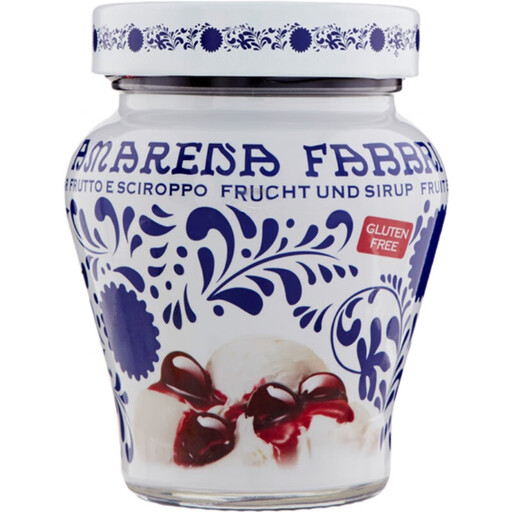 Image unavailable
These morello cherries in syrup could make a delicious crêpe topping. The description for this product states “Gluten free”. If you’re serving someone with coeliac disease, also check the gluten-free claim on the jar you buy. Check the nutrition information if sugar content is important to your choice.
No. The fact that they contain fruit doesn’t mean a product is gluten-free. Check for an explicit claim on the exact product and read its label. The “gluten-free” claim is regulated under European law.
No. Syrup fruits with no added sugar may still contain sugars naturally present in the fruit and its juice. Use the “of which sugars” line in the nutrition information to compare products.
Pots are handy for individual portions and may help reduce leftovers. A large tin gives you enough fruit to share across several crêpes. Compare the number of pots or the drained weight, and plan how you’ll store any opened contents.
Follow the instructions on the packaging you buy, as they vary by product. The Joybuy listing for the 425 g St Mamet cocktail says to refrigerate it in a suitable container and consume within 3 to 4 days of opening. Don’t automatically apply this guidance to another product.