
Livraison le jour même ou le lendemain

Qualité garantie

Débloquez vos offres de bienvenue: Livraison GRATUITE | Jusqu'à -80 % | 30 jours d'essai gratuits à JoyPlus
Téléchargez l'application
Finding the perfect spot for a large-screen TV often presents a real challenge. Between a TV stand that devours floor space, glare that ruins the picture, and the need to secure an expensive device, the obstacles are numerous. A swivel TV wall mount emerges as the perfect solution to free up space, improve viewing comfort, and achieve a clean, modern setup.
This guide is here to help you make the right choice. We break down the essential criteria to consider before you buy and present our selection of the best models, whether you're looking to mount a 32-inch or a 100-inch screen.
Before you break out the drill, there are three technical points to check to ensure a safe and durable installation.
The first step is to check the compatibility between the mount and your television. To do this, consult two key pieces of information:
The nature of your wall is just as important as the mount itself. Mounts for heavy, swivelling televisions exert a strong pulling force.
The choice of movement depends on your room's layout and your viewing habits.
Here is our selection of models that stand out for their durability and versatility, designed for different types of installations.
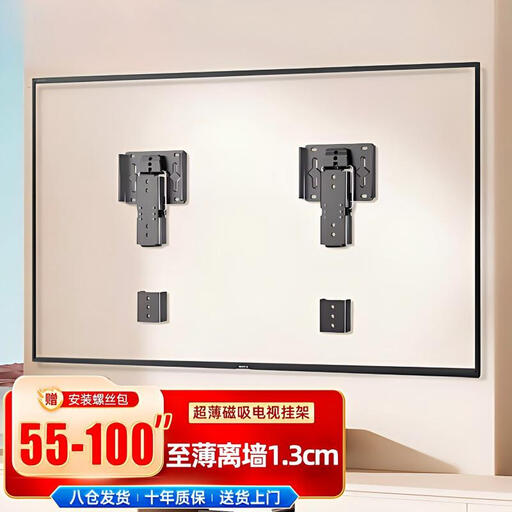
Why It Stands Out This fixed model focuses entirely on security. Its main advantage? XXL compatibility, capable of holding screens from 32 to 100 inches. Its simple and robust design makes it a sensible choice for those who don't need to change the viewing angle daily.
Pros
Who Is It For? Ideal for owners of very large screens who prioritise security and a discreet, fixed installation. It's a smart choice for a home cinema room where the viewing position is already set. Please note: installing a heavy television absolutely requires two people.
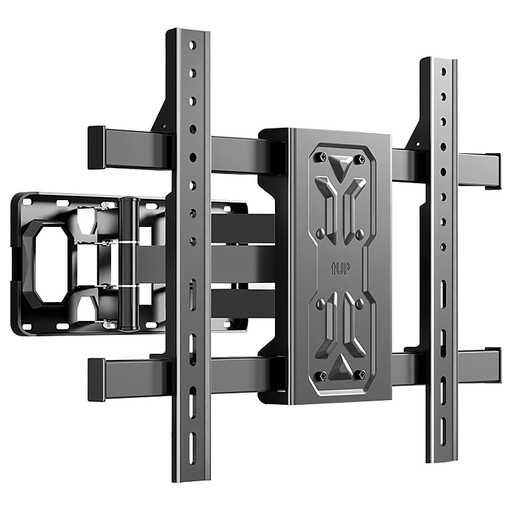
Why It Stands Out This articulating mount is a powerhouse of versatility. Designed for screens from 32 to 55 inches, it supports a maximum load of 45 kg and is VESA compatible up to 400 x 400 mm. Its arm, which extends up to 34 cm, its -15° to +5° tilt, and its ±3° level adjustment allow for precise screen positioning in any situation.
Pros
Who Is It For? Perfect for users who want total flexibility in a living space. It allows you to turn the TV from the sofa to the kitchen, avoid sun glare by tilting it, or easily access the HDMI ports on the back of the device. It must be installed exclusively on a load-bearing concrete or brick wall.
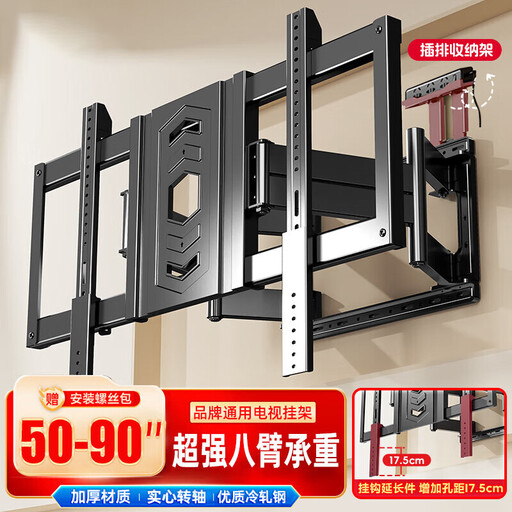
Why It Stands Out This telescopic mount is aimed at home cinema enthusiasts with very large screens (50 to 90 inches). Its key feature: an articulating arm offering an impressive 46 cm extension, while remaining discreet with a profile of only 6 cm when folded. Compatible with VESA standards up to 600x400 mm, it allows for a +/-5° tilt to eliminate glare.
Pros
Who Is It For? For owners of large televisions (up to 90 inches) who demand maximum freedom of movement. It's the ideal solution for complex setups, such as a corner installation or when the TV needs to be pulled away from the wall for a perfect immersive experience.
None of these models check all your boxes? Don't worry, other solutions exist. As every installation is unique, the key is to find the mount that perfectly combines security, functionality, and aesthetics.
To explore a wider variety of models, discover our complete collection of extendable wall mounts and find the one that will perfectly suit your home.
To check compatibility, you need to verify three points on the mount's technical sheet:
This is strongly advised against. It is not recommended to install a swivel TV wall mount for a heavy television on a plasterboard (drywall) partition. These walls are not designed to handle the pull and leverage of an articulating arm. The risk of the mount being torn from the wall and the TV falling is far too high. Installation must be done on a load-bearing concrete wall, solid brick, or solid wood studs.
Yes, it's essential. For obvious safety reasons, the installation—and especially the tricky part of hanging the television on the mount—must be carried out by two people. This is the only way to handle the screen without risking dropping it, injuring yourself, or damaging it.