What should you check before buying?
For a uni lunch, start by checking the ingredients and sugars per 100 g, then look at the pack size and storage instructions after opening. Labels and other features can help you choose between two products, but they don’t replace checking this information.
| Criteria |
What to check |
Who it matters to |
| Added sugar |
Read the ingredients list, then compare the ‘of which sugars’ figure per 100 g. A recipe with no added sugar can still contain naturally occurring sugars. |
For my packed lunch, I want to avoid a recipe with added sugar without mistaking this preference for an absence of sugars in sweetcorn. Around 42% of consumers rank this distinction as their top concern. |
| Portion size and leftovers |
Compare the product weight and individual portions, then read the storage instructions for after opening. |
If I’m eating on my own at uni, I’d rather not open a pack if I can’t keep the rest chilled. Portion management comes first for around 33% of consumers. |
| Labels and product features |
Check the organic certification or origin you’re interested in separately from the product’s nutritional information. |
I want to choose based on a label or an origin claim, but I don’t want to assume anything about the sugar content. This is the top priority for around 25% of consumers. |
Joybuy products for this lunch
These products include sweetcorn kernels and baby corn. First, choose the type that suits your meal: baby corn is a different product from sweetcorn kernels. For each product, check the label if sugar content or storing leftovers will affect your choice.
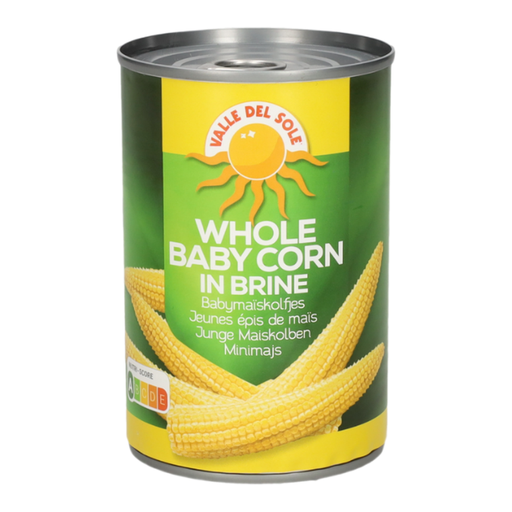 Image unavailable
Valle Del Sole Baby Corn 13 up 400 g
For a salad where you’d prefer baby corn to sweetcorn kernels. The pack size is listed as 400 g. If you only use some of the contents, check the storage instructions on the packaging.
View on Joybuy
 Image unavailable
Bonduelle sweetcorn kernels 285 g
For a meal where you’d prefer sweetcorn kernels rather than baby corn. Check the ‘of which sugars’ figure and the storage instructions for this product after opening on the label.
View on Joybuy
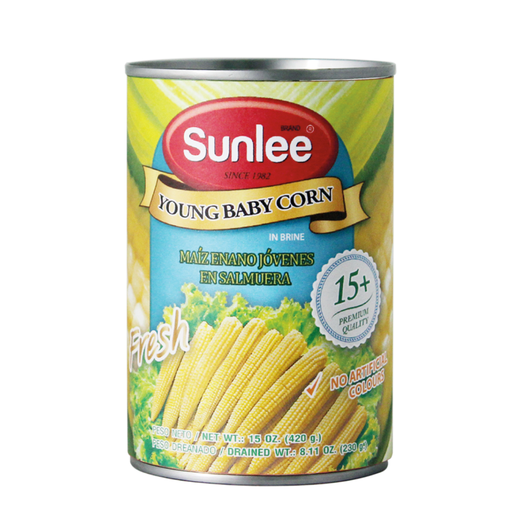 Image unavailable
Sunlee Baby Corn 420 g
For adding baby corn to your lunch instead of sweetcorn kernels. The pack is listed as 420 g, so plan what you’ll do with any leftovers after opening.
View on Joybuy
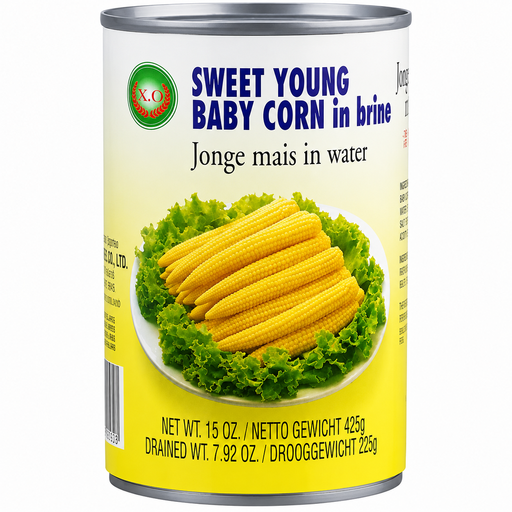 Image unavailable
X.O Sweet Young Baby Corn in Brine 425 g
For a meal where baby corn in brine works better than sweetcorn kernels. The pack size is listed as 425 g. Check the packaging for storage instructions after opening.
View on Joybuy
 Image unavailable
Bonduelle Supersweet Corn 570 g
For making a meal with sweetcorn kernels, as long as you can manage the leftovers from a 570 g pack. Joybuy’s product page lists sweetcorn kernels, water and salt. Check the packaging for nutritional information and storage instructions after opening.
View on Joybuy
Frequently asked questions
Does sweetcorn labelled ‘no added sugars’ still contain sugars?
Yes, it can contain sugars that occur naturally in sweetcorn. Anses points out that ‘no added sugars’ doesn’t mean there are no sugars. The Bonduelle product page for the product reviewed lists 5.1 g of sugars per 100 g. Check the ‘of which sugars’ figure to find out how much is in the product you choose.
Does ‘no added sugars’ mean ‘reduced sugar’?
No. Having no added sugar in the recipe doesn’t prove that the total sugar content is lower than in another product. If this comparison matters to you, check the ‘of which sugars’ figures per 100 g, and remember that baby corn and sweetcorn kernels are different products.
What should I do with leftover sweetcorn after opening?
Follow the instructions on the packaging and refrigerate leftovers as directed by the manufacturer. For the product reviewed, Bonduelle specifies a maximum of 4 °C and 48 hours. Auchan Bio advises keeping it in an airtight container in the fridge and consuming it within two days.
Should you automatically throw away a tin after its best-before date?
No. According to the Ministry of Agriculture, going past the best-before date on a tin doesn’t automatically make it unsafe, although its quality may change. Don’t use a dented or swollen tin, or any product that smells suspicious when opened.


