People who need a quick lunch
You’re looking for a base to add toppings to and want to choose a pack size that suits the meals you actually plan to make.


For a quick lunch without buying more than you need, choose a pack size that matches how much you eat, then compare plain, wholemeal and brioche-style recipes. If the ingredients matter to you, read the ingredients list and nutritional information for the specific product. If you’re taking the pack with you, check the storage instructions too.
You’re looking for a base to add toppings to and want to choose a pack size that suits the meals you actually plan to make.
You want to compare the flours used, fibre and salt rather than relying on the word ‘wholemeal’ on the pack.
You need to read the ingredients list and any ‘may contain’ warnings on the pack you buy before preparing your lunch.
Start with a pack size you can use, then compare the recipes based on their ingredients and how you like to have lunch.
| What to consider | What to check | Who it’s for |
|---|---|---|
| Pack size | Check the net weight and choose a size that suits how often you eat it. | If you regularly make a lunch with toppings, you’ll want to finish the pack without wasting any. Around 40% of consumers prioritise a pack size that suits how they use it. |
| Wholemeal ingredients | Check which flours are listed in the ingredients, then compare fibre and salt per 100 g. | If you’re looking for a wholemeal wheat recipe, the name alone won’t help you choose between two packs. For around 30% of consumers, ingredients are the top priority. |
| Pack to take with you | Check the pack’s weight, the shape of the rusks and the storage instructions. | If you’re having lunch away from home, the pack needs to fit in your bag and suit the way you prepare your meal. Around 20% of consumers put convenience first. |
| Type of recipe | Choose plain, wholemeal or brioche-style according to your preferences and planned toppings; check the ingredients again. | You might prefer a brioche-style recipe or smaller rusks to add toppings to, even if other factors matter less to you. Taste or this type of format is the top priority for around 10% of consumers. |
The word ‘wholemeal’ doesn’t tell you which flours are used or give you the nutritional values. Auchan and Pelletier product listings describe different recipes.
Compare the ingredients list, as well as the fibre and salt per 100 g, on the packs you’re considering.
Auchan and Pelletier product listings indicate different possible traces, depending on the product. The French Directorate-General for Competition, Consumer Affairs and Fraud Control says allergenic ingredients must be clearly highlighted in the ingredients list.
If you have an allergy or intolerance, check the information on the pack you’re buying.
Storage instructions affect how you can use an opened pack. The product listing for AUCHAN wholemeal rusks, for example, says to keep them away from heat and moisture.
Choose a pack size that suits how often you eat them and follow the instructions on the packaging.
If a pack loses its crunch before you’ve finished it, some of it could go to waste.
Carrefour products identified include Carrefour Extra plain rusks in a 400 g pack and Carrefour Original wholemeal wheat rusks in a 500 g pack.
The product listing for AUCHAN wholemeal wheat rusks describes a 500 g pack containing 24 slices.
The Pelletier product listing describes a 500 g pack of wholemeal wheat rusks containing 24 slices.
These KRISPROLLS products come in a range of recipes and pack sizes for making a lunch with toppings. Choose a size that suits how much you eat and check the ingredients that matter to you.
 Image unavailable
A 425 g pack to consider if you regularly use crisp rusks for adding toppings. The product contains gluten from wheat and barley; check the label if you need to avoid it.
 Image unavailable
The 240 g bag is a good choice if you want a smaller amount of crisp rusks to add toppings to. It contains gluten from wheat and barley; check the label if you need to avoid it.
 Image unavailable
This 425 g bag contains wholemeal rusks to top or serve alongside lunch. The product contains gluten from wheat and barley; check the label if you need to avoid it.
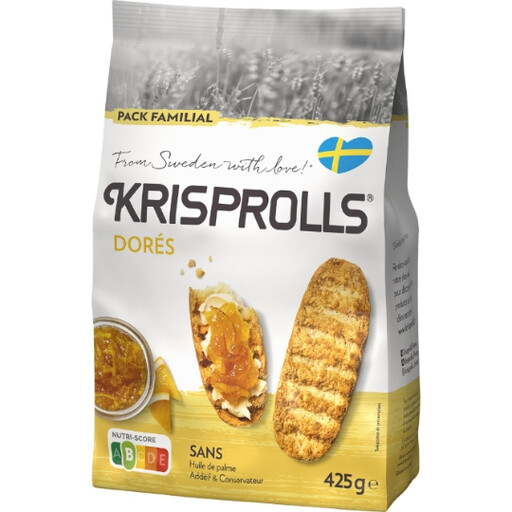 Image unavailable
Another recipe of crisp rusks for adding toppings, in a 425 g pack. Don’t confuse it with the wholemeal products: the recipe described uses wheat flour, with no mention of wholemeal flour. It contains gluten from wheat and barley.
First, check which flours are listed in the ingredients, then compare fibre and salt per 100 g. Two products described as wholemeal rusks can have different recipes and nutritional values.
Read the ingredients list and any ‘may contain’ warnings on the pack you buy. The French Directorate-General for Competition, Consumer Affairs and Fraud Control says allergenic ingredients must be clearly highlighted; the possible traces listed can also vary between Auchan and Pelletier products.
Follow the instructions on the packaging. The product listing for AUCHAN wholemeal rusks, for example, says to keep the pack away from heat and moisture.