
Livraison le jour même ou le lendemain

Qualité garantie

Débloquez vos offres de bienvenue: Livraison GRATUITE | Jusqu'à -80 % | 30 jours d'essai gratuits à JoyPlus
Téléchargez l'application
A designer pendant light can transform a living room, dining room or hallway. But looks aren’t everything. A light that’s too large, points in the wrong direction or isn’t compatible with your ceiling fitting can quickly turn an impulse buy into a disappointment.
Before you fall for a designer chandelier, a glass pendant light or a crystal ceiling light, take a moment to avoid these three common pitfalls:
For a light intended for the living room, start by measuring the available space and ceiling height. Above a table, the pendant should provide enough light without getting in the way of conversation or blocking your view. Above a kitchen island or a large table, several light sources usually provide more even illumination.
In particular, check:
In a hallway or bedroom with a low ceiling, a crystal ceiling light or compact pendant will often be a better choice than a large chandelier.
An E27 lampholder takes standard-sized bulbs, while an E14 lampholder is designed for smaller bulbs, often used in multi-arm chandeliers. In both cases, always observe the maximum wattage specified by the manufacturer.
Lights sold without bulbs give you more freedom to choose:
An integrated LED pendant may offer several colour temperatures, but how it can be replaced depends entirely on the light’s design. Always check the technical specifications and instruction manual provided.
Opal glass gives a soft, even light. Clear or smoked glass draws more attention to the bulb and the way the light reflects. Gold-coloured metal, brass and crystal details give a light a more striking decorative presence.
An IP20 rating is for indoor use in dry environments. This doesn’t automatically make a light suitable for a bathroom or an area exposed to splashes. For a light connected to the mains, we recommend using a qualified electrician, particularly for heavy models or Class I lights that require earthing.
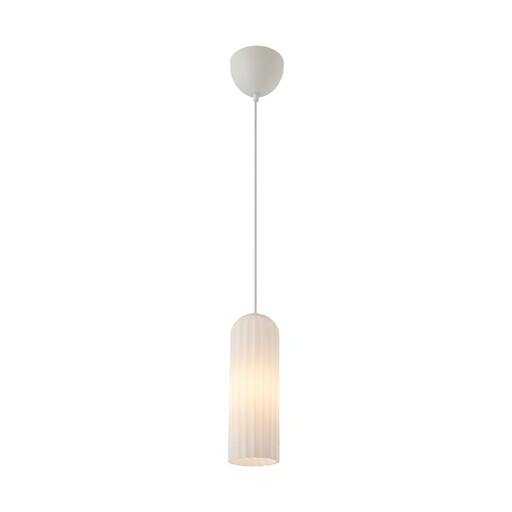
Why it’s a good fit for this shopper: At 30 cm high and with an E27 lampholder, this compact model is ideal for a first installation in a living room, bedroom or hallway.
The dimensions, 220 to 240 V voltage and maximum wattage of 25 W are clearly stated. All you need to do is choose a bulb separately to create the atmosphere you want.
Ribbed white glass, 200 cm fabric cable, IP20 rating for indoor use and compatibility with a dimmable bulb.
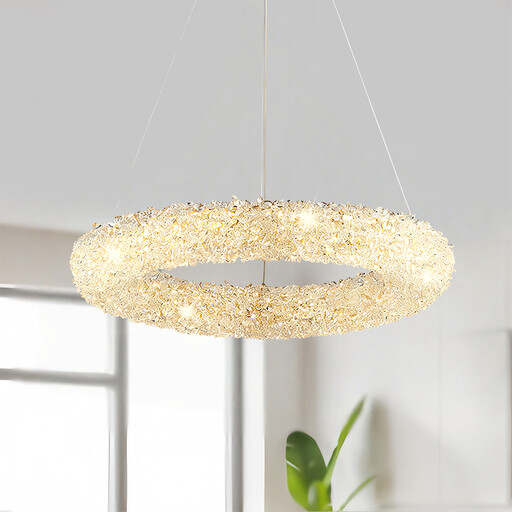
Why it’s a good fit for this shopper: Its gold circular frame and K9 crystals make an instant impression in a large living room, dining room or bedroom.
The adjustable height lets you tailor the pendant to your ceiling and furniture. Three colour temperature settings also let you change the lighting to suit different occasions.
Integrated LED light source, circular frame, K9 crystals and adjustable colour temperature.
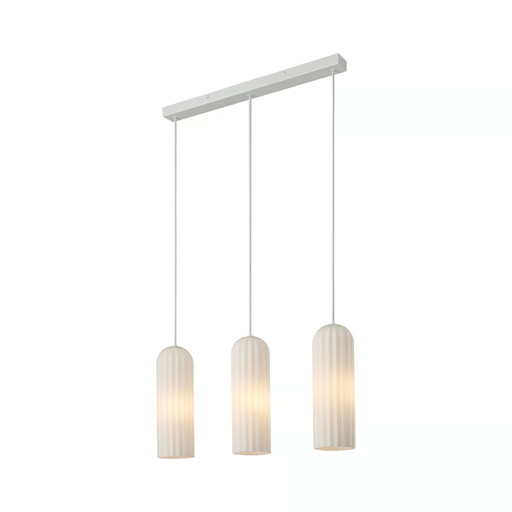
Why it’s a good fit for this shopper: Its three E27 lampholders make it a good choice for a long table, kitchen island or any space that needs more evenly distributed light.
Three light sources help reduce dark spots compared with a single light. However, be sure to check its 52 cm width against the dimensions of your table.
Three E27 lampholders, ribbed white glass, 130 cm cables and compatibility with dimmable bulbs.
We’ve put together a comprehensive, regularly updated list of products that meet these demanding selection criteria and European safety standards.
Before drilling or connecting the light, switch off the power at the consumer unit. Check whether the model can be fitted to a ceiling hook or needs a specific fitting. Some lights, particularly blown-glass pendants, may have slight variations in shape or small air bubbles due to their handcrafted production.
To keep the glass and metal looking their best:
A distance of 70 to 90 cm between the tabletop and the bottom of the pendant is usually a good starting point. Adjust this according to the light’s dimensions, ceiling height and how much visibility you want. If in doubt, follow the manufacturer’s instructions.
An E27 lampholder alone doesn’t guarantee compatibility with a dimmer. Choose a bulb explicitly marked as dimmable and check that your dimmer is compatible with its technology. For an integrated LED pendant, refer directly to the model’s technical specifications.
Energy use depends on the wattage and how long the light is switched on. To estimate it, multiply the light source’s wattage by the number of hours it’s used, then apply your electricity tariff. A lower-wattage LED can reduce energy use, but your preferred brightness and usage habits also play a part.