
Livraison le jour même ou le lendemain

Qualité garantie

Débloquez vos offres de bienvenue: Livraison GRATUITE | Jusqu'à -80 % | 30 jours d'essai gratuits à JoyPlus
Téléchargez l'application
A thunderstorm rolls in, the power flickers for a split second, and then disaster strikes: your computer, new television, or gaming console refuses to turn on. A single voltage spike is all it takes to permanently fry devices that cost you several hundred, or even thousands, of euros. Yet the solution is simple and inexpensive: a surge protector power strip.
The problem is, the market is flooded with models that look identical, and it's easy to get ripped off. Choosing the wrong product means, at best, throwing your money down the drain and, at worst, buying a false sense of security. We'll explain how to cut through the noise to effectively protect your valuable devices.
Before you start shopping, it's crucial to understand the most frequent mix-ups that lead straight to a bad purchase.
To secure an investment like a computer or a hi-fi system, a few technical specifications are non-negotiable. They distinguish a genuine surge protector power strip from a simple gadget.
This is the most important indicator. The amount of energy a surge protector can absorb and dissipate is measured in Joules (J). The higher this number, the more robust the protection.
TV power strip or a computer power strip: Aim for a model offering at least 1,000 Joules. For highly sensitive or expensive equipment (home server, workstation), higher protection is strongly recommended.A true electronic equipment protector must adhere to specific standards. In Europe, keep an eye out for these two certifications:
Beyond pure protection, certain elements improve daily comfort and safety:
Power strip with child safety: Shutters protect the outlet contacts. This is a must-have for households with young children.Rather than an endless list, here are targeted options based on your needs, each meeting our criteria for safety and effectiveness.
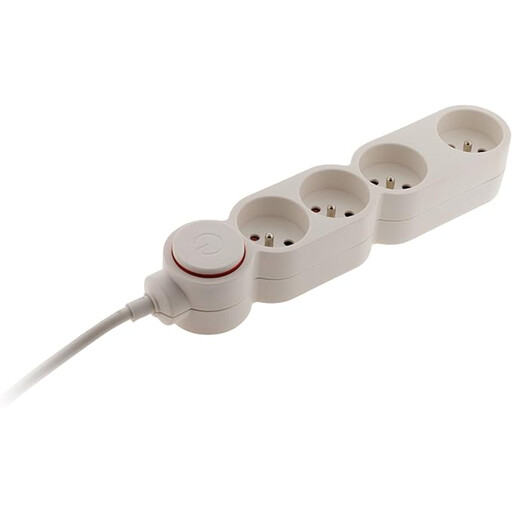
Why we chose it: The simple, effective solution for a standard workstation (computer, monitor, printer). It offers certified, no-frills protection and gets straight to the point: protecting your equipment.
This isn't just a power strip. It's a true surge protection power block, explicitly compliant with the EN 61643-11 (Class III) standard, guaranteeing active protection.
Certified protection and integrated child safety for maximum peace of mind in a compact format.
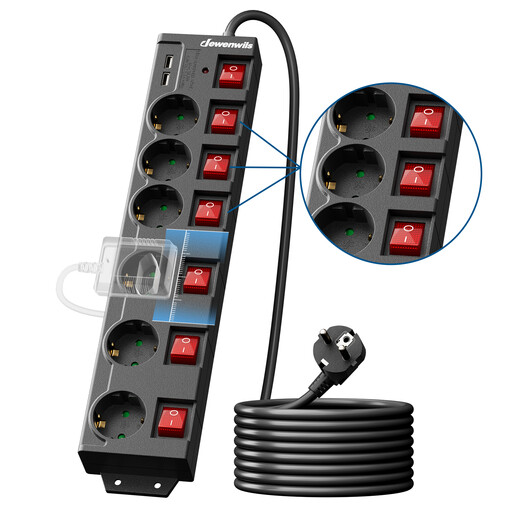
Why we chose it: Perfect for a living room with a TV, console, internet router, soundbar, and more. Its 6 outlets, long 5-meter cable, and individual switches allow for fine-tuned management of your setup, all while ensuring complete protection.
This model combines a large number of outlets with explicit surge protection, preventing the daisy-chaining of unprotected power strips—a practice as common as it is dangerous.
Maximum flexibility thanks to its 6 outlets with dedicated switches, USB ports, and a 5-meter cable for a setup without constraints.
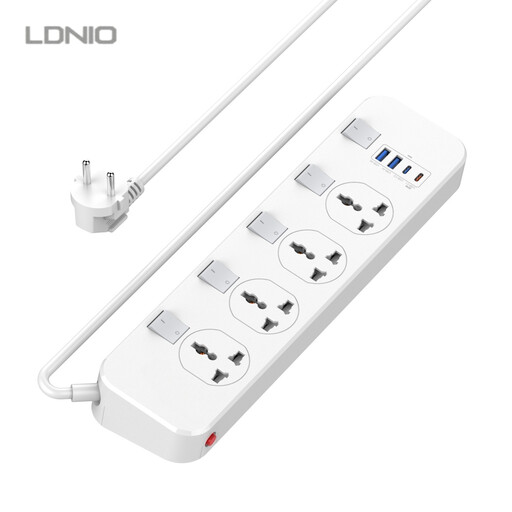
Why we chose it: Designed for those who juggle modern smartphones, tablets, and laptops. The integration of a 20W USB-C Power Delivery (PD) port allows for fast charging directly from the power strip, in addition to providing surge protection.
It goes beyond simple protection by incorporating modern charging standards. No need for a separate fast charger (which wouldn't be protected) or for crowding the outlet with multiple power bricks.
The combination of surge protection, individual switches, and a 20W USB-C PD fast-charging port makes this a formidable all-in-one solution.
Discover our full selection of products that meet these strict criteria and French safety standards.
A surge protector's protective components have an expiration date. The parts that absorb surges (usually Metal Oxide Varistors or MOVs) wear down each time they handle a voltage spike. Most quality models include an indicator light that turns off or changes color when the protection is no longer active. In the absence of a major incident, it is advisable to replace your surge protector every 3 to 5 years for optimal safety.
Let's be clear: no commercial power strip will save you from a lightning bolt that strikes your house or power line directly. Its role is to protect against the much more common indirect surges that travel through the electrical grid following a nearby storm or grid incidents. For complete lightning protection, a surge arrester must be installed in the main electrical panel by a professional electrician.
No, this is a very bad idea, both dangerous and prohibited by safety standards. This practice, known as "daisy-chaining," can cause an overload on the first power strip and the wall outlet, creating a fire hazard. If you're short on outlets, opt for a surge protector extension cord with a longer cable or a model with more connectors, like the ones featured above.