
Livraison le jour même ou le lendemain

Qualité garantie

Débloquez vos offres de bienvenue: Livraison GRATUITE | Jusqu'à -80 % | 30 jours d'essai gratuits à JoyPlus
Téléchargez l'application
An impeccably organized desk, a living room free from cable clutter, and most importantly, your expensive electronics safely shielded from power surges. The appeal of a quality surge protector power strip is undeniable, but the market is a minefield of products with misleading spec sheets. So, how do you distinguish reliable protection from a cleverly packaged marketing gimmick?
As the Tech Editor at Joybuy, I review hundreds of products every year. My mission: to bring you clarity. Let's cut through the technical jargon and get straight to the point: here are the criteria that truly matter for making a smart, long-lasting, and 100% secure investment.
Before we even get into the technical details, let's expose the three most common traps that turn a great deal into a costly mistake.
To avoid these disappointments, three technical criteria demand your full attention. They are the true measure of a power strip's quality.
The core component is the varistor: a part that sacrifices itself to absorb voltage spikes. Its capacity is expressed in Joules (J). The higher this number, the more robust the protection. For valuable equipment (computers, TVs, gaming consoles), aim for a rating of at least 500 to 1000 Joules. Also, check for safety certifications, particularly the CE marking, which guarantees the product complies with European requirements.
The number of outlets is fundamental, but their arrangement is just as crucial. Outlets oriented at 45° or 90° allow you to plug in bulky transformers without blocking adjacent slots. A power strip with a master switch is standard, but individual switches offer finer control and help reduce the standby power consumption of each device.
For charging, look for a USB-C hub or USB-A ports with a total output of at least 2.1A. For fast charging your modern laptops or smartphones, a USB-C PD (Power Delivery) port of 20W or more is a significant, must-have feature.
Every multi-outlet strip has a maximum power rating, usually indicated in Watts (W). Most home models support up to 3680W (16A at 230V). It is imperative never to exceed this limit by plugging in high-power appliances (space heaters, ovens, large home appliances). Finally, choose a cable length that suits your needs to avoid strain on the cord or resorting to daisy-chaining, a dangerous and strictly forbidden practice.
Instead of an endless catalogue, here is our curated selection for three distinct user profiles, all vetted for their safety and practicality.
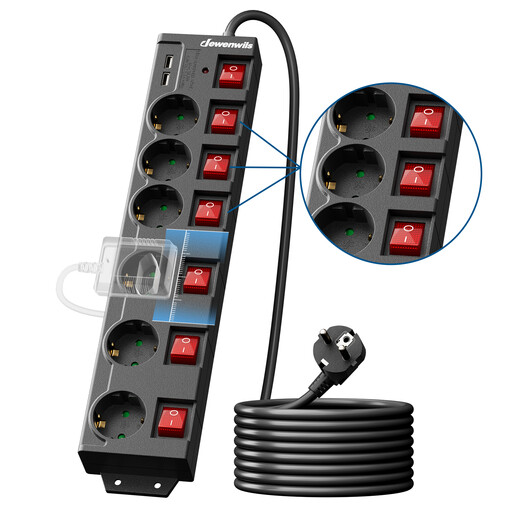
Our Editor's Take: Perfect for a home office or a heavy-duty gaming setup. The 6 outlets, USB ports, and long 5-meter cable let you connect everything (PC, monitor, printer) and charge your devices without worrying about the distance to the wall outlet.
The individual switches allow you to control standby power consumption, and the 5-meter cable solves the problem of poor ergonomics. The 90°-oriented outlets easily accommodate the bulkiest adapters.
Total control with 6 dedicated switches. Great installation flexibility thanks to the extra-long 5-meter cable and wall-mounting holes.
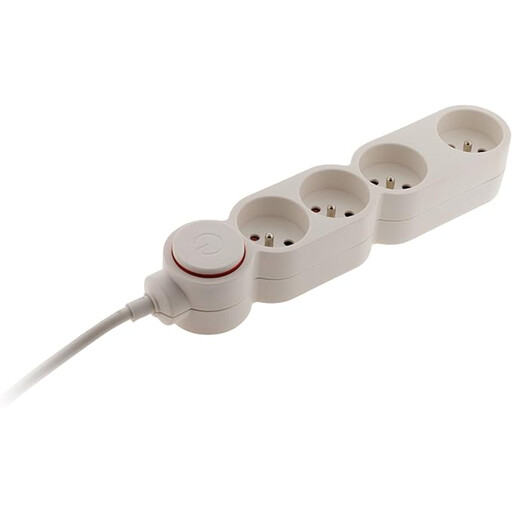
Our Editor's Take: Specifically designed to protect valuable devices like a 4K TV, a gaming console, or a home cinema system. Here, the absolute priority is safeguarding your equipment against power surges.
It directly tackles the "fake surge protector" trap by advertising its compliance with the European standard EN 61643-11 (Class III), a verifiable technical detail that certifies its protective capabilities.
Certified surge protection for complete peace of mind. Features child safety shutters on every outlet.
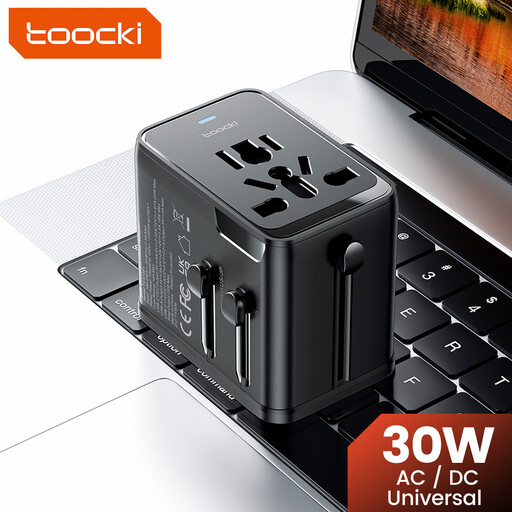
Our Editor's Take: This universal travel adapter isn't a classic power strip, but an all-in-one solution for globetrotters. It combines plugs for Europe, the UK, the US, and Australia with modern charging ports.
It solves the problem of slow USB ports by integrating two USB-C ports, one of which offers 30W PD fast charging, capable of efficiently powering a laptop or recharging a smartphone in record time.
Worldwide compatibility in an ultra-compact design. 30W fast charging via USB-C for the most demanding devices.
Discover our complete selection of power strips that strictly adhere to our safety criteria and standards.
Be aware that the protection doesn't last forever. The component that absorbs surges (the varistor) wears down with each event. Most quality models have an indicator light that shows if the protection is still active. If this light is off, the power strip will still function as a simple multi-outlet strip, but it will no longer protect your devices. As a general rule, it's wise to replace it every 3 to 5 years, or immediately after a severe thunderstorm or an unusual power outage.
Absolutely not! This is an extremely dangerous practice. It can lead to an overload of the first power strip and create a major risk of overheating and fire. Always plug your power strip directly into a wall outlet.
Let's be clear: it protects against indirect surges that can occur on the electrical grid when lightning strikes nearby. However, it offers no guarantee against a direct lightning strike on your home or the power line that feeds it. It provides what is known as "Type 3" protection, the last line of defense before your devices. For robust protection, it should be part of a more comprehensive system, with surge protectors installed directly on your electrical panel by a professional.