Anyone putting together a Sunday spread
If you’re planning your own sides or a homemade sauce, plain fillets let you choose the seasoning. For grilled fillets, check the added ingredients too, as the recipe may be different.


To put together your own Sunday spread, start with plain or grilled fillets and choose the recipe that suits you. If you want to serve mackerel without preparing a dressing, compare the olive oil recipes and marinades according to the flavour you’re after. In every case, check the proportion of fish, the ingredients, allergens and drained weight: the recipe name alone won’t tell you what’s in the tin or how many tins you’ll need.
If you’re planning your own sides or a homemade sauce, plain fillets let you choose the seasoning. For grilled fillets, check the added ingredients too, as the recipe may be different.
An olive oil recipe or an already seasoned marinade saves you making a separate sauce. Choose the seasoning to suit the rest of your menu rather than assuming every recipe in a range is the same.
The proportion of fish, added ingredients, declared allergens and storage instructions after opening can vary from one product to another. Compare the details on the tins you’re actually planning to serve.
When choosing mackerel for Sunday, first decide whether you want to season the fish yourself or serve a ready-prepared recipe. Then compare the labels of products suited to that use.
Choose this if: you’re putting together a plate with your own sides and want to decide on the seasoning.
Bear in mind: a plain recipe needs accompaniments; the word ‘grilled’ doesn’t guarantee that it contains only fish and salt.
Choose this if: you’re looking for a recipe to serve as it is, as a starter or on toast.
Compare: the proportion of oil and the nutritional values of each product, especially the fat per 100 g.
Choose this if: you already have a flavour combination in mind, such as mustard, lemon or herbs.
Check: the sauce adds ingredients that vary by recipe, including possible allergens.
| What matters | What to check | Who is it for? |
|---|---|---|
| Seasoning you can choose | The ingredients list and proportion of fish; don’t assume a grilled recipe is plain. | For a plate with my own sides, I want to choose what goes with the fillets. Around 36% of consumers put this need for flexibility first. |
| Ready-to-serve recipe | The type of oil or marinade, added ingredients and nutritional information for the product you choose. | If I’m serving toast or a starter without making a sauce, I’m mainly looking for seasoning that’s already there. This is said to be the top priority for around 29% of consumers. |
| Ingredients and allergens | The ingredients, allergens and any ‘may contain’ warnings on the exact tin. | When I’m planning a menu around ingredients to avoid, I need to be able to check the recipe I’m serving rather than relying on the flavour name alone. Around 21% of consumers are said to prioritise checking the label this way. |
| Quantity and leftovers | Drained net weight, the number of people you’re serving and the product’s own storage instructions after opening. | To set the table without opening more tins than necessary, I want to know how much fish is available and how to store any leftovers. This is said to be the main concern for around 14% of consumers. |
The term doesn’t tell you the proportion of fish, the oil used or the seasoning. Plain, grilled and olive oil products can have very different ingredients.
First choose how you want to serve the mackerel, then compare the ingredients and pack size of similar products.
You can’t work out how much fish to serve from the number of tins alone. For example, the Carrefour Extra grilled plain product reviewed lists a drained net weight of 85 g.
Check the drained weight of each product before deciding how many tins to open for your guests.
A smaller-than-expected pack may mean you have to open extra tins during the meal.
Carrefour lists possible traces of mustard and milk for the grilled plain fillets reviewed. Petit Navire lists other possible traces for its lemon and ginger recipe.
Check the ingredients and any ‘may contain’ warnings on every recipe you buy, even if you already know the brand.
Instructions vary by product. For its olive oil mackerel fillets sold in a pack of three 120 g tins, Auchan’s product information advises transferring the fish to a suitable food container, storing it at 0 to 4 °C and eating it within 48 hours.
Read the instructions on your tin before serving, and have a suitable container ready if you think you’ll have leftovers.
Petit Navire offers extra virgin olive oil fillets as well as flavoured recipes for a ready-seasoned starter.
The Saupiquet recipes reviewed let you compare grilled fillets in extra virgin olive oil with organic olive oil fillets.
Carrefour’s range includes recipes with white wine, mustard and escabeche sauce, as well as grilled plain fillets.
E.Leclerc offers plain fillets and several recipes in sauce, including mustard and white wine.
Auchan offers a plain variety as well as grilled, olive oil and flavoured recipes.
The offers shown by Lidl depend on which supermarket you select.
This option is a good fit if you’re looking for olive oil mackerel fillets to serve as a starter or on toast. Compare its label with those of other recipes if drained weight, the exact type of oil or storage instructions after opening are important to your choice.
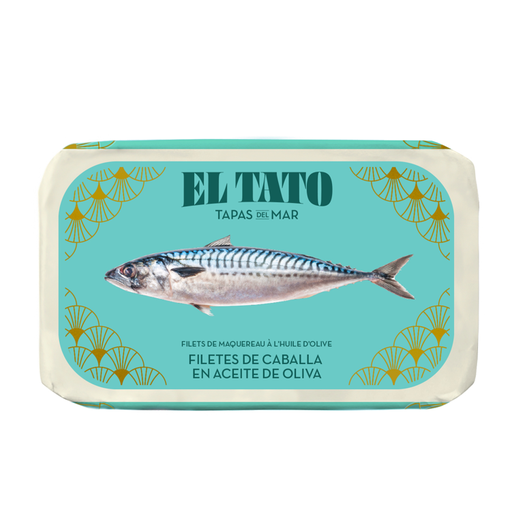 Image unavailable
An olive oil recipe to consider if you’d like to serve fillets as a starter or on toast.
The title lists 115/80g: check the packaging to see what each weight refers to before working out portions. Check the label too if the ‘extra virgin olive oil’ claim or specific storage instructions after opening matter to you.
Follow the instructions for the product you’ve bought. For Saupiquet olive oil fillets sold in a pack of three 120 g tins, Auchan’s product information advises transferring the fish to a suitable food container, storing it at 0 to 4 °C and eating it within 48 hours of opening.
Start with the product name, ingredients, allergens, net quantity, nutritional information and the date shown. France’s DGCCRF lists these details for pre-packed foods. When planning your meal, also check the drained net weight if it’s shown, along with the storage instructions after opening.
No. A best-before date doesn’t mean the same thing as a use-by date. The DGCCRF explains that a product in intact packaging may lose some of its flavour qualities after its best-before date. Check the exact wording on the tin and don’t use damaged packaging.