Anyone who wants to keep track of the kcal in their portion
If you’re setting a 500 kcal limit for your Sunday meal, the amount you actually eat matters just as much as the value per 100 g shown on the pack.


To stay within 500 kcal per person, choose a frozen meal based on the amount you’ll actually serve, rather than its calories per 100 g alone. An individual tray makes it easier to work out the total if you know its weight. A large bag needs to be divided into portions, while a vegetable dish may need extra ingredients, which you’ll have to include in the meal total.
If you’re setting a 500 kcal limit for your Sunday meal, the amount you actually eat matters just as much as the value per 100 g shown on the pack.
A family-sized bag can be shared between several people. Deciding how much to serve lets you calculate the total for each person, rather than treating the whole bag as one portion.
A vegetable stir-fry or ratatouille can make a good base for a meal. If you add other foods or a sauce, their kcal count towards the total on your plate too.
Start with the amount you plan to serve and the kcal per 100 g. The DGCCRF explains that this way of presenting nutritional information makes it easier to compare products, but the total on your plate depends on how much you eat. Then check the pack size and ingredients to make sure they suit everyone you’re serving.
| What to consider | What to check | Who is this for? |
|---|---|---|
| 500 kcal total | The kcal per 100 g and the amount actually served; multiply the two values, then divide by 100. | If I’m eating a whole tray, I want to know whether that amount stays within my limit, rather than relying on the value per 100 g alone. Around 42% of consumers prioritise this per-portion calculation. |
| Sharing the dish | The weight of the bag, the number of portions stated and the amount served to each person. | For a shared Sunday meal, I’d rather decide how much each person is having before serving a large dish. Portioning is the top priority for around 33% of consumers. |
| What’s in the meal | The ingredients and allergens, followed by the kcal in any foods added to a dish served as a side. | If I’m starting with a vegetable dish or need to avoid certain ingredients, I want to check what will be on my plate as a whole. Around 25% of consumers put the meal’s ingredients first. |
Picard’s Pad Thaï contains 152 kcal per 100 g and weighs 350 g, so the whole pack contains 532 kcal — over the 500 kcal limit.
Before choosing a product, work out the kcal for the amount you’ll actually serve.
The Nutri-Score is voluntary, supplementary labelling, as the DGCCRF explains. It doesn’t tell you the total kcal in your portion.
Use the kcal per 100 g and the amount served to check you’re within your limit. Check the other nutritional information and the ingredients list separately.
Picard describes its cooked ratatouille as a side dish. The total you calculate for this dish alone doesn’t include any other food you might serve with it.
If you’re adding anything else to your plate, add together the kcal in each item before checking whether you’re within the 500 kcal limit.
Freezing doesn’t eliminate most micro-organisms. Anses advises against refreezing food once it has thawed.
Keep transport time to a minimum, put products away as soon as you get home, and follow the storage and preparation instructions on the packaging.
Carrefour offers a range of ready meals and frozen stir-fries. Its Carrefour Sensation Italian-style stir-fry contains 49 kcal per 100 g and comes in a 750 g bag.
Picard’s product pages for its cooked ratatouille and Pad Thaï give details including the pack size and kcal per 100 g.
In its frozen food range, Auchan distinguishes between individual meals, family-sized packs and quick-preparation dishes.
E.Leclerc sells frozen ready meals, including products under the Côté Table and Tables du Monde brands. The product page for a 1 kg Côté Table paella gives nutritional information per 100 g.
Lidl offers a selection of frozen ready meals.
ALDI’s frozen food range includes pizzas and ready meals.
These two frozen sides could be part of a Sunday meal. To stay within a limit of 500 kcal per person, check how much you serve and count anything else you add to the plate separately.
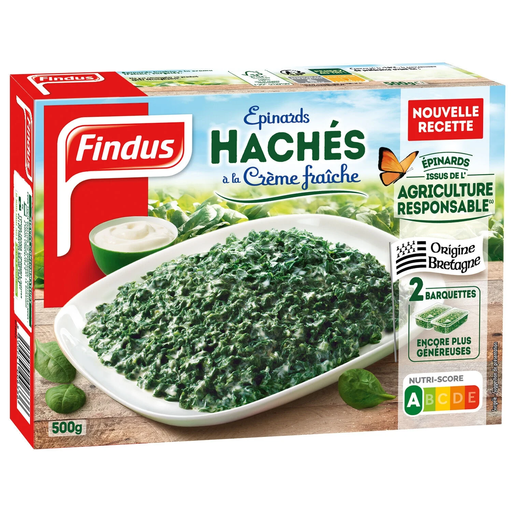 Image unavailable
A dish to portion out if you’re building your meal around a vegetable side. The bag contains 500 g; check how much you serve, the allergens listed on the packaging and the kcal in anything else you add.
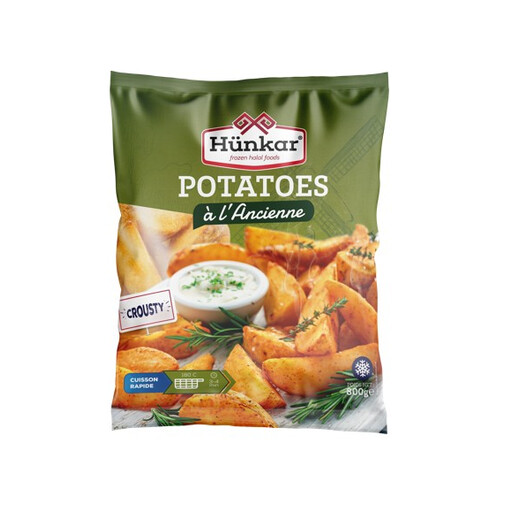 Image unavailable
A side to divide between several people sharing a meal. The bag contains 800 g: weigh the portion you plan to serve, check the preparation instructions on the packaging, and count the other items on the plate separately.
Multiply the kcal per 100 g by the number of grams served, then divide by 100. For example, 350 g of a dish containing 152 kcal per 100 g comes to 532 kcal. That’s the total for a whole pack of Picard Pad Thaï if you eat it all.
No. The Nutri-Score doesn’t tell you the total kcal in the amount you eat. To check your limit, use the energy value per 100 g and the amount served. The DGCCRF describes the Nutri-Score as voluntary, supplementary labelling.
Yes, as long as each portion you serve stays within the limit once you’ve done the calculation. Carrefour Sensation’s paella Valenciana contains 109 kcal per 100 g and comes in a 1 kg bag, so the whole bag contains 1,090 kcal. Work out the weight of each portion rather than relying on the family-sized pack alone.
Follow the instructions for the specific product and don’t refreeze it after thawing — this is Anses’ recommendation. When you buy it, also keep transport time to a minimum before putting it in the freezer.
Read the ingredients list and check the allergens highlighted on the label of the product you’re buying. Two frozen dishes with similar pack sizes and energy values can still have different ingredients.