
Livraison le jour même ou le lendemain

Qualité garantie

Débloquez vos offres de bienvenue: Livraison GRATUITE | Jusqu'à -80 % | 30 jours d'essai gratuits à JoyPlus
Téléchargez l'application
Heatwaves, stuffy bedrooms… summer nights can quickly turn into a nightmare. Waking up in a sweat, fighting with a duvet that feels more like a radiator than a soft cocoon: it's an all-too-familiar scenario. Choosing the right summer duvet is therefore essential for getting truly restorative sleep. But be warned, the market is full of pitfalls that lead straight to a disappointing purchase.
It's easy to be swayed by vague marketing claims like "?ultra-light?" without checking the technical specifications, only to end up with a duvet that turns your bed into an oven. Others ignore certifications, exposing themselves to poor-quality materials or potentially irritating substances. The classic mistake? Thinking that any "?all-season?" duvet will do in the summer, when only a specific fill weight can guarantee optimal comfort when the temperature soars. This guide breaks down the criteria that truly matter and helps you avoid marketing traps.
Before you start shopping, let's review the few parameters that distinguish a genuinely lightweight and breathable duvet from a mere sales pitch.
Fill weight, expressed in grams per square meter (g/m?), measures the weight of the filling. It is the most reliable indicator of a duvet's warmth level. For summer nights or for a bedroom heated to 20?°C and above, a fill weight of less than 250?g/m? is highly recommended.
But be careful, a low fill weight isn't everything. The nature of the filling plays an equally crucial role in temperature regulation.
The type of filling directly impacts the duvet's breathability, weight, and hypoallergenic properties.
The duvet's shell is the first material in contact with your skin (through the cover). A 100% cotton shell, especially a tightly woven cotton percale, is a real plus for breathability.
Finally, it's essential to check the labels. The STANDARD 100 by OEKO-TEX certification is a key benchmark. It guarantees that every component of the product has been tested and is free of substances harmful to your health and skin. This is an indispensable seal of safety, especially for those with sensitive skin or allergies.
To illustrate these criteria in practice, here are a few models that meet specific needs, based on information provided by the manufacturers.
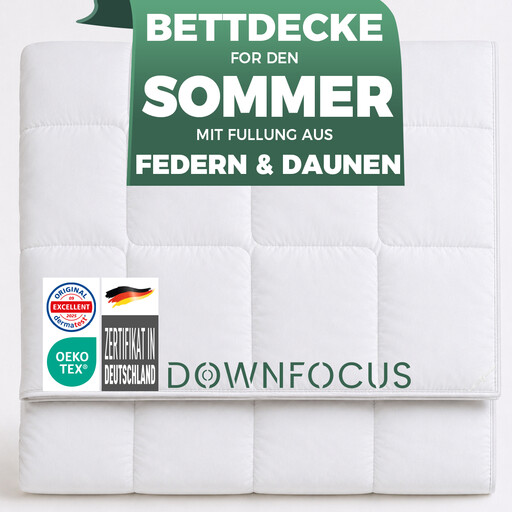
Why we chose it: Ideal for those who seek the luxurious feel and superior breathability of a natural filling to spend cool summer nights without sacrificing comfort.
Its 200 g/m? fill weight and its filling (90% feathers, 10% down) ensure effective thermoregulation, preventing the "sauna effect" of less breathable duvets.
Certified RDS for animal welfare and Oeko-Tex for material safety. The tightly woven cotton shell acts as a natural barrier against dust mites.
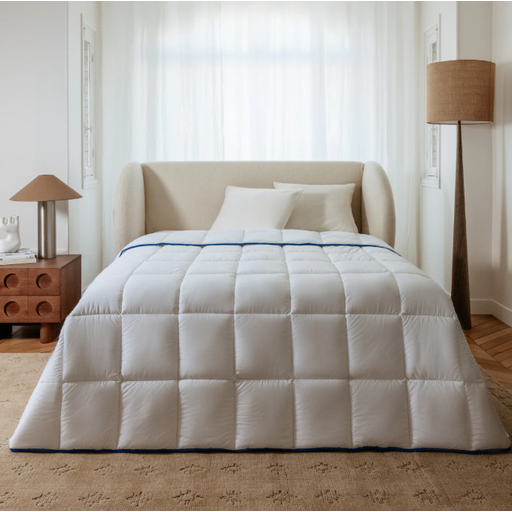
Why we chose it: It combines a synthetic filling with a full suite of certifications for complete peace of mind. It's an excellent choice for a **two-person summer duvet**.
It doesn't just claim to be hypoallergenic. The Oeko-Tex, Certipur, and Sanitized certifications guarantee a healthy product, free from harmful substances, and with an effective anti-dust mite and antibacterial treatment.
The siliconised hollowfibre filling (250 g/m?) and cotton percale shell ensure good air circulation. Plus, it's machine washable at 40 °C, a real bonus for maintenance.
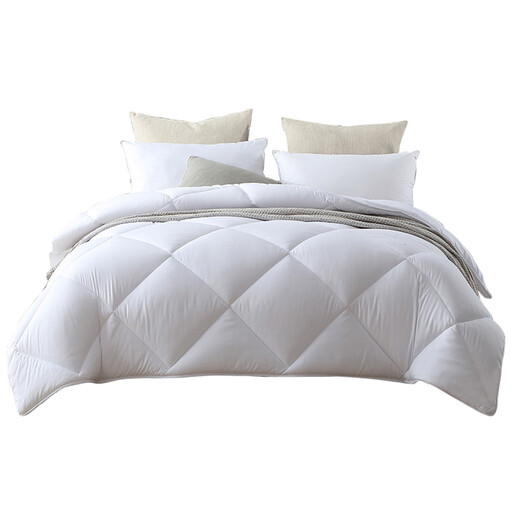
Why we chose it: A simple and effective solution for those looking for a functional and affordable summer duvet without sacrificing the essential: good breathability.
It provides a reliable alternative to entry-level products that often lack breathability and wear out prematurely.
Its practicality-to-price ratio is its main strength. Washable and soft, it's a smart choice for everyday use or a guest room.
Explore our complete selection of products that meet our quality criteria and the most demanding safety standards.
For a room where the temperature is around or above 20-22?°C, a fill weight between 150 and 250?g/m? is ideal. If you tend to get very hot at night, aim for a fill weight around 180-200?g/m?.
Always check the manufacturer's label. Most synthetic duvets can be machine washed at 40?°C. For down duvets, professional cleaning or washing in a large-capacity machine (at a low temperature) is often recommended. For drying, a gentle cycle in the tumble dryer with dryer balls (or tennis balls) will help the filling regain its full loft.
An anti-dust mite duvet is designed to limit the proliferation of these allergens. Its effectiveness relies on two principles: either a chemical treatment of the fabric (like the Sanitized treatment) or a physical barrier. This physical barrier is a shell with an extremely tight weave that prevents dust mites from penetrating the filling. It's also worth noting that synthetic fillings are naturally less hospitable to dust mites than some natural fillings.