
Livraison le jour même ou le lendemain

Qualité garantie

Débloquez vos offres de bienvenue: Livraison GRATUITE | Jusqu'à -80 % | 30 jours d'essai gratuits à JoyPlus
Téléchargez l'application
Summer nights can quickly turn into a nightmare when the temperature soars. Tossing and turning in bed, sweating under a duvet that's far too thick... it's a scenario we all know too well. Choosing a suitable summer duvet isn't a luxury; it's the key to getting restorative sleep. But be warned, the market is saturated with often misleading marketing promises. To avoid a purchase you'll regret all summer, let's break down the common pitfalls to avoid.
To make the right choice, let's set aside the marketing jargon and focus on a few objective technical specifications. It's the only way to assess a duvet's true performance.
Fill weight, expressed in grams per square metre (g/m?), measures the density of the filling. It is the number one indicator of a duvet's warmth level.
Thermal comfort doesn't just depend on the filling; the duvet's shell is just as crucial.
Labels are your best insurance against unpleasant surprises. They guarantee the quality and safety of the textiles.
To help you see how these criteria apply in practice, here are a few options that meet different needs.
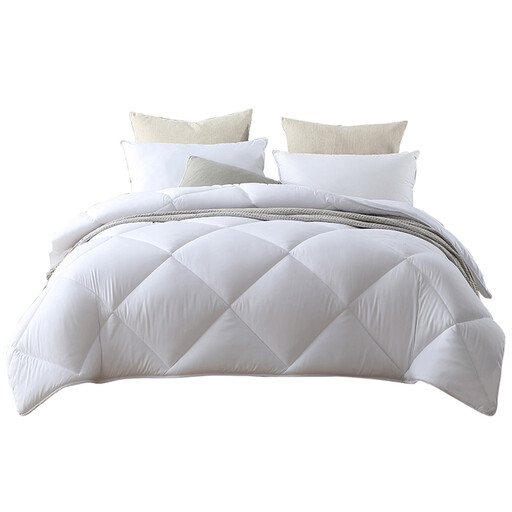
The editor's verdict: Ideal for a first-time purchase, a guest room, or for those who prioritise simplicity. Its synthetic filling makes it ultra-easy to wash and dry, a major plus for impeccable hygiene.
It doesn't market itself as a miracle "all-season" solution, but instead embraces its status as a lightweight, breathable duvet, perfect for summer nights. Its hypoallergenic properties are a real everyday bonus.
Easy machine maintenance and hypoallergenic properties, offering excellent value, price, and convenience.
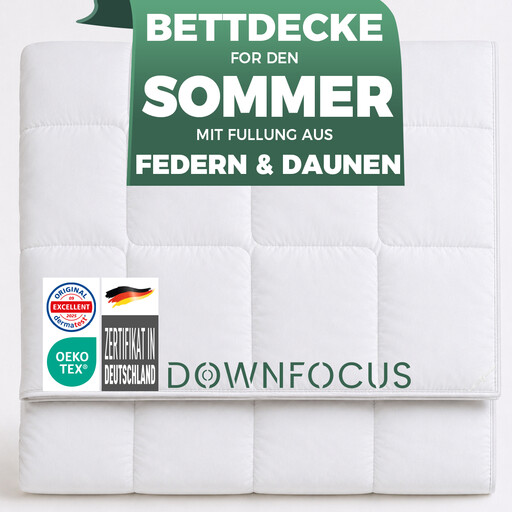
The editor's verdict: For those who swear by the thermal performance and unparalleled lightness of natural fillings. The feather and down duo offers superior thermoregulation to say goodbye to night sweats.
It sidesteps the fill weight trap: at 200 g/m?, it's perfectly suited for summer. The OEKO-TEX and RDS certifications are a guarantee of quality and ethics, a far cry from worthless marketing labels.
Exceptional breathability and moisture management thanks to the natural filling. Its tightly woven cotton shell acts as an anti-dust-mite barrier.
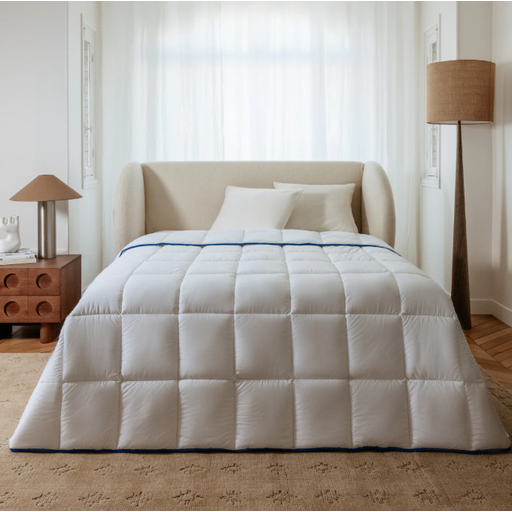
The editor's verdict: A large-format 2-person duvet (240x260 cm) perfect for King Size beds. Its cotton percale shell and array of certifications make it a safe choice for the whole family, including those with sensitive skin and allergies.
Countering vague promises, it presents a list of rock-solid certifications: OEKO-TEX, Certipur, and Sanitized. This guarantees a tested, hypoallergenic, antibacterial, and anti-dust-mite product.
The combination of a premium cotton percale shell (91 threads/cm?) for breathability and a certified synthetic filling for maximum hygiene.
Explore our full selection of duvets that meet our strict standards for comfort and safety.
The lifespan depends on the quality of the materials and care. You can expect about 5 years for a good synthetic model, and up to 10 years for a well-maintained natural-fill duvet. Remember to shake it regularly to restore its loft and air it out (away from direct sunlight) to release moisture.
First step: check the manufacturer's label. Most synthetic duvets can be machine washed at 30?°C or 40?°C. Use a large-capacity washing machine (12 kg or more) to avoid compressing it. For natural duvets, dry cleaning is often recommended to preserve the qualities of the down. In any case, thorough drying is essential to prevent mould.
For allergy sufferers, the answer is clear: it's essential. An anti-dust-mite duvet is effective in two ways: either through a chemical treatment applied to the fabric, or through a mechanical barrier (a weave so tight that dust mites cannot penetrate). If you are sensitive, look for certified products that guarantee one of these protections.