
Livraison le jour même ou le lendemain

Qualité garantie

Débloquez vos offres de bienvenue: Livraison GRATUITE | Jusqu'à -80 % | 30 jours d'essai gratuits à JoyPlus
Téléchargez l'application
With the wrong bedding, summer nights can quickly turn into a nightmare. Waking up in a sweat isn't inevitable, though: the solution often lies in choosing the right summer duvet. The problem is, the market is saturated with options and marketing promises that create confusion. Before you decide, it's crucial to sidestep the most common traps to avoid investing in a duvet that will end up in the closet at the first sign of warm weather.
As the Head of Product Recommendations at Joybuy, I'm here to help you see things more clearly. Let's review the mistakes to avoid and the essential criteria for finding the duvet that will save your summer nights.
Buying a duvet seems simple, but certain misconceptions can lead to a poor choice. Here are the most common pitfalls?:
To ensure you choose a lightweight and comfortable duvet, focus on these three technical parameters.
Fill weight, expressed in grams per square metre (g/m?), indicates the weight of the filling and, consequently, the warmth level of the duvet.
The choice between natural and synthetic depends on your priorities regarding comfort, maintenance, and budget.
The shell is in almost direct contact with your skin (through the duvet cover).
To help you see how these criteria apply in practice, here are a few models suited to different profiles.
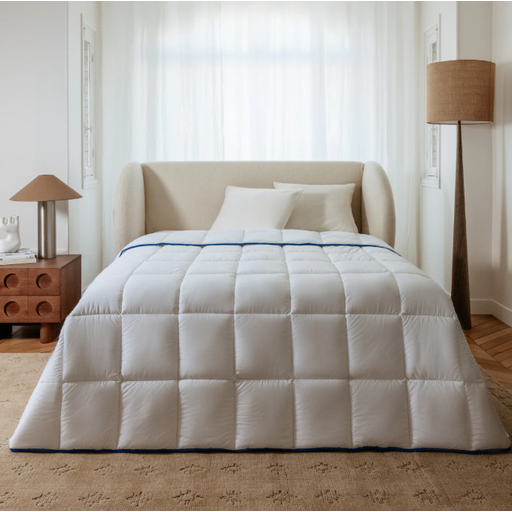
Why it's a great choice : Perfect for those seeking a solution that is both practical and healthy. Its synthetic filling and easy machine washing at 40 °C simplify maintenance and allergen removal.
It doesn't sacrifice breathability for practicality. Its 100% cotton percale shell (230 thread count) is a high-quality fabric that prevents heat build-up, unlike low-end synthetic shells.
Its multiple certifications (OEKO-TEX STANDARD 100, Certipur, Sanitized) guarantee its hypoallergenic and anti-dust mite properties. Its fill weight of 250 g/m? is perfectly suited for summer nights.
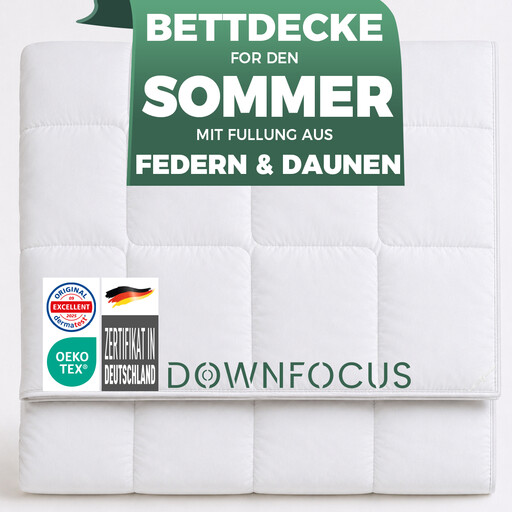
Why it's a great choice : For those who swear by the luxurious feel and superior temperature regulation of down. It offers an airy, lightweight comfort worthy of a luxury hotel's bedding.
It sidesteps the trap of natural duvets often being too warm for summer. Its filling has been specially designed for summer nights with a light fill weight of 200 g/m?. Additionally, its tightly woven cotton shell acts as a natural barrier against dust mites.
Its dual ethical certifications (Downpass and RDS) guarantee animal welfare. Also certified OEKO-TEX, it offers complete safety. The blend of 90% feathers and 10% down ensures a perfect balance of support and softness.
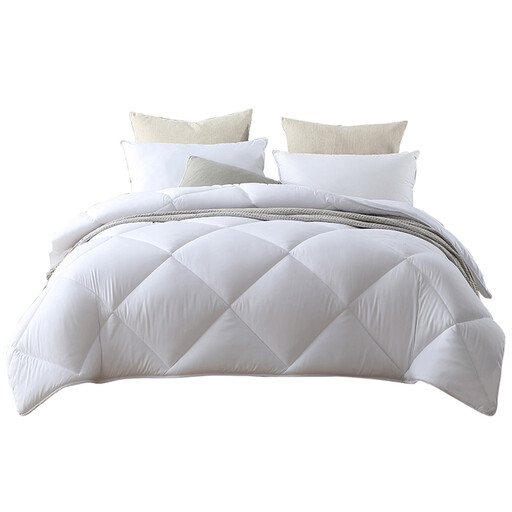
Why it's a great choice : A very accessible option for a single bed or for those who don't want to make a large investment. Its versatility allows it to be used for a good part of the year in a normally heated room.
Although positioned as an "all-season" duvet, its design emphasizes breathability and softness. It is therefore perfectly suitable for summer or mid-season, avoiding the trap of a basic, overly warm duvet.
Its non-allergenic properties and machine washability simplify maintenance. An excellent starting point for anyone looking for a functional and economical solution.
We have compiled a complete selection of duvets that meet our strict selection criteria and current safety standards.
Most summer duvets, especially those with a synthetic filling, are designed for machine washing. Always check the manufacturer's label. Opt for a delicate cycle at 30 or 40?°C and use a large-capacity washing machine so the duvet is not compressed. For down duvets, tumble drying on low heat with dryer balls is recommended to restore the filling's full loft.
Yes, a 4-season duvet can be an excellent solution. It consists of two separate duvets: a lightweight duvet for summer and a thicker one for mid-season. By joining them (often with ties or press studs), you get a warm duvet for winter. The initial investment is higher, but the versatility is unbeatable. You simply use the thinnest part during the summer.
Durability depends on the quality of the materials and the rigour of the maintenance. A good quality synthetic duvet has a lifespan of about 5 to 7 years. A natural feather and down duvet, if well-maintained (aired regularly, professionally cleaned), can last 10 years or even longer.