
Same-day & Next-day Delivery

Quality Guaranteed

Unlock Your Welcome Offers: FREE Delivery | Up to 80% OFF | Free 30-day JoyPlus trial
Download the APP
Summer nights can quickly turn into a nightmare when the heat sets in. Tossing and turning, sweating under a duvet that's too thick… It's a scenario many know all too well. Choosing the right summer duvet is therefore crucial for getting restful sleep. But the market is saturated with marketing promises that can easily lead to a purchase you'll regret. Before you decide, it's essential to know how to avoid the most common pitfalls.
To make the right choice, rely on objective technical specifications rather than brand messaging. Here are the three points to inspect closely.
The fill weight, expressed in grams per square metre (g/m? or GSM), measures the density of the filling. It's the number one indicator of a duvet's warmth level.
Ignoring this figure means risking ending up with a duvet that's unusable during the two to three hottest months of the year.
The choice of filling affects comfort, care, and hypoallergenic properties.
Natural duvets (down, feathers): Renowned for their unparalleled thermoregulating power, they offer luxurious comfort and unmatched breathability. Down is lighter and more insulating than feathers. While more durable, these duvets require more delicate care (often professional dry cleaning) and a higher budget. Check for certifications like RDS (Responsible Down Standard), which guarantees animal welfare.
Synthetic duvets (polyester, microfibres): This is the ultimate choice for practicality. Siliconised hollowfibres, for example, mimic the loft of down while ensuring good air circulation. A synthetic duvet is typically hypoallergenic and anti-dust-mite, making it a sensible choice for sensitive individuals. Another major advantage: it's a machine-washable duvet, which radically simplifies its care.
The casing, the fabric that contains the filling, is in almost direct contact with your skin (through the cover). Its quality is therefore paramount.
Here are a few models that tick all the boxes of the objective criteria we've just detailed, each meeting a specific need.
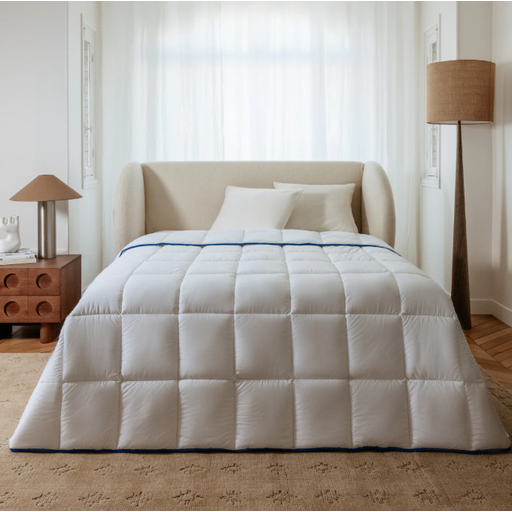
Why we chose it: The ideal solution for those seeking efficiency, simplicity, and safety. Perfect for a first-time purchase, a guest room, or for allergy sufferers who prioritise easy maintenance.
Its 250 g/m? fill weight is perfectly calibrated for summer and avoids the overheating trap. Its multiple certifications, including OEKO-TEX, confirm its hypoallergenic properties, going far beyond a simple marketing promise.
Its siliconised hollowfibre fill ensures excellent air circulation, while its percale cotton casing provides a soft, breathable touch. Bonus: ultra-simple care, machine washable at 40°C.
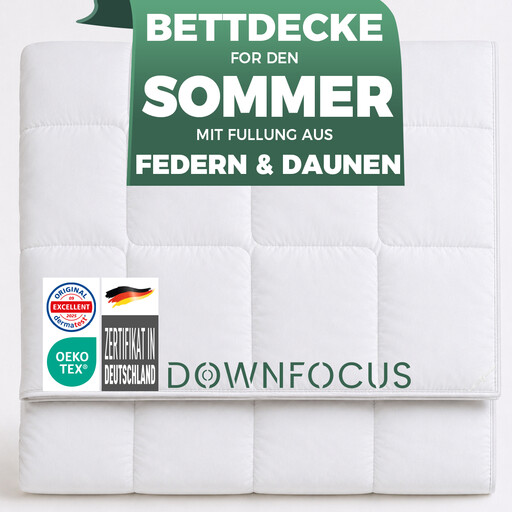
Why we chose it: For those who want the superior comfort and thermoregulation of a natural duvet, without the weight that sometimes comes with it. A model that combines the nobility of down with modern manufacturing standards.
With an ultra-light fill weight of 200 g/m?, it's tailored for warm nights and avoids the false compromise of "all-season" duvets. RDS and OEKO-TEX certifications guarantee a product that is both ethical and healthy.
Its fill (90% feathers, 10% down) offers a perfect balance between loft and lightness. Its tightly woven cotton casing acts as a natural barrier against dust mites.
Why we chose it: A large-format solution (220x240 cm) that combines comfort, practicality, and safety. Designed for double or Queen Size beds, it offers generous coverage and easy care, ideal for family use.
Its synthetic fill and OEKO-TEX certification make it a safe and hypoallergenic option. The 250 g/m? fill weight is season-appropriate, avoiding the classic trap of a king-size duvet that turns into an oven.
Its large size and easy machine washing (a large-capacity washing machine is recommended) make it ultra-practical for daily use. The 91 threads/cm? percale cotton casing is both soft and durable.
Discover our complete, up-to-date selection of products that meet our strict selection criteria and current safety standards.
For comfortable summer nights in a room where the thermometer exceeds 20°C, aim for a fill weight between 180 and 250 g/m?. If you tend to get very hot at night or live in a particularly warm region, a fill weight around 180 g/m? will be your best ally.
It all depends on the fill. A synthetic duvet is usually machine-washable at 30 or 40°C. Use a gentle cycle and a large-capacity washing machine to avoid compressing it. Tumble drying on low heat is often possible and helps to restore its loft. For a natural duvet, dry cleaning is often recommended on the label to preserve the quality of the down and feathers. Regardless of the model, remember to air out your duvet regularly to release moisture absorbed during the night.
Yes, as a general rule. Down and feathers have inherently superior thermoregulation and breathability. They wick away moisture produced by the body more effectively. However, modern synthetic fibres have made enormous progress. High-quality hollowfibres can now offer excellent air circulation and represent a very high-performing alternative, especially for allergy sufferers or those who prioritise ease of care. Ultimately, it all comes down to your priorities: the exceptional comfort and thermoregulation of natural materials, or the practicality and hypoallergenic benefits of synthetics.