If you’re looking for products that are strictly “sugar-free”, check the “of which sugars” line: under EU Regulation (EC) No 1924/2006, this claim is reserved for products containing no more than 0.5 g of sugars per 100 g or 100 ml. For a weekday breakfast, plain porridge oats and cereals labelled “no added sugars” meet a different need: they may contain naturally occurring sugars, and preparation methods and ingredients vary by product.
Who are these options for?
People looking for products that are strictly “sugar-free”
Your priority is the total sugar content, not simply the absence of added sugars. The “of which sugars” line, shown per 100 g, lets you compare a cereal against the threshold for this claim under EU Regulation (EC) No 1924/2006.
Busy people keeping an eye on added sugars
You want a simple bowl of cereal that’s quick to prepare before you head out. Compare plain porridge oats with flakes carrying this claim, then check the preparation instructions and nutritional information on each pack. Quaker, for example, describes its Oats as containing “no added sugars”, while noting that they contain naturally occurring sugars.
People drawn to fruit muesli
You prefer the cereal, dried fruit or seeds in a muesli recipe. Check the ingredients list and the “of which sugars” line: a recipe with no added sugars may still contain sugars naturally present in its fruit. Also check the allergens for the product you choose.
What should you check?
For weekday mornings, first distinguish between total sugar content and no added sugars. Then choose a format that fits the time you have to prepare breakfast.
| Criteria | What to check | Who is it for? |
|---|
| Strictly “sugar-free” |
Check “of which sugars” per 100 g: under EU Regulation (EC) No 1924/2006, the “sugar-free” claim requires a maximum of 0.5 g of sugars per 100 g or 100 ml. |
If I genuinely want a “sugar-free” cereal, the “no added sugars” claim isn’t enough to decide. Around 42% of consumers would make total sugar content their main criterion. |
| Quick to prepare |
Compare how the oats are prepared with ready-to-pour flakes, then check the ingredients list. |
Before a working day, I want a quick breakfast without choosing a recipe based solely on its “no added sugars” claim. Convenience would come first for around 33% of consumers. |
| Fruit muesli |
Look for dried fruit in the ingredients; check “of which sugars” and the allergen information on the pack. |
If I prefer the texture and fruit in muesli, I’m happy to compare naturally occurring sugars rather than look for a strictly “sugar-free” recipe. This would be the priority for around 25% of consumers. |
Common pitfalls to avoid
-
Confusing “sugar-free” with “no added sugars”
A recipe with no added sugars may still contain naturally occurring sugars. So this claim doesn’t prove that the cereal meets the strict criterion you’re looking for.
If “sugar-free” is essential, check the claim and the “of which sugars” line per 100 g; EU Regulation (EC) No 1924/2006 sets the threshold at 0.5 g per 100 g or 100 ml.
-
Assuming fruity muesli is “sugar-free”
Dried fruit can contain naturally occurring sugars, even when the recipe is labelled “no added sugars”.
Compare the “of which sugars” line on the mueslis you’re considering. If total sugar content is your deciding factor, compare them with plain oats too, rather than relying on the recipe name alone.
-
Using fibre as an indicator of sugar content
These figures describe different things. According to Kellogg’s France, All-Bran Fibre Plus contains 27 g of fibre and 18 g of sugars per 100 g.
Check the fibre content, the “of which sugars” line and the ingredients list separately for the product you’re considering.
-
Relying on contradictory product information
Carrefour’s product information for Carrefour Bio Corn Flakes includes the claim “no added sugars” alongside a contradictory statement about added sugars. On its own, it’s not enough to confirm that this product meets that criterion.
Check the claims and nutritional information on the packaging of the product you buy.
Brands to compare by product
Quaker
An option to consider for plain porridge oats you can prepare at home.
- Quaker France describes Quaker Oats as wholegrain oats with “no added sugars”.
- The brand notes that these oats contain naturally occurring sugars, so this claim is not the same as “sugar-free”.
Carrefour Bio
A cornflakes product to consider if you’re looking for ready-to-eat flakes.
- Carrefour labels its Carrefour Bio Corn Flakes “no added sugars”.
- The product information also contains a contradictory statement about added sugars. Check the packaging before choosing this product on that basis.
Bio Village
An E.Leclerc range where you can compare cornflakes and porridge oats.
- E.Leclerc lists Bio Village cornflakes labelled “no added sugars”.
- To choose a specific product, check its ingredients and sugar content on the pack.
Kellogg’s
Worth comparing if fibre content is also important to you.
- Kellogg’s France states that All-Bran Fibre Plus contains 27 g of fibre per 100 g.
- The same product information states that it contains 18 g of sugars per 100 g and lists sugar among the ingredients. This product doesn’t meet the “sugar-free” or “no added sugars” criteria.
Nestlé Céréales
Check individual recipes rather than judging by the brand name alone.
- Nestlé Céréales outlines its work on the composition of its recipes.
- To see whether a particular cereal suits your needs, check its claim, ingredients and the “of which sugars” line.
A product to explore on Joybuy
This selection features a blend of oat flakes with fruit and vegetables for breakfast. If you’re looking for something strictly “sugar-free”, check the sugar content on the packaging before choosing this product.
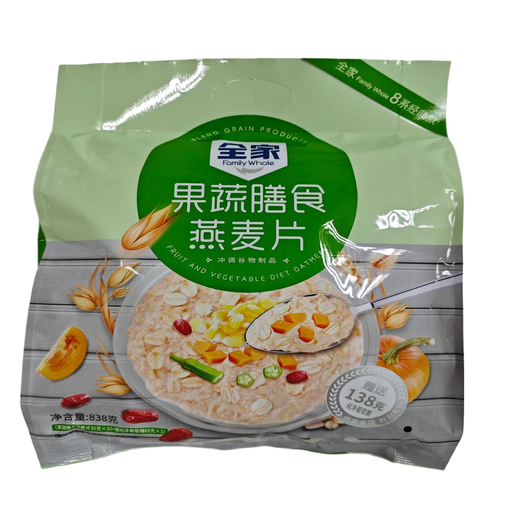 Image unavailable
Oat flakes with fruit and vegetables, 838 g
For a weekday breakfast, check that preparing it with boiling water fits your routine. If “sugar-free” is your criterion, also check the “of which sugars” line per 100 g on the current packaging. Check the ingredients and allergen information for this specific product.
View on Joybuy
Frequently asked questions
Does “no added sugars” mean “sugar-free”?
No. A cereal with no added sugars may still contain naturally occurring sugars. For the “sugar-free” claim, EU Regulation (EC) No 1924/2006 sets a maximum of 0.5 g of sugars per 100 g or 100 ml. Check the product’s “of which sugars” line.
Porridge oats or cornflakes for a busy morning?
Consider flakes if you want to pour them straight into a bowl; plain porridge oats are a good option if their preparation method fits your morning routine. Either way, check the specific recipe rather than assuming that a particular format guarantees a certain sugar content.
Can fruit muesli contain no added sugars?
Yes, though it won’t necessarily be “sugar-free”. Carrefour’s product information for Bjorg muesli with raisins, dates and figs states that the fruit contains naturally occurring sugars. If total sugar content matters to your purchase, compare the “of which sugars” line.
What should I check if I have an allergy?
Read the ingredients, highlighted allergens and any may-contain statements on the packaging of the exact product you’re buying. A “no added sugars” claim tells you nothing about whether allergens are present.


