When having coffee with friends, start by checking what your guests mean by “less sugar”: “sugar-free” means a very low sugar content, while “no added sugars” can still allow for naturally occurring sugars. Reduced-sugar biscuits may suit someone looking for a recipe without sweeteners, but that doesn’t make them “sugar-free”. Then compare the nutritional information, ingredients and allergens on the packet you plan to serve.
Who is this choice for?
Hosts keeping an eye on sugar content
If sugar content matters when you’re serving coffee, compare the “of which sugars” figure per 100 g, then work out how it relates to the portion you’ll serve. The claim on the front of the pack doesn’t replace checking this information.
Guests who prefer to avoid sweeteners
A reduced-sugar recipe that’s labelled as containing no sweeteners may suit this preference. Check the ingredients and sugar content: these are two different things.
Groups where allergens need checking
Before sharing a packet, check which allergens are highlighted in the ingredients list and look for any “may contain” warnings. This information can vary between recipes in the same range.
What should you look for?
When having coffee with friends, start with your guests’ main needs, then check the sugar claim and the ingredients of the exact product.
| What matters |
What to check |
Who is it for? |
| Sugar content |
The exact claim and the “of which sugars” figure per 100 g, then for the portion you plan to serve. |
If I’m mainly looking for a very low sugar content, “no added sugars” isn’t enough to tell me. Around 42% of consumers would put sugar content at the top of their list of priorities. |
| Sweeteners and polyols |
The ingredients list, particularly maltitol or sorbitol if present. |
I prefer to know whether the sweet taste comes from substitutes before serving the biscuits. This would be a priority for around 33% of consumers. |
| Sharing and allergens |
Allergens, “may contain” warnings, and the number of portions or individual packets. |
When several friends are coming for coffee, I need a suitable pack size and ingredients that meet any known dietary requirements. Sharing and checking this information would come first for around 25% of consumers. |
Common pitfalls to avoid
-
Confusing “no added sugars” with “sugar-free”
According to Anses, not adding sugar doesn’t rule out sugars that occur naturally in the ingredients. “Sugar-free” refers to a different sugar-content threshold.
Check the exact claim, then compare the “of which sugars” figure per 100 g and for the portion you plan to serve.
-
Taking the front-of-pack claim at face value
Reduced-sugar biscuits can still contain sugar. For example, Auchan describes its Less Sugar range as reduced in sugar and containing no sweeteners: that doesn’t mean it’s “sugar-free”.
Compare the nutritional information on a like-for-like per 100 g basis and check the ingredients.
-
Overlooking polyols or allergens
A low figure for “of which sugars” doesn’t tell you which substitutes have been used. A biscuit may also be unsuitable for a guest because of its allergens.
Check the nutritional information for polyols, and look for allergens and any “may contain” warnings on the packet you’re serving.
-
Ruling out a biscuit because it has no Nutri-Score
The DGCCRF says Nutri-Score is optional in France. Its absence doesn’t tell you what’s in a biscuit.
If it’s shown, read it alongside the nutrition declaration and ingredients list, rather than treating it as the only thing that matters.
Brands to know
Auchan Less Sugar
A range to consider if you’re looking for reduced-sugar biscuits without automatically choosing a recipe that contains sweeteners.
- Auchan describes its cocoa and orange variety as containing no sweeteners and packaged in individual sachets.
- Auchan’s reduced-sugar claim doesn’t mean this product is “sugar-free”: check its nutrition declaration.
Gerblé
The brand offers recipes with sugar-related claims; check the ingredients of each product individually.
- Auchan’s product information for Gerblé soft biscuits with chocolate chips states 0 g of sugars per 100 g.
- The same product contains 32 g of polyols per 100 g. This figure applies to these soft biscuits, not all Gerblé biscuits.
Carrefour
The retailer lets you browse products from several brands, rather than offering just one biscuit recipe.
- Its “Sugar-free biscuits” search results bring together different products to compare by claim, ingredients and nutritional information.
- A results page can’t guarantee that a product suits your guests’ preferences or allergies: check each packet.
Biscuits available on Joybuy
These two products offer different options to get you started: a biscuit labelled as having no added sugars and one with a spring onion flavour. Choose according to the claim and flavour you’re looking for, then check the ingredients on the packet.
 Image unavailable
KRISPROLLS Swedish wholemeal biscuits with no added sugars, 425 g
Worth considering if you’re looking for a biscuit labelled as having no added sugars to serve with coffee, without assuming that means “sugar-free”. The packet contains 425 g. Wheat and barley are listed: check the allergens and any “may contain” warnings on the packet you serve.
View on Joybuy
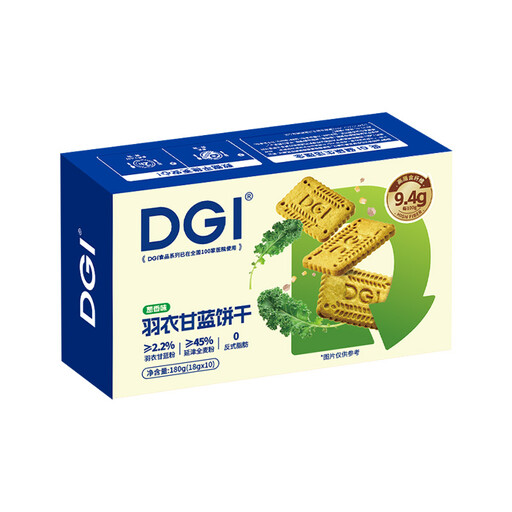 Image unavailable
DGI Kale Cookies with spring onion flavour, 180 g
Worth considering if your guests enjoy this flavour and are happy with a recipe containing maltitol. The packet contains 180 g and wheat is also listed. A warning says that excessive consumption may have a laxative effect: check this, along with the allergens and any “may contain” warnings, before serving these biscuits.
View on Joybuy
Frequently asked questions
Do “sugar-free” and “no added sugars” mean the same thing?
No. Anses says that “sugar-free” means less than 0.5 g of sugars per 100 g or 100 ml; “no added sugars” doesn’t rule out naturally occurring sugars. For biscuits, check the “of which sugars” figure per 100 g.
Is Nutri-Score compulsory on biscuits in France?
No. The DGCCRF says Nutri-Score is optional, while a nutrition declaration is compulsory on pre-packed food. If the logo appears on a packet, read it alongside the nutritional information and ingredients; its absence isn’t enough to judge the biscuit.
What should I check if a guest has an allergy?
Read the packet for the specific product you’re going to serve. The DGCCRF says allergenic ingredients must be listed and highlighted; also check for any “may contain” warnings, and don’t assume that two recipes from the same brand have the same ingredients.
How can I spot sugar substitutes?
Check the ingredients list and nutritional information for the exact product. For example, the Gerblé soft biscuit featured by Auchan lists maltitol and sorbitol in its ingredients and polyols in its nutrition table; this composition doesn’t apply to every product in the range.


