What should you check before buying?
For a nursery snack, start by checking the nursery’s guidance and whether the sweet is suitable for the child. Then compare the nutritional information and ingredients according to what matters most to you.
| What matters |
What to check |
Who is this for? |
| Sugar content |
Compare ‘of which sugars’ per 100 g and, if shown on the label, the amount of polyols. Distinguish ‘sugar-free’ from a stated reduction in sugars. |
If I’m specifically looking for sugar-free sweets, a simple reduction doesn’t meet my needs; this distinction would be the priority for around 36% of consumers. |
| Ingredients and tolerance |
Read the ingredients, allergens, possible traces and consumption warnings. Check the child’s individual requirements before sharing. |
When several children are being offered the same treat, I need to take their dietary requirements into account; around 28% of consumers would put this compatibility at the heart of their choice. |
| Nursery rules and safety |
Ask whether confectionery and sharing it are allowed. Consider the texture and size in light of the children’s ages and the nursery’s guidance. |
Before bringing sweets, I want to know whether they can be given to the children in the nursery; this would be the main concern for around 36% of consumers. |
Brands to compare
These products illustrate how ingredients can vary; the brand alone isn’t enough to tell you whether a sweet is suitable for a nursery.
Auchan
The stevia-sweetened sugar-free caramel is sold in a 120 g bag containing 24 sweets.
- Auchan’s listing states that it contains less than 0.5 g of sugars per 100 g.
- It also states that it contains 90 g of polyols and 272 kcal per 100 g, as well as dairy ingredients.
Confiseo
The sugar-free herbal boiled sweets distributed by E.Leclerc have a Nutri-Score B on their product listing.
- E.Leclerc’s listing states that they contain 0.5 g of sugars per 100 g.
- It includes a warning that excessive consumption may have a laxative effect; the hard texture should also be considered for the children concerned.
Carrefour
The sugar-free soft fruit-flavoured sweets offer another texture to compare.
- Carrefour’s listing details maltitols, mannitol and sucralose, among other ingredients.
- It mentions pork gelatine and possible traces of milk and nuts. Check availability before relying on this product.
Haribo
Croco Baby is a useful comparison if you’re looking for confectionery marketed as free from sweeteners rather than sugar-free sweets.
- Haribo describes this product as containing 30% less sugar and no sweeteners.
- Its listing states that it contains 35 g of sugars per 100 g and may contain traces of wheat and milk.
Sugar-free sweets selected on Joybuy
Both of these sweets carry the ‘sugar-free’ claim. Whether they’re suitable for a nursery snack still depends on the nursery’s rules, their ingredients and whether the texture is right for the child.
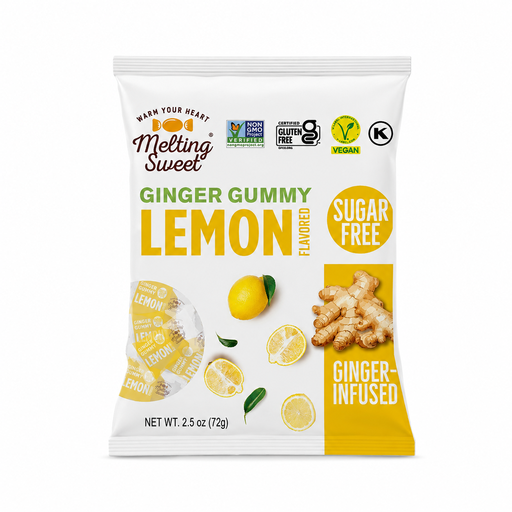 Image unavailable
MELTING SWEET, soft ginger jelly sweets, lemon flavour, sugar-free, 72 g
A soft texture to consider if you’re looking for sugar-free confectionery for a snack approved by the nursery. Coconut is listed as an allergen, and there is a warning that excessive consumption may have a laxative effect. Check the ingredients, intended portion and any guidance relevant to the child.
View on Joybuy
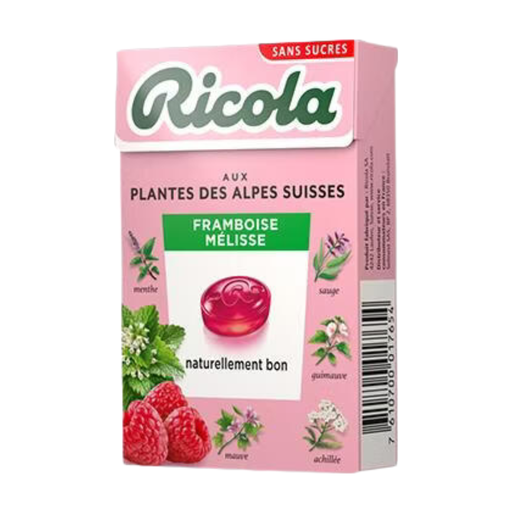 Image unavailable
Ricola Raspberry & Lemon Balm, sugar-free sweets, 50 g pocket tin
A pocket-tin option if you’re looking for confectionery labelled ‘sugar-free’. Before taking it to the nursery, check its polyol content and texture, the child’s age and chewing ability, and the nursery’s rules.
View on Joybuy
Frequently asked questions
Is Nutri-Score compulsory on sweets in France?
No. Santé publique France explains that producers can display Nutri-Score voluntarily. Its absence isn’t enough to rule out a product: check the ingredients and nutritional information on the packaging too.
Are sugar-free sweets also free from carbohydrates and calories?
No. Auchan’s sugar-free caramel listing states that it contains less than 0.5 g of sugars, but 90 g of polyols and 272 kcal per 100 g. Compare the ‘carbohydrates’, ‘of which sugars’, ‘polyols’ and energy figures per 100 g, rather than relying on the ‘sugar-free’ claim alone.
What should you check before sharing sweets between children?
First check that the nursery allows confectionery and sharing it, then make sure the texture is suitable for the children concerned. Check the specific product’s packaging for allergens, possible traces, gelatine and consumption warnings.
Can sugar-free sweets replace a regular snack?
No: the ‘sugar-free’ claim doesn’t make confectionery a regular snack. Assurance Maladie recommends limiting confectionery for children. If the nursery allows it, treat it as an occasional sweet and follow the nursery’s guidance.


