Shoppers looking specifically for ‘sugar-free’
You want to tell this claim apart from a simple reduction in sugars. Check the product description and the ‘of which sugars’ line before choosing a product.


If you’re specifically looking for sugar-free sweets, choose a product labelled as such, then check the sugars per 100 g, the ingredients and any warnings about polyols. At the weekend breakfast table, these sweets can be an occasional treat rather than a replacement for the foods in the meal. If it’s displayed, the Nutri-Score can help you compare similar products, but the DGCCRF says it is optional.
You want to tell this claim apart from a simple reduction in sugars. Check the product description and the ‘of which sugars’ line before choosing a product.
If polyols or certain ingredients influence your choice, check the ingredients list and any warnings for the exact product. The recipes described by Auchan, E.Leclerc and Carrefour are not identical.
You’re thinking of serving a few sweets as an occasional treat, rather than making them the meal. For children, Manger Bouger suggests options such as bread or cereal, a dairy product and a piece of fruit or a compote with no added sugars.
First, distinguish ‘sugar-free’ from ‘reduced sugars’, then look at the recipe and consider how you want to include sweets in breakfast.
| What matters | What to check | Who it matters to |
|---|---|---|
| The ‘sugar-free’ claim | The claim on the exact product and the ‘of which sugars’ line per 100 g. | If I’m specifically looking for sugar-free sweets, a recipe that is simply reduced in sugars won’t meet my needs. Around 37% of shoppers prioritise this distinction. |
| The ingredients | Polyols, ingredients to avoid and any warning about excessive consumption. | If I’m serving sweets to several people, I want to know whether the recipe contains ingredients that may not suit everyone. This is the main concern for around 36% of shoppers. |
| Their place in the meal | The amount served and the nutritional information, including energy and fat. | I’d like to add a sweet treat now and then without making it the focus of breakfast. Around 27% of shoppers prioritise its place in the meal. |
Haribo France says Croco Baby has reduced sugars, but also states that it contains 35 g of sugars per 100 g. So this product won’t meet the needs of someone specifically looking for sugar-free sweets.
Check the claim on the product you choose and its ‘of which sugars’ line. Don’t rely on a comparison with another recipe.
According to the DGCCRF, displaying the Nutri-Score is optional in France, while nutritional information is required on most pre-packed foods. If the logo isn’t shown, you should still read the label.
When it is displayed, use the Nutri-Score as additional information to compare similar products. Check the ingredients, nutritional values and warnings too.
The product information for Auchan sugar-free caramel sweets lists 90 g of polyols per 100 g. The information for CONFISEO herbal sweets warns that excessive consumption may have a laxative effect.
Look for polyols in the ingredients list and read the pack warnings before deciding how much to serve.
‘Sugar-free’ doesn’t mean ‘calorie-free’: both the Auchan and CONFISEO product information give an energy value. For children, Manger Bouger’s breakfast ideas focus instead on cereal-based foods, a dairy product and a piece of fruit or a compote with no added sugars.
If you serve sweets, keep them as an occasional addition to the meal rather than a substitute for its other foods.
Auchan describes sugar-free stevia caramel sweets in a 120 g bag.
E.Leclerc’s product information features CONFISEO sugar-free herbal boiled sweets.
Carrefour’s product information describes sugar-free soft sweets with sweeteners.
Croco Baby may suit someone looking for reduced sugars, but not someone specifically looking for sugar-free sweets.
Lutti’s Arlequin Original product appears in Carrefour’s product information.
This selection features a soft ginger and lemon sweet described as sugar-free, which you could consider as an occasional addition to breakfast.
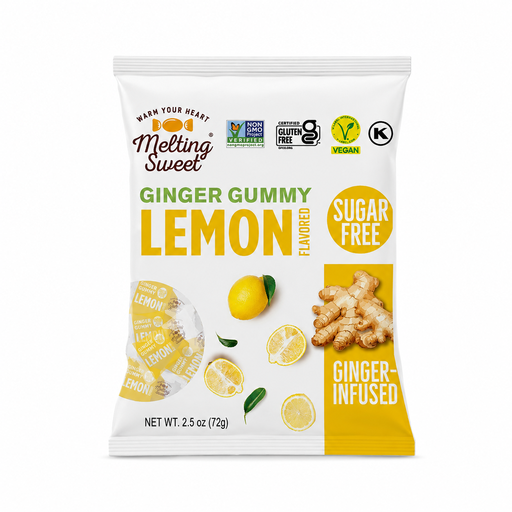 Image unavailable
An option if you’re looking for a sugar-free soft sweet to enjoy as an occasional treat at breakfast. The product information lists sweeteners E953 and E965, coconut and a warning about excessive consumption. Check these details on the pack before serving.
No. The DGCCRF says the Nutri-Score is optional in France, while nutritional information is required on most pre-packed foods. You can therefore compare nutritional information even when no Nutri-Score is displayed.
No. The Auchan and E.Leclerc product information lists 272 kcal and 234 kcal per 100 g respectively for the sugar-free products mentioned here. Compare the energy and other nutritional values for the exact recipe, rather than assuming what it contains from the ‘sugar-free’ claim alone.
Some sugar-free recipes use polyols, and E.Leclerc’s product information for CONFISEO sweets warns that excessive consumption may have a laxative effect. Read the ingredients list and any warnings for the product you choose.
They can be an occasional treat, but they shouldn’t replace the other foods planned for the meal. In its breakfast ideas for children, Manger Bouger suggests options including bread or cereal, a dairy product and a piece of fruit or a compote with no added sugars.
Check the exact recipe: Auchan’s caramel sweets product information lists fresh cream and milk, while Carrefour’s soft sweets product information lists pork gelatine. Check the pack again when you buy, as these details don’t apply to all sugar-free sweets.