When planning your marathon fuelling, don’t choose a ‘sugar-free’ praline as your main source of carbohydrates based on that claim alone. Look for a product with clear carbohydrate information per serving, so you can plan how much to take with you. A praline or another chocolate treat might satisfy a craving when you’re not exercising, but check its ingredients and make sure you tolerate it before taking it on a run.
Who is this option for?
Runners planning their fuelling
If you’re planning to take on carbohydrates during a marathon, the amount per serving and how easy the product is to carry matter more than its chocolate flavour alone. A review published in 2015 in Nederlands Tijdschrift voor Geneeskunde, referenced on PubMed, gives a guide of 30 to 60 g of carbohydrates per hour for efforts lasting 1 to 2.5 hours.
Chocolate lovers keeping an eye on added sugars
You’re looking for a chocolate treat to enjoy when you’re not running. The claim ‘no added sugars’ and the amount of carbohydrates answer different questions, so check the ingredients and nutrition information before choosing.
Runners mindful of ingredients and what they can tolerate
If you’re concerned about polyols, check whether they’re present and read the pack warnings before considering taking the product during exercise. If you have a nut allergy, check the exact product: Lindt says none of its products is guaranteed to be 100% free from nut allergens.
What should you check?
If you plan to eat something during your run, start with the amount of carbohydrates per serving and how much you intend to carry. If you’re looking for a chocolate treat to enjoy away from exercise, check the exact claim and the ingredients list.
| What matters |
What to check |
Who it matters to |
| Carbohydrate intake during a run |
Carbohydrates per serving you take with you, and the amount you plan to consume during exercise. |
If I’m planning to refuel during a marathon, I want to be able to plan my intake rather than infer it from the ‘sugar-free’ claim. Around 50% of consumers would put this measurable intake at the top of their list. |
| Reducing added sugars |
The exact claim, the ingredients and the carbohydrates listed in the nutrition information. |
For a chocolate treat away from a run, I first want to compare recipes based on their added sugars, without confusing them with my fuelling plan. This would be the priority for around 30% of consumers. |
| Tolerance and allergens |
Polyols, any warnings and nut-related statements on the specific product you’re considering. |
Before taking a confectionery product with me, I need to know whether its ingredients and serving size suit me, especially if I have a known sensitivity. Around 20% of consumers would put these checks first. |
Mistakes to avoid
-
Assuming ‘sugar-free’ means suitable for marathon fuelling
This claim alone doesn’t tell you how many grams of carbohydrates you’ll get from the serving you eat. The guidance reported in the review published in Nederlands Tijdschrift voor Geneeskunde relates to measured carbohydrate intake during efforts lasting 1 to 2.5 hours.
For your run, start with the carbohydrates listed per serving and a fuelling plan you’ve tried in training. If a praline was chosen for its flavour but doesn’t fit that plan, save it for another occasion.
-
Overlooking polyols in a sweetened recipe
‘No added sugars’ doesn’t mean every product has the same ingredients. Auchan’s maltitol spread carries a warning that excessive consumption may have laxative effects; this is an example of a spread, not a praline.
For the specific product you’re considering, check the ingredients, the ‘polyols’ line if it appears in the nutrition information, and any warnings. Don’t try a new serving for the first time during a run.
-
Ignoring nut-related statements
A confectionery product’s name isn’t enough to confirm its ingredients or whether it may contain traces. Lindt says none of its products is guaranteed to be 100% free from nut allergens.
If you have an allergy, check the ingredients and pack warnings for the exact product before eating it.
Brands and retailers to know
These pointers can help you understand product ranges and labels; they don’t mean that an entire brand is suitable for fuelling a marathon.
Lindt
A chocolate brand to consider for a treat, rather than assuming its products are suitable for fuelling a run.
- Lindt advises checking the pack’s ingredients list to find out what each product contains.
- Lindt says none of its products is guaranteed to be 100% free from nut allergens.
Auchan
Its range lets you distinguish products marketed as lower in sugar from recipes carrying a different claim.
- Auchan describes Less Sugar as a range of biscuits and bars with reduced sugar, no refined sugars and no sweeteners.
- This description doesn’t make these biscuits or bars ‘sugar-free’ pralines. Check the claim and ingredients of the product you choose.
Carrefour
A retailer where sugar-related claims may appear across different product categories.
- A Carrefour search, for example, brings up cookies labelled ‘sugar-free’.
- A cookie isn’t a praline, so check the product category and label before comparing products.
E.Leclerc
A retailer offering categories including chocolate and confectionery.
- E.Leclerc DRIVE offers an assortment that also includes biscuits and chocolate bars.
- For a specific praline, check its recipe and label at your chosen shop or on the relevant delivery service.
A fuelling option on Joybuy
This selection features a fruit purée to consider if you’re looking for something to take with you on a run, rather than a sugar-free praline. Compare its nutrition information with your planned fuelling strategy.
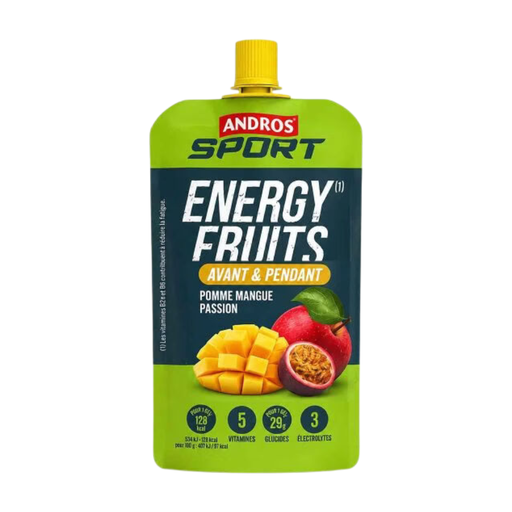 Image unavailable
Andros Sport Energy mango fruit purée, 114 g × 18
Worth considering if you want to plan portions to take with you, rather than choosing a praline for your run. The pack contains 18 mango-flavoured 114 g pouches. Check the carbohydrates and sugars per pouch in the nutrition information, then try the portion you’re planning to take during training. The format alone doesn’t determine your intake or how well you’ll tolerate it.
View on Joybuy
Frequently asked questions
Can a sugar-free praline be your main source of fuel during a marathon?
Don’t choose one for this purpose based on the ‘sugar-free’ claim alone: you need to know the carbohydrates in the serving you plan to eat and check that it suits you during exercise. A review published in 2015 in Nederlands Tijdschrift voor Geneeskunde, referenced on PubMed, gives a guide of 30 to 60 g of carbohydrates per hour for efforts lasting 1 to 2.5 hours; this guide doesn’t describe the ingredients of any particular praline.
Does ‘no added sugars’ mean ‘no carbohydrates’?
No. EU rules on nutrition claims govern the wording ‘no added sugars’; it doesn’t mean that a product contains no carbohydrates. Check the ingredients and nutrition information, distinguishing between carbohydrates, sugars and, where listed, polyols.
What should you check if a confectionery product contains polyols?
Before considering taking it on a run, check the serving size, nutrition information and any warnings on the pack. For example, Auchan’s maltitol spread warns that excessive consumption may have laxative effects; this doesn’t describe all pralines.


