What should you check?
For this dinner, first decide whether ‘sugars-free’ is a strict requirement or whether you mainly want to control what’s added when you serve the porridge.
| What matters |
What to check |
Who is it for? |
| Meeting the ‘sugars-free’ requirement |
Check the ‘of which sugars’ line: Regulation (EC) No 1924/2006 of the European Union sets the threshold for this claim at no more than 0.5 g per 100 g or 100 ml. Check the prepared porridge too. |
If a guest genuinely needs a ‘sugars-free’ option, simply avoiding added sugar isn’t enough. Around 45% of consumers put this strict requirement first. |
| Customising each bowl |
Check the base’s ingredients list, then plan to serve the liquid and toppings separately. |
When everyone at the table has different tastes, I prefer to prepare a plain base that each person can customise. This flexibility comes first for around 33% of consumers. |
| Adding a crunch |
Compare the sugars per 100 g and check the grains and nuts in your chosen topping. |
I’d like to offer a crunchy topping for some bowls without making everyone have it. Around 22% of consumers prioritise this option. |
Oats and mixes for building your bowls
These Joybuy products include an oat mix with other ingredients, as well as oat flakes to top separately. If you have a strict ‘sugars-free’ requirement for your dinner, check the nutritional information for the product and the ingredients in the bowl you’ll be serving before making your choice.
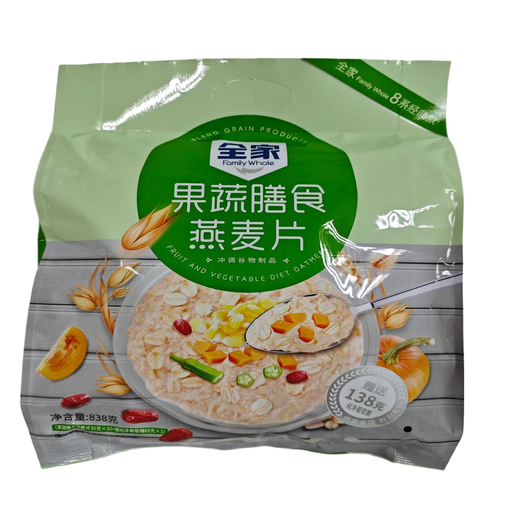 Image unavailable
Family Whole Fruit and Vegetable Dietary Oat Flakes, 838 g, with glucose supplied
This oat, fruit and vegetable mix may be worth considering if you want to prepare individual bowls rather than a plain oat base. Adding the separately supplied glucose would change the recipe, so before serving a ‘sugars-free’ option, check the packaging for the sugar content of the base you’re using and its ingredients.
View on Joybuy
 Image unavailable
Quaker Oats, 500 g
These plain oats let each guest choose their own liquid and toppings. Quaker France states that they contain 100% wholegrain oats and 1.1 g of sugars per 100 g, so this product does not meet the strict ‘sugars-free’ threshold. The brand also notes that it may contain barley and wheat.
View on Joybuy
 Image unavailable
BJORG Organic Oat Flakes, 500 g
These oats are a good base for bowls with toppings chosen at serving time. If ‘sugars-free’ is essential, check the ‘of which sugars’ line on this product’s packaging, as well as the ingredients added to each bowl.
View on Joybuy
 Image unavailable
LUCIEN GEORGELIN Oat Flakes, 500 g
These oats can be used as a base for bowls with toppings served separately at dinner. Before choosing them for a strict ‘sugars-free’ requirement or for guests who need to avoid certain ingredients, check the nutritional information and ingredients list on the exact product packaging.
View on Joybuy
Frequently asked questions
Are ‘sugars-free’ and ‘no added sugars’ the same thing?
No. Under Regulation (EC) No 1924/2006 of the European Union, the ‘sugars-free’ claim requires a product to contain no more than 0.5 g of sugars per 100 g or 100 ml. A product with ‘no added sugars’ may still contain naturally occurring sugars, so check the ‘of which sugars’ line if meeting the strict threshold matters for your dinner.
Can you serve plain oats at a dinner with friends?
Yes, if you want a base that everyone can customise, but don’t assume it’s ‘sugars-free’. Quaker France says its Quaker Oats can be prepared with water, milk or a plant-based drink. Remember to check what’s added to each bowl.
How can you make sweet additions optional?
Prepare the oats without routinely adding sugar and serve toppings separately. The oats alone don’t tell you what’s in the finished recipe: for example, a banana porridge recipe published by Lidl Recettes France includes sugar among its ingredients.
Which ingredients should you check before serving several guests?
Check the packaging of each product you use. Quaker France notes that its Quaker Oats may contain barley and wheat; Carrefour France notes that its Carrefour Original Oat Flakes may contain traces of lupin and mustard; and Jordans France’s Almond, Hazelnut & Seed Granola contains oats, barley, almonds and hazelnuts, among other ingredients.


