For your New Year’s Eve table or party bags, look for almond or chocolate-coated sweets whose ingredients meet your requirements. For a small chewy treat after the meal, dragee-shaped chewing gum serves a different purpose. Check the exact claim: in the European Union, “sugar-free” means no more than 0.5 g of sugars per 100 g or 100 ml, while “no added sugar” does not mean sugar-free. Before serving, also check the ingredients, allergens and any warnings about polyols.
Who are these sweets for?
Hosts who want traditional party sweets
For decorating the table or filling party bags, almond or chocolate-coated sweets are the format you’re looking for. If you want to avoid added sugar, check the “no added sugar” claim and the “of which sugars” line: they don’t mean the same thing as “sugar-free”.
People who need to check the ingredients
Before sharing sweets, make sure you can identify any nuts and other allergens listed for the product you’ve chosen. Some sweets with no added sugar also contain polyols, so keep the packaging handy to check the ingredients and warnings.
Guests who prefer a chewy sweet
Dragee-shaped chewing gum can be offered individually after the meal. Although some packs use the word “dragees”, chewing gum isn’t a substitute for the sugared almonds traditionally served at a celebration.
What should you check before choosing?
For New Year’s Eve, start with how you plan to serve the sweets, then check the nutrition claim and ingredients for the product you’ve chosen.
| What matters |
What to check |
Who should consider it? |
| The sugar claim |
Compare the exact claim with the “of which sugars” line in the nutrition information per 100 g. Under European Regulation (EC) No 1924/2006, “sugar-free” means no more than 0.5 g of sugars per 100 g or 100 ml. |
If I’m looking for a sweet that specifically meets the “sugar-free” claim, I can’t rely on “no added sugar”. Around 39% of consumers would make this distinction their priority. |
| Ingredients for sharing |
Check the ingredients list, allergens and any polyol warning on each product. |
When I’m serving several guests, I want to be able to rule out a recipe that isn’t suitable for some of them. Ingredient suitability would be the top consideration for around 38% of consumers. |
| How you plan to serve them |
Check whether the product is described as a sweet or as chewing gum, then look at the packaging. |
For the table or party bags, I’m looking for traditional celebration sweets; for after the meal, a chewy sweet may be enough. Around 23% of consumers would prioritise this choice of format. |
Mistakes to avoid
-
Confusing “no added sugar” with “sugar-free”
A sweet with no added sugar may still contain naturally occurring sugars. The “sugar-free” claim, on the other hand, must meet the threshold set by European regulations.
If this distinction matters to you, check the exact claim and the “of which sugars” value per 100 g on the product you’ve chosen.
-
Serving sweets without keeping the ingredients close to hand
An almond recipe may contain nuts, and some sweets use polyols. Excessive consumption of polyols may have a laxative effect, as the warning on the box of sweets described by Chocolat Sans Sucre explains.
Keep the packaging by the buffet and clearly separate any sweets offered to guests who need to avoid certain ingredients.
-
Ordering chewing gum to decorate the table
Carrefour France and Auchan France use the term “dragees” for sugar-free chewing gum. These products have a different name and purpose from the sugared almonds traditionally served at celebrations.
Check the product description before choosing: if you want both, plan separately for table decorations and after-dinner sweets.
Brands to help you identify the formats
Maison Braquier
Maison Braquier offers a range of celebration sweets with “no added sugar”, including almond and chocolate varieties.
- A format to consider if you want traditional sweets for the table or party bags.
- The “no added sugar” claim doesn’t mean every product is “sugar-free”; check the ingredients of the product you choose.
Freedent
Freedent offers sugar-free chewing gum in dragee form, including products listed by Auchan France.
- The format is suitable for handing out individually after a meal.
- It isn’t an almond sweet for decorating the table; check the ingredients of your chosen flavour.
Hollywood
Hollywood is one of the chewing-gum brands associated with searches for sugar-free sweets.
- An option if you’re looking for a chewy sweet rather than a traditional celebration sweet.
- Check the product description and ingredients of the specific product before serving.
Airwaves
Airwaves is represented here by a menthol-flavoured chewing gum in dragee form, intended to be chewed rather than used to decorate a celebration table.
- The menthol flavour gives you an option to suit your guests’ tastes.
- Check the ingredients of the variety you choose; this format isn’t a substitute for traditional sugared almonds.
Dragee-shaped chewing gum on Joybuy
These two products are chewy sweets for after the meal, not almond or chocolate-coated sweets for your New Year’s Eve table. Check the nutrition claim and ingredients on the packaging you receive before serving them.
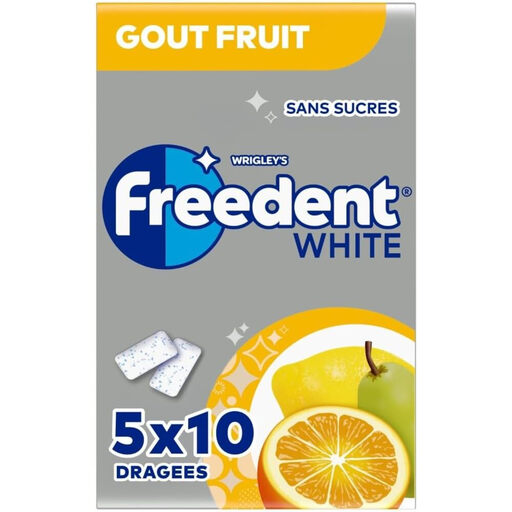 Image unavailable
Freedent Whitening Fruits, 5 packs of 10, 70 g
The five packs of ten pieces are handy for handing out individually after a meal, rather than for presenting traditional celebration sweets.
The product description says this variety is “sugar-free”. Check the claim, sweeteners and allergens on the packaging you receive.
View on Joybuy
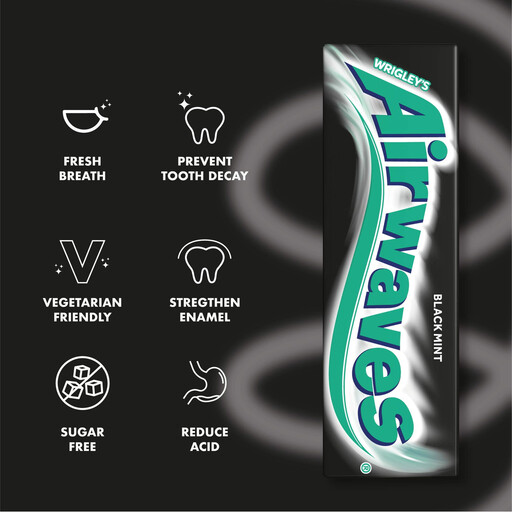 Image unavailable
GUM DR Airwaves Black Menthol, 10 pieces
This menthol chewing gum is an option to enjoy after a meal if your guests like the flavour; it isn’t a substitute for traditional celebration sweets.
The product description says it is “sugar-free”. Check the claim, ingredients and warnings on the packaging you receive before sharing it.
View on Joybuy
Frequently asked questions
Do “sugar-free” and “no added sugar” mean the same thing?
No. In the European Union, Regulation (EC) No 1924/2006 reserves the “sugar-free” claim for products containing no more than 0.5 g of sugars per 100 g or 100 ml. A sweet with “no added sugar” may still contain naturally occurring sugars. Check the “of which sugars” line per 100 g to make an informed choice.
Are maltitol sweets suitable for all guests?
Not necessarily. An almond sweet contains a tree nut, and ingredients vary between products. Check the allergens list and any warning about polyols: excessive consumption may have a laxative effect.
Can sugar-free chewing gum replace sweets served at the table?
It can replace a small individual after-dinner sweet, but it doesn’t have the same presentation purpose as an almond or chocolate-coated sweet. Check the product description if you’re preparing party bags or decorating the table.
How should you store sweets before New Year’s Eve?
Follow the storage instructions and use-by date shown on the packaging of the product you’ve chosen. Keep the packaging handy too, so guests can check the ingredients when you serve them.


