Shoppers looking for strictly “sugar-free” products
You want to check the total sugar content, not just whether any sugar has been added. The threshold for the “sugar-free” claim is set by EU Regulation (EC) No 1924/2006.


If you’re looking for porridge oats that are strictly “sugar-free”, check the “of which sugars” line: for solid foods, EU Regulation (EC) No 1924/2006 sets the threshold for this claim at 0.5 g per 100 g. “No added sugar” alone does not confirm that the product meets this level. For a picnic, dry oats let you put together a mix on the spot. Any preparation containing ingredients that need to be kept refrigerated must stay chilled during transport.
You want to check the total sugar content, not just whether any sugar has been added. The threshold for the “sugar-free” claim is set by EU Regulation (EC) No 1924/2006.
You’d rather carry dry oats and add your toppings when you’re ready to eat. For homemade muesli, Auchan describes Bjorg jumbo oats as having a slightly firm texture.
You need to check the ingredients and any “may contain” statements on the pack you choose. For example, Carrefour warns that its Carrefour Bio small oats may contain traces of other cereals containing gluten and other allergens.
When choosing a product to take to the park, first be clear about your requirements for sugar, then check how it needs to be prepared and what’s in the exact product you’re considering.
| What matters | What to check | Who it’s for |
|---|---|---|
| Sugar content | For a “sugar-free” claim, check the “of which sugars” line: no more than 0.5 g per 100 g under EU Regulation (EC) No 1924/2006. Don’t confuse this with “no added sugar”. | If I genuinely want a “sugar-free” product, a claim on the front of the pack isn’t enough. Around 50% of shoppers are said to make this their top priority. |
| Transport and preparation | Check the packaging and what you need to add before eating the product. Keep wet ingredients separate unless the preparation can be kept chilled. | At the park, I want to be able to carry my snack and prepare it with what I have to hand. Convenience is said to be the top criterion for around 30% of shoppers. |
| Ingredients and allergens | Read the ingredients list and “may contain” statements for the exact product; the words “porridge oats” alone don’t confirm that it’s free from traces. | If there are ingredients or allergens I need to avoid, I must be able to check the contents of the pack I choose. For around 20% of shoppers, this compatibility is said to take priority over other criteria. |
Quaker says its Oats labelled “no added sugar” contain naturally occurring sugars. So this claim alone doesn’t tell you the total sugar content.
If meeting the “sugar-free” threshold matters to you, check the “of which sugars” value per 100 g for the exact product and apply the 0.5 g threshold set by EU Regulation (EC) No 1924/2006.
The Jordans granola described by Auchan contains oats, barley, almonds and hazelnuts, among other ingredients. Its recipe and ready-to-eat snacking format are different from plain oats that you mix yourself.
First choose the type of product that suits your picnic, then compare its ingredients and sugar content. Don’t treat “low sugar” as meaning “sugar-free”.
A preparation mixed with ingredients that need to be refrigerated requires different precautions from dry oats. Anses recommends limiting how long perishable foods are kept at room temperature and maintaining the cold chain.
Take dry oats with the ingredients packed separately to add at the last minute, or keep the preparation chilled during the journey and picnic.
Carrefour’s product listing for its Carrefour Bio small oats warns of possible traces of other cereals containing gluten, tree nuts, soya, sesame and mustard.
If you need to avoid certain ingredients or allergens, check the statements on the packaging of the product you’re buying.
Quaker Oats are worth considering if you’re looking for oats labelled “no added sugar”, as long as you don’t confuse this claim with “sugar-free”.
Carrefour Bio wholegrain small oats are a base to consider when putting together a dry mix.
The Auchan oats reviewed here let you compare a single-ingredient recipe with your sugar requirements.
The Grainea and Bio Village products described by E.Leclerc let you compare oats by their nutrition labels.
The Jordans granola described by Auchan is for anyone looking for a crunchy, ready-to-eat product, rather than plain oats.
This oat-based preparation is sold as a portioned mix to take with you and make up using boiling water. It shouldn’t be treated as a pack of plain porridge oats.
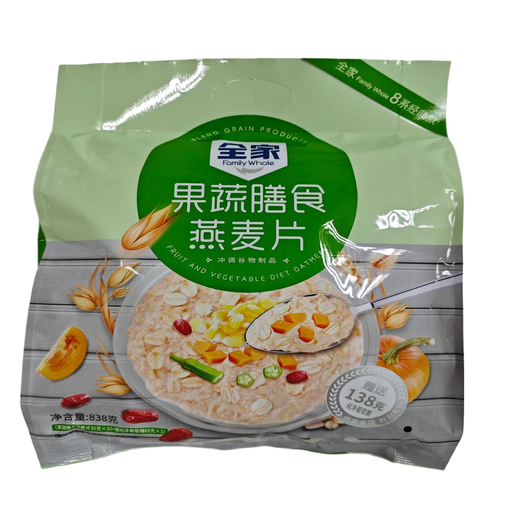 Image unavailable
Worth considering if you can make up a portion with boiling water at the picnic, rather than if you’re looking for plain oats to eat as they are.
Before buying, check the ingredients list, allergens and “of which sugars” value for the exact preparation. Separate glucose sachets are mentioned; adding them would change the composition of the portion you eat.
No. For a solid food carrying a “sugar-free” claim, EU Regulation (EC) No 1924/2006 sets a maximum of 0.5 g of sugars per 100 g. Quaker says its Oats labelled “no added sugar” contain naturally occurring sugars, so check the “of which sugars” line on the pack in question.
Yes, as long as the preparation contains any ingredients that need to be refrigerated and stays chilled during transport and the picnic. Anses recommends limiting how long perishable foods are kept at room temperature and maintaining the cold chain.
No. Carrefour warns that its Carrefour Bio small oats may contain traces of other cereals containing gluten. Check the ingredients and any trace statements on the packaging of the exact product before choosing it.
Reseal the pack and protect the oats from moisture, following the storage instructions Auchan gives for Bjorg jumbo oats. If you’ve already mixed them with ingredients that need to be refrigerated, follow the storage instructions for those ingredients and keep the preparation chilled.