For a coffee break without chewing
If you’d like a mint to dissolve during or after your coffee, compare lozenges and chewing gum before choosing a flavour. The format matters just as much as your preference for mint.


For your morning coffee break, choose a lozenge if you’d rather not chew. Mint chewing gum is a good option if you don’t mind chewing, particularly after breakfast. Either way, check that the product is labelled “sugar-free”, then read the ingredients list: this label doesn’t mean it contains no polyols, other sweeteners or calories.
If you’d like a mint to dissolve during or after your coffee, compare lozenges and chewing gum before choosing a flavour. The format matters just as much as your preference for mint.
A mint-flavoured product isn’t automatically sugar-free. Check the label on the exact product, then look at the “of which sugars” line in the nutritional information. Don’t assume that “sugar-free” is a general promise that a product is healthier.
If certain ingredients are a concern for you, compare the sweeteners, polyols and allergens listed on each pack. Products from the same brand can have different recipes.
Start with the format that suits you during your break — sucking a lozenge or chewing gum — then check that the product is labelled “sugar-free” and review the ingredients in the specific product you’ve chosen.
| What to consider | What to check | Who is it for? |
|---|---|---|
| Format and flavour | Lozenge to suck or chewing gum; the flavour shown on the product. | During a short coffee break, I prefer a mint I can let dissolve without chewing. Format and flavour come first for around 42% of consumers. |
| Sugars and ingredients | “Sugar-free” label, “of which sugars” per 100 g, and the list of sweeteners, polyols and allergens. | If I’m replacing a regular mint sweet, I want to know its sugar content and ingredients before choosing. This is the top priority for around 33% of consumers. |
| After eating | Whether you can chew it after breakfast; check that the chewing gum you choose is labelled “sugar-free”. | After breakfast, I may prefer chewing gum to sucking a lozenge. Around 25% of consumers prioritise this use after eating. |
In the European Union, under the rules set out by EUR-Lex, the “sugar-free” claim means a product contains no more than 0.5 g of sugars per 100 g or 100 ml. It refers to sugars, not all sweetening ingredients or the energy content.
Sugar-free confectionery can contain polyols or other sweeteners, and still have an energy content. The claim alone doesn’t tell you everything about the recipe.
Read the ingredients list and nutritional information together, especially the “of which sugars” line and any information about polyols.
Mentos France’s product information for regular Mentos Mint sweets lists 69 g of sugars per 100 g, while other Mentos products are labelled “sugar-free”.
Check the full product name and packaging rather than assuming you know what’s in it based on the brand.
Recipes can differ in their polyols, whether they contain aspartame, and the allergen information provided. Joybuy’s product information for a Hollywood Strong Mint chewing gum flags a source of phenylalanine and possible laxative effects if consumed excessively.
Check the label for the specific product, particularly if you need to avoid an ingredient or take a warning into account.
Mentos and Hollywood offer a range of mint products. The information below applies to specific products, not every recipe from each brand.
The range includes regular mint sweets, sugar-free lozenges and sugar-free chewing gum, so you can choose the format that suits your break.
Its mint chewing gums are for people who prefer chewing to letting a lozenge dissolve.
This selection includes lozenges, mint chewing gums and a soft ginger-and-mint sweet to chew. First choose the format that suits your break, then check the “sugar-free” label and ingredients on the product you select.
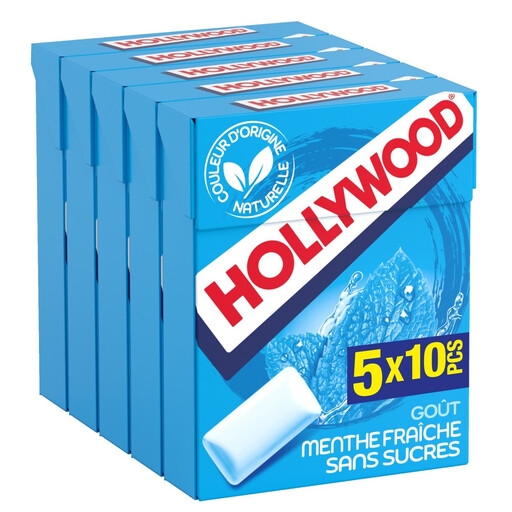 Image unavailable
If you don’t mind chewing during your break, this pack of five offers Fresh Mint-flavoured chewing gum. Check the “sugar-free” label and ingredients on the packaging of the product you choose.
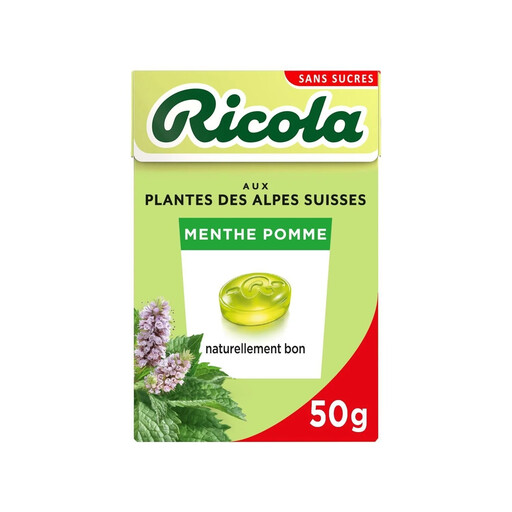 Image unavailable
If you’d rather suck a lozenge than chew, this apple-and-mint herbal variety comes in a 50 g pack. Read the ingredients list if you’re keeping an eye on particular sweeteners.
 Image unavailable
This chewing gum combines a Spearmint flavour with a pack of 10 pieces weighing 14 g. Check that the product you buy is labelled “sugar-free” and look at the ingredients that matter to you.
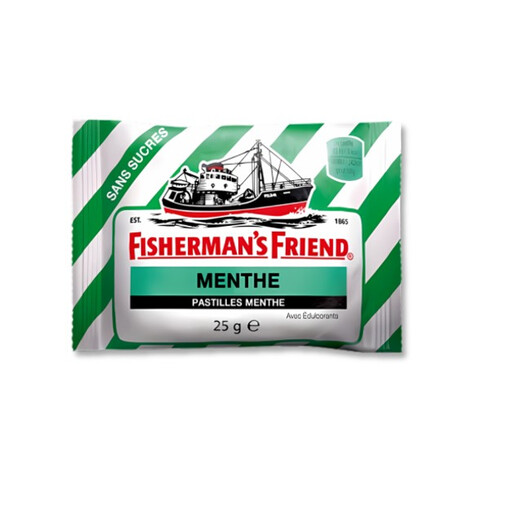 Image unavailable
If you’d rather suck a lozenge, this product comes as mint lozenges in a 25 g pack. Before buying, check what the S/S label means, as well as the sugar content and ingredients on the packaging.
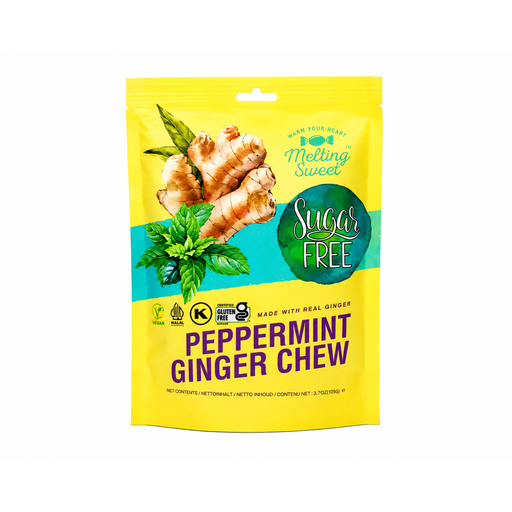 Image unavailable
If you’re looking for something to chew rather than a lozenge or chewing gum, this variety combines ginger and peppermint in a 105 g pack. Ginger adds a distinctive flavour; check the ingredients and consumption advice on the packaging too.
Not necessarily in the strictest sense. In the European Union, the rules set out by EUR-Lex allow this claim for products containing up to 0.5 g of sugars per 100 g or 100 ml. Check the “of which sugars” line for the specific product.
Yes, if it’s an ingredient you need to be aware of. Whether a product contains aspartame depends on the recipe, and products that do may carry the statement “source of phenylalanine”. In its information on aspartame, Anses highlights the specific case of people with phenylketonuria. Read the label on the exact product rather than relying on the brand.
Some recipes contain polyols. Joybuy’s product information for a Hollywood Strong Mint chewing gum says that excessive consumption may have laxative effects. Check the warning on the product you buy.
Check the packaging for each product. An Auchan listing for Mentos Pure Fresh mentions soya lecithins, while Carrefour’s listing for sugar-free Mentos Mint sweets says they may contain traces of milk and soya. These details don’t apply to every product from those brands.