People looking for sugar-free products
You want to distinguish this claim from ‘no added sugars’ and compare the ‘of which sugars’ content per 100 g before choosing your gum.


For something to chew while revising, choose pellet gum labelled ‘sugar-free’ and check the ‘of which sugars’ line for the exact product. An almond or chocolate confection labelled ‘no added sugars’ does not necessarily meet the same criteria. If you’re hungry, choose a separate snack, as chewing gum is no substitute for food.
You want to distinguish this claim from ‘no added sugars’ and compare the ‘of which sugars’ content per 100 g before choosing your gum.
You want gum to keep in your bag or on your desk, and are choosing between a small pack, a tub or a multipack to suit how you’ll use it.
You’re hungry during a long revision session. Chewing gum can go with a break, but it won’t keep hunger at bay until your next meal.
First, decide whether you want something to chew or a snack, then check the nutrition claim and ingredients for the product you’ve chosen. Under European Regulation (EC) No 1924/2006, a ‘sugar-free’ claim means the product contains no more than 0.5 g of sugars per 100 g or 100 ml.
Choose this if: you’re mainly looking for something to chew and want to meet the ‘sugar-free’ criteria.
Bear in mind: this format won’t replace a snack if you’re hungry.
Consider this if: you’re looking for a sweet treat to eat rather than chewing gum.
Bear in mind: the ‘no added sugars’ claim alone doesn’t prove that the confectionery is ‘sugar-free’.
Choose this if: you need something to keep you going until your next meal while revising.
Bear in mind: the ‘sugar-free’ claim alone tells you nothing about how filling a food is.
| What matters | What to check | Who is it for? |
|---|---|---|
| ‘Sugar-free’ criteria | The claim on the packaging and the ‘of which sugars’ line per 100 g; don’t confuse this with ‘no added sugars’. | If I want to meet the ‘sugar-free’ criteria strictly, the product name isn’t enough. Around 40% of consumers prioritise this check. |
| Need for a snack | Work out whether your break needs to satisfy your hunger or simply give you something to chew. | If I need to keep going until a meal, I look for a snack rather than chewing gum. This is the top priority for around 30% of consumers. |
| Format and ingredients | Compare the number of pellets and read the ingredients list and any warnings for the exact variant. | For something to chew between revision sessions, I want a convenient format without overlooking what’s in the pack. Around 30% of consumers prioritise this use. |
An almond or chocolate confection may carry the first claim without meeting the strict criteria you’re looking for. Maison Braquier’s ‘no added sugar’ range, for example, uses maltitol, but this information alone doesn’t tell you the sugar content of every product.
If you need a ‘sugar-free’ product, look for that claim and check the ‘of which sugars’ content per 100 g on the specific product.
Taking a chewing break and having something to satisfy hunger have different purposes. Manger Bouger says that fibre can help you feel fuller for longer between meals; the ‘sugar-free’ claim tells you nothing about this.
If you’re hungry while revising, choose a snack separately that’s suitable for the purpose.
Products don’t all contain the same polyols, sweeteners or other ingredients. Some also carry a warning about possible laxative effects if consumed in excess.
Before buying a tub or several packs, check the ingredients, declared allergens and warnings for the variant you’re planning to buy.
The brand offers pellet gum in formats including packs and multipacks, with a range of flavours.
Depending on the product, the range includes sugar-free gum in mint and fruity flavours.
The brand offers sugar-free gum in fresh-tasting flavours, including pellet multipacks.
The brand has a range of almond and chocolate confections labelled ‘no added sugar’, separate from chewing gum.
These products are suitable for a chewing break while revising. Choose a flavour and format that work for you, then check the ‘sugar-free’ claim, nutrition information and ingredients for the variant you’re ordering. This gum won’t replace a snack if you’re hungry.
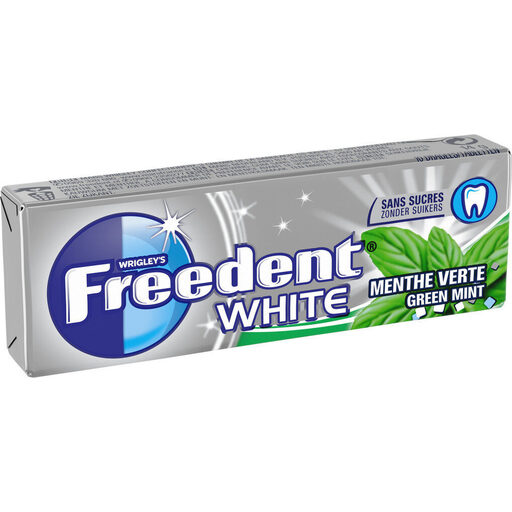 Image unavailable
A small pack for a chewing break while revising. The product listing for this variant flags a few things to check relating to phenylalanine, soya and excessive consumption. Read the label if these details matter to you.
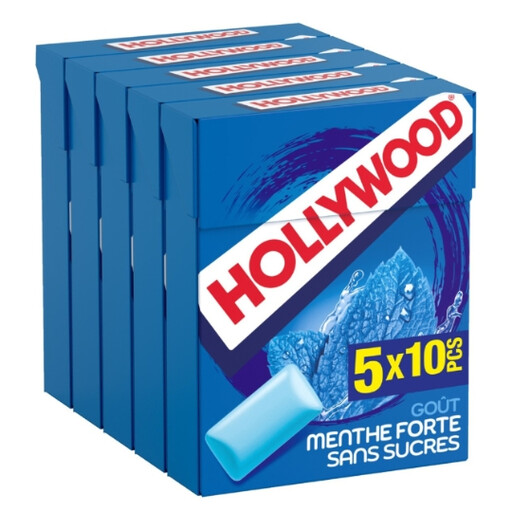 Image unavailable
Mint flavour in a pack of five, ideal if you’d like to spread the packs across several breaks. Check the ingredients list and the phenylalanine statement for this variant before buying.
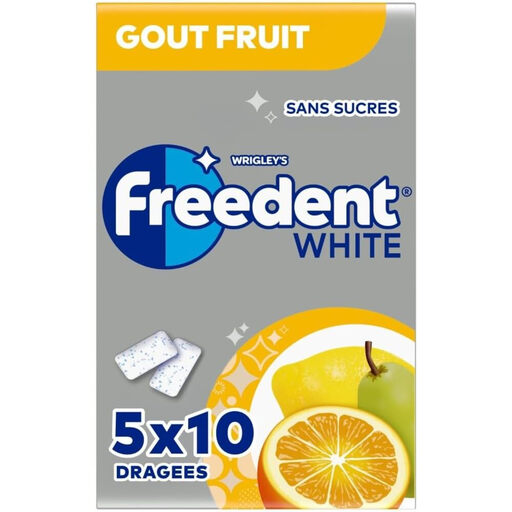 Image unavailable
A fruit-flavoured multipack if you’d like to keep several small packs handy for your breaks. The product listing for this variant mentions aspartame and soya, among other ingredients. Check the ingredients if you need to avoid them.
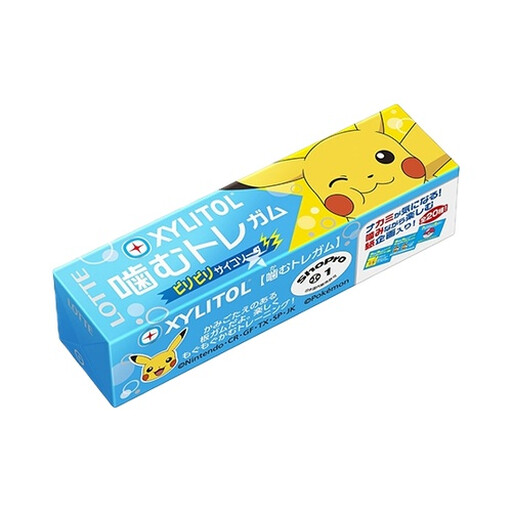 Image unavailable
A 26 g pack for a Strong Soda-flavoured chewing break. If you’re keeping an eye on the sweeteners you consume, check the ingredients list and warnings for this variant.
No. Under European Regulation (EC) No 1924/2006, a ‘sugar-free’ claim means the product contains no more than 0.5 g of sugars per 100 g or 100 ml. The ‘no added sugars’ claim doesn’t prove that a product meets this threshold. If this is important to you, check the ‘of which sugars’ declaration for the exact product.
No. Chewing gum is for when you want something to chew, not to satisfy your hunger. To keep you going until your next meal, choose food intended for that purpose. Manger Bouger says that fibre can help you feel fuller for longer between meals.
Some products containing polyols warn of a possible laxative effect if consumed in excess, including the product listing for the Freedent Classic strawberry multipack. Read the warning for your chosen variant, especially before buying several packs for revision sessions.
Check the ingredients and packaging claims for each flavour. Product listings for some Freedent and Airwaves products mention aspartame, and Freedent states that the relevant product contains a source of phenylalanine. If you need to avoid these ingredients, don’t rely on the brand name or the ‘sugar-free’ claim alone.