Parents keeping an eye on sugar at snack time
You’re looking for a sweet treat labelled ‘sugar-free’, but you also want to know which ingredients give it its sweet taste.


For a snack, consider sugar-free chewing gum only if your child can chew it and spit it out without swallowing it. Then check the full ingredients list and any warnings: ‘sugar-free’ does not mean ‘sweetener-free’, and a claim about xylitol does not tell you everything about the recipe.
You’re looking for a sweet treat labelled ‘sugar-free’, but you also want to know which ingredients give it its sweet taste.
You want to spot xylitol in the ingredients without assuming that a claim on the packaging applies to all sugar-free chewing gum.
Before choosing a flavour or format, you need to decide whether your child can chew the gum calmly and spit it out without swallowing it.
When choosing chewing gum for a child’s snack, first consider whether they can chew it without swallowing it, then check the ingredients and warnings. Flavour and packaging come after these checks.
| Criterion | What to check | Who is it for? |
|---|---|---|
| Chewing | Whether your child can chew calmly and then spit the gum out; any guidance on the packaging. | If my child might swallow the gum or play with it, I’d rather leave chewing gum out of their snack. Around 34% of consumers would put this ability first. |
| Sugar-free ingredients | The ‘sugar-free’ claim, followed by the sweeteners, allergens and warnings in the full ingredients list. | I want to avoid sugar without assuming the gum contains no other sweet-tasting ingredients. Checking the recipe would be a priority for around 33% of consumers. |
| Xylitol and claims | Whether xylitol is in the specific recipe and the conditions attached to any claim on its packaging. | If I’m specifically looking for xylitol, I want to distinguish its presence from a claim that applies to a particular product. Around 25% of consumers would make this their top criterion. |
| Flavour and format | The flavour, number of pellets and packaging, once you’ve checked suitability and ingredients. | Once I know the chewing gum is suitable for my child, I look for a flavour they’ll enjoy and a format that’s handy for snack time. Around 8% of consumers would put this first. |
Anses explains that sweeteners can give foods a sweet taste. So the claim on the front of the pack does not tell you about all the ingredients in the chewing gum.
Read the ingredients list for each product and compare the sweeteners named.
A flavour your child likes does not remove the risk of choking. The DGCCRF has reported a fatal case involving a child who swallowed a confectionery product containing chewing gum.
If your child can’t chew the gum calmly and spit it out without swallowing it, choose another snack.
On Carrefour’s listing for Hollywood Blancheur, xylitol accounts for 99.3% of the sweeteners listed; aspartame and acesulfame-K are also included.
Check all the ingredients, allergens and warnings for the exact product, even when xylitol is highlighted.
A claim shown for one product does not necessarily describe another flavour or recipe. The DGCCRF reminds consumers that nutrition and health claims are regulated.
Check the wording and conditions of the claim on the packaging of the product in question, and don’t assume it applies to the whole category.
Carrefour lists several Hollywood products, including mint and fruit flavours, as well as a Blancheur product that highlights xylitol.
Carrefour lists sugar-free Freedent products in watermelon and spearmint flavours.
These two products let you compare a fruity flavour with a minty one for snack time. Your choice should still depend on whether your child can chew and spit out the gum, and on checking the packaging for the specific product.
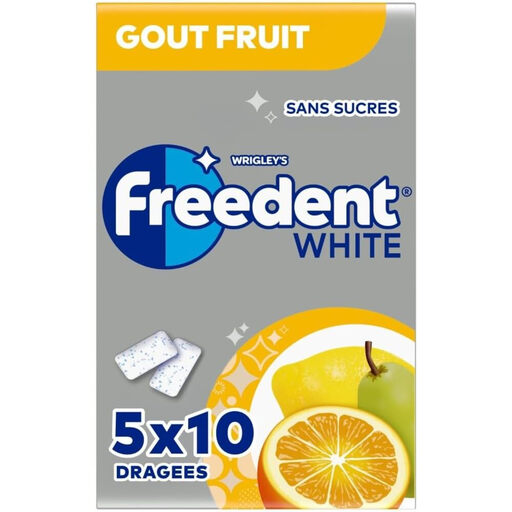 Image unavailable
A fruity option if your child can chew the gum and spit it out without swallowing it. The pack contains five packs of ten pellets; check the packaging for the full list of sweeteners, allergens and warnings.
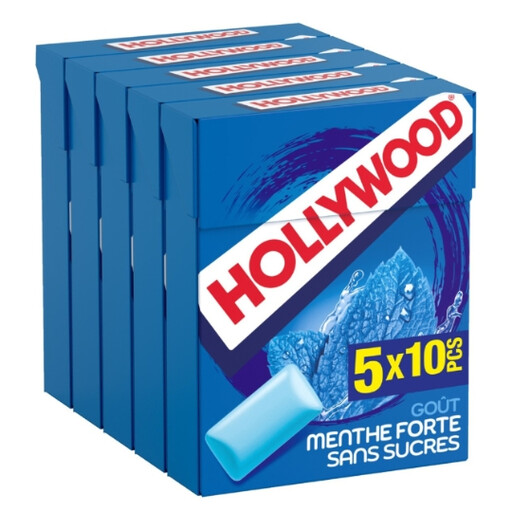 Image unavailable
A mint option to consider if your child likes this flavour and can chew and spit out the gum. Check the ‘sugar-free’ claim and ingredients on the packaging; the product listing includes a warning about excessive consumption and states that it is a source of phenylalanine.
No. Anses says sweeteners are used to give foods a sweet taste; Carrefour’s listing for Hollywood Blancheur mentions xylitol, aspartame and acesulfame-K, among other ingredients. Check the ingredients list for the product you’re considering.
No. The presence of xylitol alone isn’t enough to decide whether chewing gum is suitable for a child. Also check the other ingredients, allergens and warnings, and whether your child can chew without swallowing the gum. A product-specific claim does not apply to every recipe.
First, make sure your child can chew the gum calmly and spit it out without swallowing it. The DGCCRF highlights the choking risks associated with confectionery for young children; then check the ingredients and warnings on the packaging.
No. Don’t assume it applies to another product without checking its own labelling. The DGCCRF reminds consumers that nutrition and health claims are regulated; check the wording and conditions stated for the specific product.